


Thorburns Naturalists Sketchbook
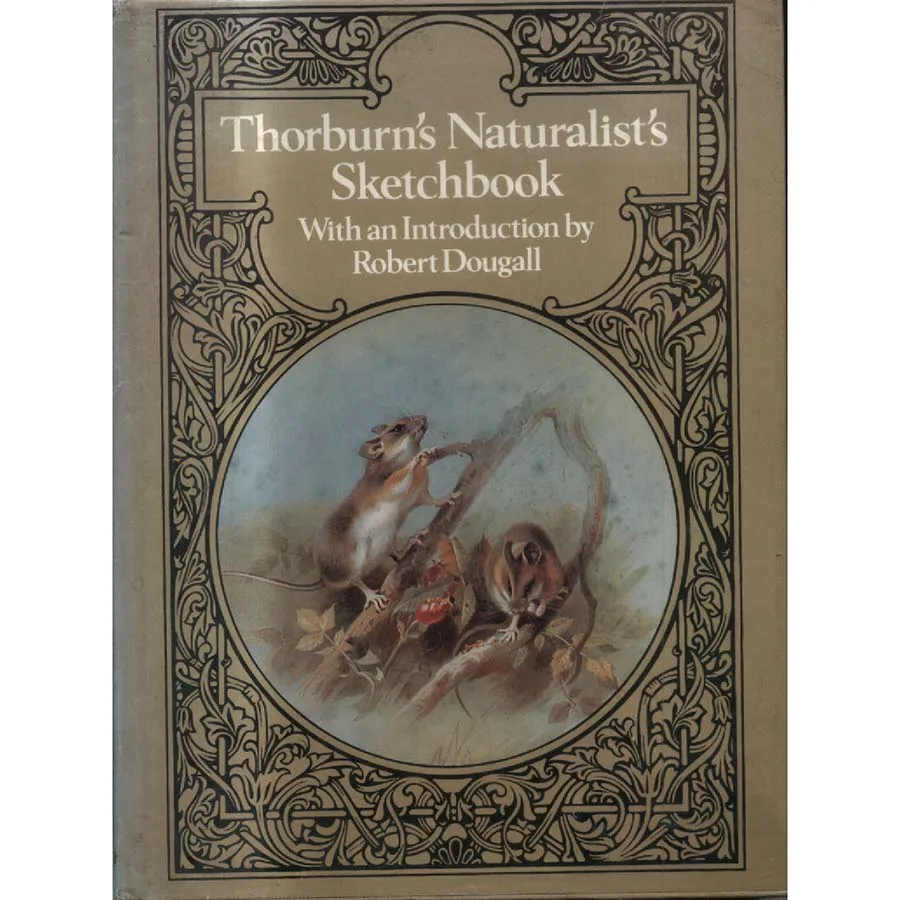
Publisher: Michael Joseph
Format: Hardback
ISBN: 0718115678
A couple of useful corrections for the listing: the title is Thorburn’s Naturalist’s Sketchbook, and the principal artist/author is Archibald Thorburn. It has an introduction by Robert Dougall—with two Ls, rather than “Dougal.”
Archibald Thorburn was one of Britain’s finest wildlife artists, blessed with the inconvenient ability to draw a bird so accurately that the bird itself might have complained about the lighting. Thorburn’s Naturalist’s Sketchbook gathers studies of birds, mammals and other wildlife that reveal both his artistic skill and his close observation of animals in their natural settings.
Thorburn’s finished watercolours are celebrated for their detail, atmosphere and remarkably convincing plumage, but a sketchbook allows the reader to see the quieter machinery behind the polished image. Here are poses tested, shapes caught, feathers examined and movements recorded before an animal remembered an urgent appointment elsewhere. Nature rarely sits for a portrait, particularly when equipped with wings.
The volume contains pencil studies and colour work covering an impressive variety of British wildlife. Birds naturally predominate: grouse, geese, ducks, falcons, owls, waders, songbirds and other creatures whose identification frequently depends upon noticing a tiny mark while they travel rapidly in the opposite direction. Mammals and plants also appear, broadening the book beyond ornithology into a more general portrait of the countryside Thorburn knew.
His sketches demonstrate the difference between merely looking at an animal and actually seeing it. The angle of a wing, the distribution of weight through a bird’s legs, the texture of winter fur and the posture adopted just before flight are all observed with extraordinary care. Thorburn does not arrange wildlife like stuffed ornaments; his creatures appear ready to move beyond the edge of the page as soon as the artist becomes distracted.
Many of the subjects belong to the moors, coasts, forests and wetlands of Britain, especially the Scottish landscapes with which Thorburn became closely associated. These are not sentimental countryside decorations populated by cooperative robins. They are field observations shaped by cold mornings, long waits and the traditional naturalist’s willingness to stand somewhere uncomfortable while an animal refuses to appear.
The sketches are accompanied by information about the species, including appearance, habits, habitat and distribution. The result lies pleasantly between art book and natural-history reference: attractive enough for leisurely browsing but sufficiently informative to justify the activity as education. One can therefore spend an hour admiring drawings of ducks while maintaining an entirely scholarly expression.
Robert Dougall provides the introduction. Known to millions as a broadcaster, Dougall was also a committed ornithologist and nature writer, making him an appropriate guide to Thorburn’s world. The combination of Dougall’s enthusiasm and Thorburn’s art produces a volume with the civilised air of a television natural-history programme from an age when presenters wore ties outdoors and animals were not required to perform dramatic reconstructions.
Published in 1977, the book also preserves something of an older tradition of natural history, when drawing remained central to the recording and understanding of species. A camera can capture a fraction of a second, but an artist must decide which details matter and how the living animal holds itself. Thorburn’s pictures are accurate because they are built from knowledge, not merely because the beaks have been measured correctly.
His work will appeal particularly to birdwatchers, wildlife artists and anyone interested in the history of natural-history illustration. It also offers excellent reference material for artists attempting wildlife subjects themselves, although it may create the slightly discouraging impression that drawing every feather correctly ought to be effortless.
The reproductions reveal the economy of Thorburn’s method. A few lines establish movement; a patch of colour defines plumage; a carefully observed head gives the whole creature character. Nothing appears laboured, which is the reward generally enjoyed by artists after many years of labour.
This is a handsome book for readers who enjoy British birds, countryside art, sporting and natural-history illustration, or simply the pleasure of observing wildlife without requiring waterproof trousers. It invites the reader into Thorburn’s working process and provides the rare opportunity to inspect a golden eagle, ptarmigan or red grouse without causing it the slightest alarm.
This copy is in Good condition, showing ordinary signs of age and previous ownership but remaining perfectly suitable for browsing, study or artistic inspiration. Offered by Crappy Old Books, it is a charming collection from an artist who could make the natural world remain still on paper—even when the natural world had shown no intention of cooperating.
Keep browsing: See more Animals books Other books by Robert Dougal
