


War Baby
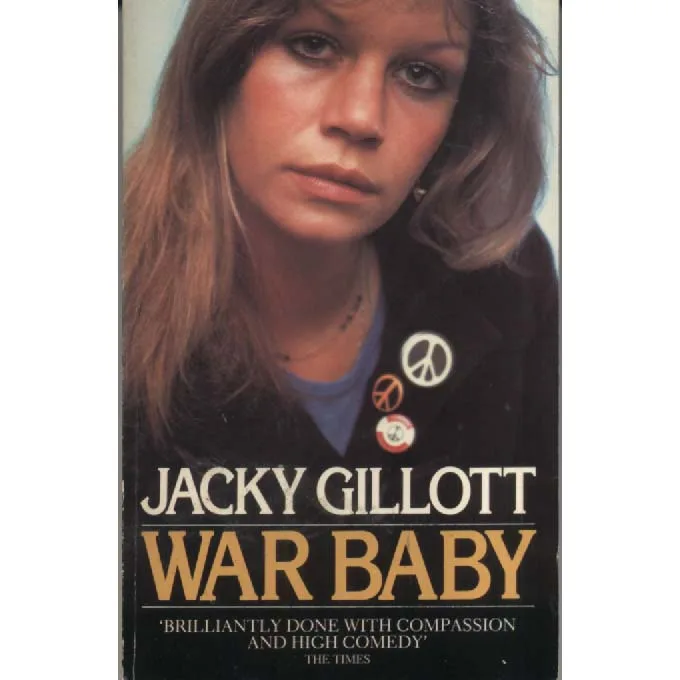
Publisher: Granada
Format: Paperback
ISBN: 0586052909
Garbie is pregnant, unmarried and determined to have an abortion—a predicament which, in the respectable England of War Baby, gives almost everyone an opportunity to develop an opinion about her life. Unfortunately, the one opinion liable to become lost amid the moral concern, social convention and administrative arrangements is Garbie’s own.
Told through flashback, Jacky Gillott’s novel follows Garbie as she considers the pregnancy, her past and the narrow collection of acceptable futures society has thoughtfully prepared for women in her position. Pregnancy may be biologically personal, but the surrounding world treats it as public property, complete with interested parties, unsolicited judgements and a committee apparently entitled to inspect the minutes.
Garbie is not a conveniently radiant heroine awaiting the discovery of maternal fulfilment. She is plain, anxious, observant and painfully conscious of her place in the social order. She has no husband waiting nobly in the next chapter and no large private income with which to transform a crisis into an interesting period of reflection. Respectability is available, as usual, but only to those who can afford the entrance fee.
Gillott uses Garbie’s situation to examine the gulf between privileged and disadvantaged lives. The same pregnancy can be treated as a manageable inconvenience, a romantic complication or a moral catastrophe depending upon money, family and social position. Society enjoys announcing universal principles; it is rather less enthusiastic about distributing universal choices.
Written during an era when abortion had recently become legally available in Britain but remained surrounded by shame, suspicion and fierce public argument, War Baby explores the distance between legal permission and genuine freedom. A right existing on paper is one thing. Exercising it while being examined by doctors, relatives, acquaintances and the invisible jury of conventional opinion is quite another.
Yet this is not merely an “issue novel” with characters arranged around a debate like chairs in a television studio. Gillott is interested in the contradictory inner life behind the public question: fear, resentment, longing, guilt and the possibility that a woman may want several mutually incompatible things at once. Human beings are inconsiderate that way, particularly when literature would prefer them to represent a clear position.
Garbie’s reflections open onto a broader portrait of English society, its class divisions and its talent for disguising coercion as concern. The novel asks what motherhood means when it is expected, what choice means when the available alternatives are unequal, and how much of a woman’s identity is permitted to remain hers once pregnancy has made everyone else suddenly attentive.
Jacky Gillott brought to her fiction the sharp social eye of an experienced journalist and broadcaster. Her prose combines political seriousness with an eccentric, darkly comic awareness of human behaviour. She recognises that institutions can be cruel without raising their voices and that respectable people often perform their most impressive moral gymnastics while insisting they are merely being practical.
First published in 1971, War Baby belongs unmistakably to the period of second-wave feminism, changing sexual attitudes and battles over reproductive autonomy. Nevertheless, its questions have shown an irritating refusal to become historical curiosities. The clothes, terminology and medical procedures may alter, while society continues enthusiastically discussing women’s bodies as though they were communal facilities requiring improved management.
This 1981 Granada edition is ideal for readers interested in feminist fiction, women’s social history and neglected British novels of the post-war period. It is thoughtful, uncomfortable and unexpectedly funny, although its humour comes from the grim recognition that absurdity and injustice are often perfectly capable of sharing an office.
This copy is in Good condition, showing some ordinary evidence of age but remaining ready to provoke, amuse and unsettle another reader. Offered by Crappy Old Books, it is a striking novel about pregnancy, abortion, class and the complicated business of making a personal decision when the entire nation appears to have pulled up a chair.
Keep browsing: See more Fiction books Other books by Jacky Gillott
