


Sonetos
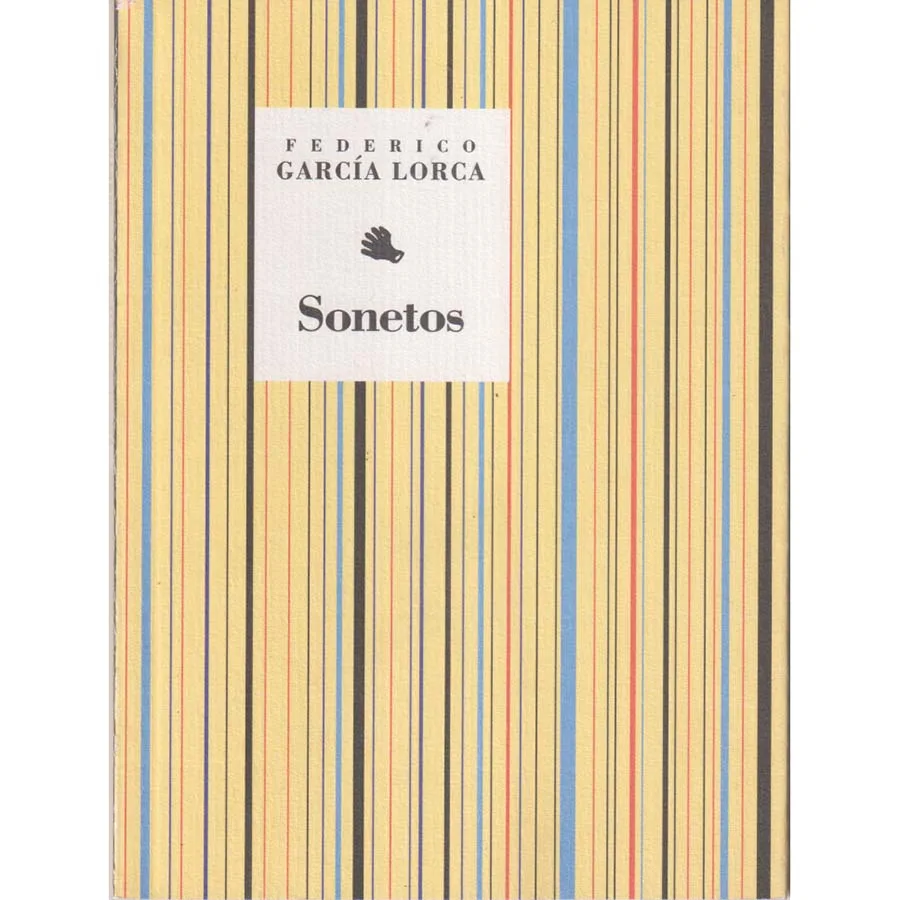
Publisher: Editorial Comares
Format: Paperback
ISBN: 9788481512748
Sonetos (1996) by Federico García Lorca. Editorial Comares. ISBN: 9788481512748. Text in Spanish. Condition: Good.
There are books that politely assume you speak their language.
This one makes no such concessions.
Sonetos is presented entirely in Spanish, which means that if your command of the language currently extends to ordering coffee and apologising for your terrible accent, you may find yourself admiring the typography rather more than the syntax. On the other hand, if you read Spanish—or are learning it—this little volume offers one of the finest opportunities imaginable to spend time with one of the greatest poets of the twentieth century in his own words.
And with Lorca, the original words matter.
Very much.
Federico García Lorca occupies that curious literary position where he is simultaneously a national treasure, an international icon and someone whose poetry somehow still manages to feel intensely personal. His verses are rich with music, longing, desire, memory, landscape and the peculiar melancholy that seems to drift so naturally through much of Spanish literature. He could write about love with breathtaking tenderness, about death without melodrama and about beauty without ever becoming sentimental.
A remarkably difficult balancing act.
Most writers fall off one side or the other.
This collection of sonnets showcases Lorca working within one of literature’s oldest and most disciplined forms. Fourteen lines. Strict structure. Centuries of tradition. Faced with these constraints, lesser poets produce competent exercises.
Lorca somehow produces lightning.
His sonnets combine classical craftsmanship with emotional intensity that feels almost startlingly modern. Images bloom unexpectedly. Symbols echo through the poems. Desire and absence seem permanently engaged in an elegant dance, while the moon—never knowingly unemployed in Lorca’s work—continues making memorable appearances.
One begins to suspect it had an exclusive contract.
Published by Editorial Comares in 1996, this edition allows readers to encounter Lorca exactly as he intended: in Spanish, with all the rhythm, music and subtle shades of meaning that inevitably become softened, however skilfully, in translation.
Translation is a wonderful thing.
It opens doors.
But poetry occasionally insists that some rooms are best entered through the original entrance.
Even readers who already know Lorca through English editions often discover something entirely different when reading him in Spanish. The sound of the language carries much of the emotional force. Individual words resonate against one another with extraordinary precision. Internal rhythms emerge naturally. The poems sing rather than simply speak.
Which is fortunate.
Lorca always seemed to believe language should possess music, even when discussing sorrow.
His influence extends far beyond Spanish literature. Poets, playwrights, musicians and artists across the world continue returning to his work because it never seems to grow old. Fashion changes. Literary theories come and go. Entire schools of criticism rise, flourish and quietly disappear.
Lorca simply keeps being Lorca.
Perhaps that explains why new generations continue finding him.
Or perhaps truly great poetry has an irritating habit of making itself permanently relevant.
This edition is particularly rewarding for students of Spanish, collectors of Hispanic literature or readers wishing to experience one of Europe’s greatest poetic voices without mediation. It is not merely a book about Lorca; it is Lorca himself, speaking directly across the decades in the language that shaped every image, every rhythm and every carefully chosen silence.
This copy remains in good condition, preserving an attractive Spanish-language edition that deserves a place on the shelves of anyone interested in poetry, Spanish culture or simply books that repay repeated reading. It may challenge the casual browser, but then the finest poetry rarely apologises for expecting a little effort.
From Crappy Old Books—because second-hand bookshops have always been quietly multilingual places. Somewhere between the detective novels and gardening manuals lurks a slim Spanish volume that reminds us literature was never intended to stop politely at national borders. Sonetos asks very little of its readers beyond curiosity, patience and perhaps the occasional consultation of a dictionary. That seems a fair bargain. Besides, dictionaries have enjoyed a surprisingly fulfilling existence for centuries without anyone accusing them of spoiling the plot. If nothing else, owning Lorca in Spanish is a gentle reminder that some books are not simply meant to be read—they are meant to be heard, one beautifully chosen word at a time.
Keep browsing: See more Poetry books Other books by Federico Garcia Lorca
