


Yalo
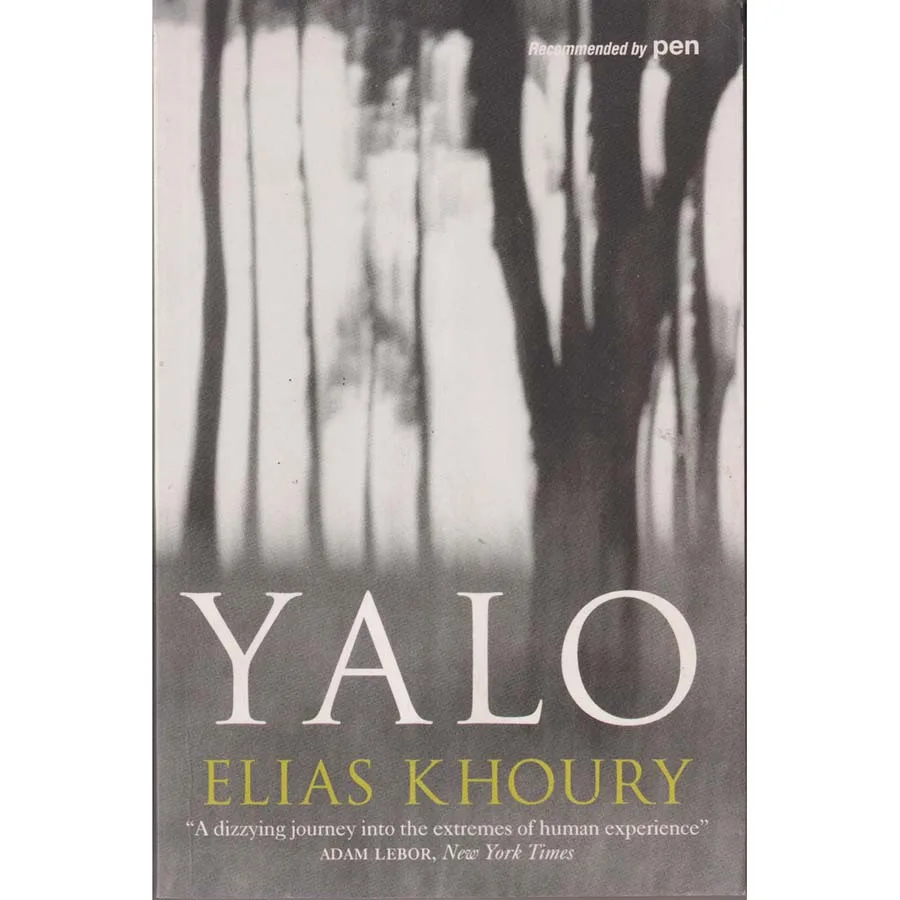
Publisher: Quercus Publishing
Format: Paperback
ISBN: 9781906694814
Yalo (2010) by Elias Khoury. Quercus Publishing. ISBN: 9781906694814. Condition: Good.
Some novels ask whether their narrator is telling the truth.
Yalo begins by quietly suggesting that truth itself may already have packed its bags and slipped out of the room.
The result is one of the most unsettling, intelligent and unforgettable novels to emerge from modern Middle Eastern literature—a book that circles memory, violence and identity with extraordinary persistence until the reader begins to wonder whether any life can ever be narrated honestly, even by the person who lived it.
Cheerful, it isn’t.
Compelling, absolutely.
Originally written in Arabic by the Lebanese novelist Elias Khoury, Yalo follows Daniel, known as Yalo, a young man imprisoned and repeatedly interrogated. Forced to write and rewrite the story of his own life for his captors, he produces version after version, each contradicting or reshaping the last. The more he remembers, the less certain everything becomes.
Or perhaps the more certain.
Khoury leaves that delightfully uncomfortable decision to the reader.
What begins as the account of one man’s crimes gradually expands into something much larger: a meditation on trauma, war, memory and the strange ways in which violence rewrites not only history but language itself. Lebanon’s civil war hangs over every page, not always directly, but like weather that has permanently altered the landscape.
Some storms, it seems, never entirely pass.
Khoury is one of those rare novelists capable of making uncertainty feel entirely natural. Rather than treating memory as a filing cabinet from which facts may be neatly retrieved, he presents it as something fluid, fragmented and constantly revised. Every confession carries the possibility of invention. Every recollection may conceal another.
Reading Yalo can feel rather like assembling an enormous jigsaw puzzle while quietly suspecting someone has mixed in pieces from several other boxes.
Oddly enough, this makes the picture even more fascinating.
Despite its weighty themes, the novel is never merely political. It remains intensely personal throughout. Yalo himself is neither straightforward victim nor straightforward villain. He exists in the morally ambiguous territory where most real human beings eventually find themselves, carrying contradictory impulses that refuse to resolve into comforting certainties.
Literature, thankfully, has far more patience for ambiguity than television detectives.
Khoury’s prose possesses an almost hypnotic rhythm. Ideas recur, images return transformed, conversations echo across chapters, and the act of repetition itself becomes part of the novel’s architecture. It reflects the interrogations at its centre, but also the workings of memory, where we revisit the same moments endlessly in the hope they might finally explain themselves.
Usually, they don’t.
Published by Quercus in 2010, this English-language edition introduced a wider readership to one of the Arab world’s most celebrated contemporary novelists. It stands as a reminder that some of the finest fiction written in recent decades has emerged from places where history has refused to remain quietly in the background.
This is not simply a novel about Lebanon.
It is a novel about what conflict leaves behind inside people long after the headlines have disappeared.
This copy remains in good condition, making it an excellent acquisition for readers interested in world literature, literary fiction, psychological novels or simply books that trust their audience to think as well as feel.
From Crappy Old Books—because the best novels occasionally refuse to provide the comfortable certainty we secretly hoped for when we opened the first page. Yalo does not hand out simple answers, tidy morals or reassuring conclusions. Instead, it quietly dismantles the idea that memory is reliable, confession is straightforward or identity is fixed. That sounds terribly serious—and it is—but it is also what makes the novel so rewarding. Long after many books have dissolved into a vague recollection of "something happened to someone," Yalo remains vividly lodged in the mind, asking awkward questions every time you think you’ve finally understood it. Like all truly memorable second-hand books, it arrives carrying not only its previous owner’s fingerprints but also the unsettling possibility that certainty itself was never in particularly good condition to begin with.
Keep browsing: See more Fiction books Other books by Elias Khoury
