


Modern Party Cooking
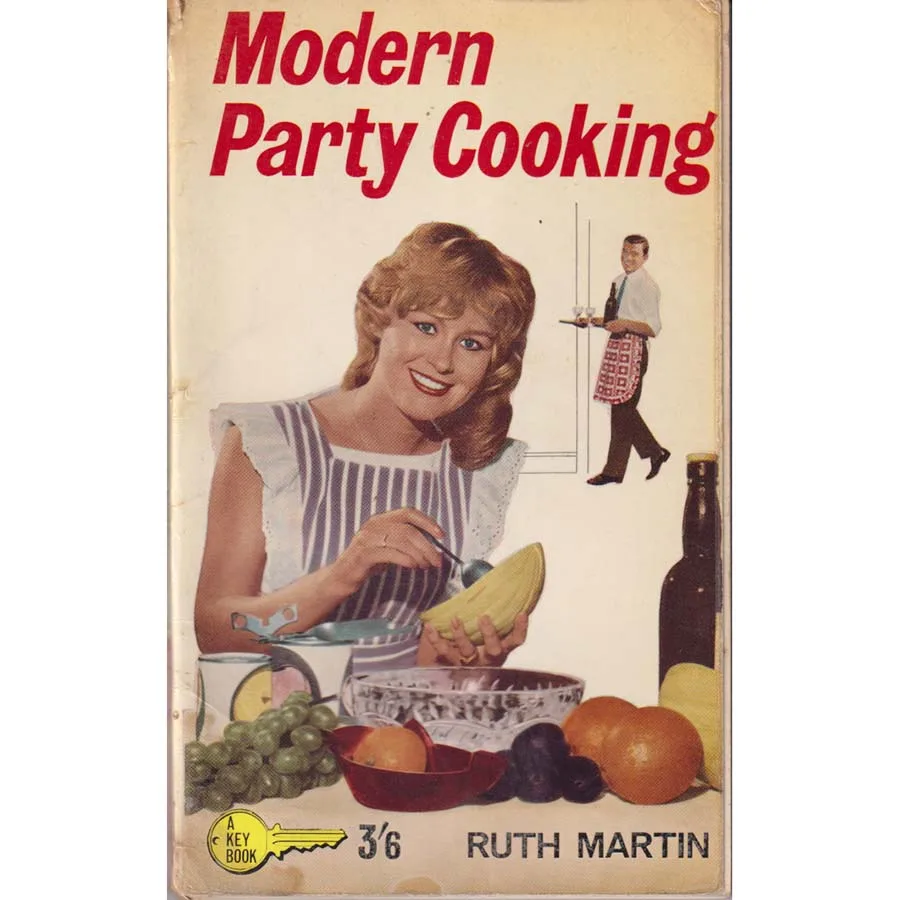
Publisher: Newnes
Format: Paperback
ISBN: none
Modern Party Cooking (1964) by Ruth Martin. Newnes. No ISBN. Condition: Good. Professionally rebound.
There was once a glorious period in British social history when a successful party required three things: enough sherry to loosen conversation, enough pineapple to suggest sophistication, and at least one dish suspended in aspic for reasons that nobody has ever adequately explained.
Modern Party Cooking arrives from that magnificent age.
Published in 1964, this delightful volume captures the optimism of an era when entertaining at home was becoming stylish, adventurous and ever so slightly competitive. Guests were no longer expected to make do with a plate of sandwiches and a packet of crisps. No, this was the decade of buffet tables, cocktail sticks, carefully folded paper napkins and recipes designed to convince visitors that one was effortlessly cosmopolitan.
Whether one actually was is another matter entirely.
Ruth Martin guides readers through the mysterious art of feeding groups of people without descending into culinary panic. There are ideas for elegant dinners, buffets, drinks parties and special occasions, all presented with the calm assurance of someone who firmly believes that, with sufficient planning, no social gathering need ever collapse into chaos.
Modern readers may smile at some of the recipes. Ingredients once regarded as thrillingly continental now sit quietly on supermarket shelves wondering what all the fuss was about. Decorative garnishes appear with admirable confidence. Butter is treated as an old friend rather than a dietary scandal. Cream enters the conversation without issuing an apology. It was, in many ways, a more optimistic age.
There is also something wonderfully charming about the phrase "modern" in a book title. It is publishing’s equivalent of buying a house called The New Cottage only to discover it was built in 1827. What was dazzlingly contemporary in 1964 now serves as a delightful culinary time capsule, reminding us that every generation sincerely believes it has finally perfected the art of entertaining.
And, inevitably, every generation is proved wonderfully wrong by the next.
The recipes themselves remain surprisingly practical. Good food has a stubborn habit of refusing to go out of fashion, even if the serving suggestions occasionally do. Strip away the decorative flourishes and the occasional enthusiastic use of gelatine, and you’ll find plenty of sensible advice that still translates perfectly well to a modern kitchen.
One cannot help imagining the parties this book may once have helped create. Living rooms filled with cigarette smoke and laughter, LP records spinning quietly in the background, somebody attempting to balance a plate and a sherry glass while discussing Harold Wilson, and one unfortunate guest accidentally knocking over the cheese straws just as everyone agreed they looked delicious.
This particular copy comes with an added distinction: it has been rebound. Far from diminishing its appeal, the rebinding has given the book a fresh lease of life, preserving a volume that clearly deserved another chance to continue dispensing culinary wisdom. Books about cooking have always lived harder lives than novels. They spend decades propped open on kitchen worktops, splashed with mysterious sauces and consulted with flour-covered fingers. A well-restored cookery book is therefore rather like a well-restored cast-iron frying pan—it has earned its second career.
This copy remains in good condition, with its sturdy rebinding ensuring that Ruth Martin’s entertaining advice is ready for many more years of service, whether you’re recreating vintage recipes or simply enjoying a fascinating glimpse into Britain’s domestic past.
From Crappy Old Books—because old cookery books are never really just about food. They’re about aspiration. About the sort of evening their owners hoped to host, the sort of friends they imagined gathering around the table, and the quiet belief that a well-made canapé might just smooth over awkward silences. This one has survived six decades, a complete rebinding, and countless changes in culinary fashion. It has watched fondue come and go, witnessed the rise and fall of nouvelle cuisine, endured molecular gastronomy without complaint, and still quietly insists that the secret to a successful party is feeding people well. Frankly, it’s difficult to argue with that.
Keep browsing: See more Food books Other books by Ruth Martin
