


Watching For The King
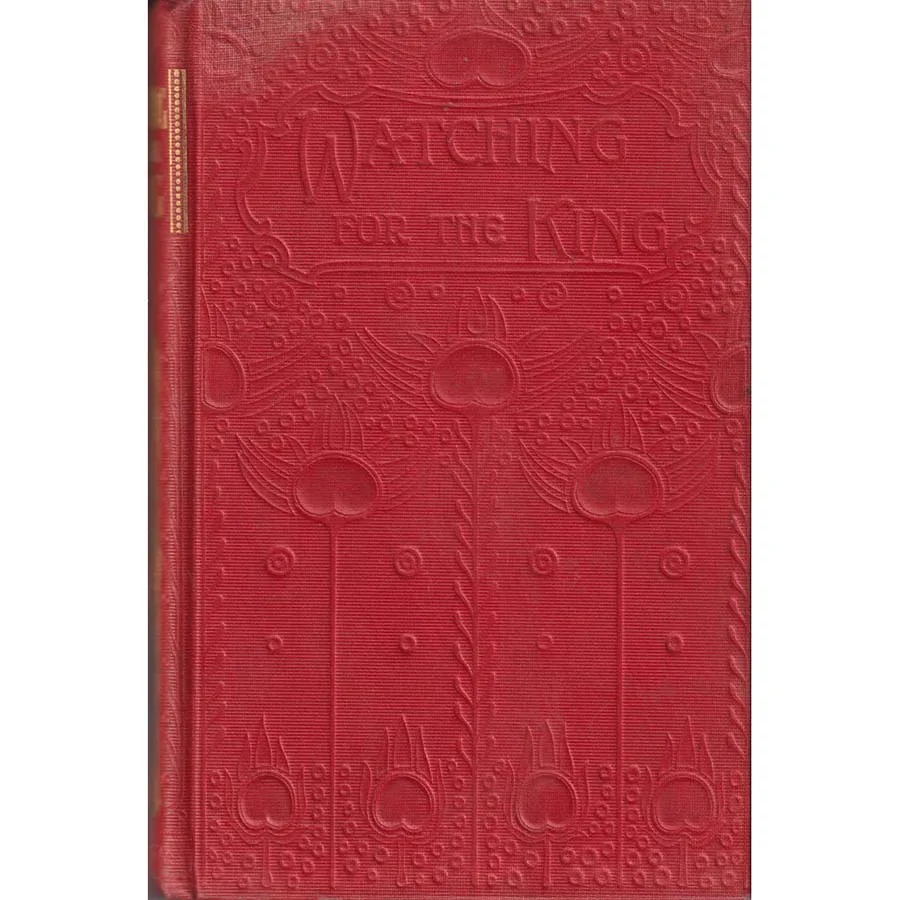
Publisher: John F Shaw
Format: Hardback
ISBN: none
Watching for the King (1907) by L. Marston. John F. Shaw. No ISBN. Condition: Good.
Some books arrive wearing their intentions proudly on their sleeves. Others wear them embossed into deep red cloth with enough decorative flourishes to convince you they have personally shaken hands with Queen Victoria, even though she had inconveniently departed this world several years before publication.
Watching for the King is very much one of the latter.
Published in 1907 by the prolific religious publisher John F. Shaw, this handsome volume belongs to that wonderfully earnest tradition of Edwardian juvenile fiction in which courage, honesty, patience and unwavering moral fibre are considered vastly more exciting than laser pistols or mutant zombies. To be fair, the zombies had not yet received a publishing contract.
The title itself is wonderfully intriguing. Which king? Why are we watching for him? Is this an historical adventure? A Christian allegory? A tale of steadfast faith? Quite possibly all three. Books of this period delighted in weaving exciting narratives together with gentle moral instruction, quietly hoping young readers would emerge not only entertained but also marginally improved as human beings.
Whether that actually happened remains one of literature’s enduring mysteries.
John F. Shaw specialised in producing books that aimed to inspire young minds with stories of loyalty, perseverance and Christian virtue. Their heroes and heroines generally possessed impeccable manners, an admirable work ethic and a remarkable ability to remain cheerful despite hardships that would have most modern protagonists reaching immediately for a therapist and an oat-milk latte.
Yet there is something undeniably appealing about them.
These books are windows into another age—an England of Sunday schools, polished boots, railway excursions, church halls and carefully cultivated respectability. The pace is slower, the language more measured and the values worn proudly rather than hidden beneath layers of irony. Ironically, that very lack of irony now gives the book much of its charm.
And then there is the binding.
What a splendid piece of Edwardian book design it is. Rich crimson cloth, lavishly embossed with stylised floral motifs and elegant lettering, it has the sort of craftsmanship that modern publishers occasionally remember exists when producing a £200 collector’s edition. In 1907, however, this was simply how respectable books often dressed themselves. Even before you’ve turned a page, it already looks as though it belongs on a polished oak bookshelf beside a globe, a brass telescope and a mildly disappointed grandfather.
This copy remains in good condition, which is no small achievement after well over a century. The binding remains attractive and solid, preserving both its handsome decorative cover and the quiet dignity that old books seem to acquire simply by surviving. It has clearly outlasted several monarchs, two world wars, countless changes in literary fashion and every motivational self-help trend ever invented.
From Crappy Old Books—because books like this remind us that every generation worries about the next one. In 1907 the solution appeared to involve wholesome stories, moral fortitude and beautifully bound volumes costing a few shillings. Today we have screen-time limits, educational apps and endless debates about algorithms. Whether either approach produces better adults remains open to discussion. One thing, however, is beyond dispute: the Edwardians certainly knew how to make a book that looked magnificent sitting quietly on a shelf, waiting patiently for its next reader... and perhaps, appropriately enough, still watching for the King.
Keep browsing: See more Fiction books Other books by L Marston
