


Screen Education Yearbook 7-6 1965
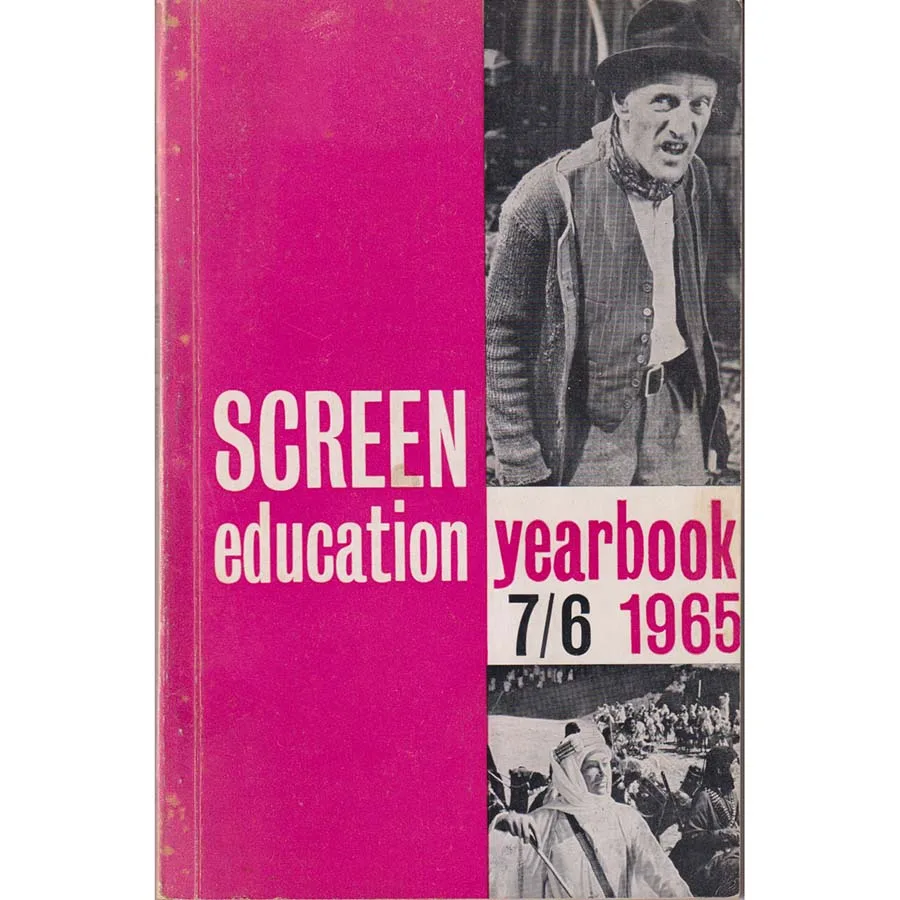
Publisher: Society for Education in Film and Television
Format: Paperback
ISBN: none
Screen Education Yearbook 7–6, 1965 (1965) edited by Roger Mainds. Society for Education in Film and Television. ISBN: None. Condition: Good.
There was a time when "screen education" didn’t involve explaining to teenagers why perhaps they shouldn’t believe everything they saw on social media. In 1965, the challenge was considerably more manageable. The average screen lived in the corner of the living room, had three channels if you were lucky, and occasionally required a firm slap on the side to restore the picture.
This fascinating Screen Education Yearbook belongs to that wonderfully optimistic period when educators were beginning to realise that film and television weren’t merely distractions from learning—they could be learning. Quite a radical notion at the time, considering many adults still viewed television as little more than a machine for corrupting the nation’s youth with westerns, quiz shows and questionable hairstyles.
Produced by the Society for Education in Film and Television, this annual is part reference work, part professional journal and part time capsule. It captures a moment when moving images were becoming increasingly important in schools, universities and public life, long before phrases such as "media literacy" entered everyday conversation.
Reading it today is oddly satisfying because so many of the questions remain surprisingly familiar. How should we teach people to understand visual media? How do films influence opinion? Can television educate as well as entertain? Replace "television" with "TikTok" and one suspects many of the discussions could be held all over again, albeit with rather more Wi-Fi and considerably fewer tweed jackets.
Roger Mainds and his contributors write with the quiet seriousness of people who believed that cinema deserved to be studied alongside literature, history and art. Looking back, they were absolutely right. Films are now analysed in classrooms across the world, television studies are established academic disciplines, and entire university departments exist to examine precisely the kinds of questions this yearbook was already asking sixty years ago.
Of course, there is something delightfully British about the publication itself. It doesn’t shout. It doesn’t promise to "revolutionise your teaching" or "unlock the hidden power of multimedia." Instead, it calmly assembles reports, articles, reviews and discussions, trusting that readers are intelligent enough to decide what they find useful. It is the publishing equivalent of a sensible cardigan—reliable, understated and unlikely ever to go dramatically out of fashion.
As a snapshot of 1965, it is also irresistible. This was a world where educational films arrived in metal canisters, projectors occasionally chewed expensive reels with alarming enthusiasm, and the words "streaming service" would probably have suggested an unfortunate leak in the school roof. Teachers dimmed the lights, threaded the projector with practiced care and hoped nobody would notice if the film snapped halfway through.
This copy remains in good condition, a pleasing survival for a publication that was designed to be consulted rather than treasured. It will appeal to collectors of film history, educational publishing, media studies, vintage yearbooks or anyone fascinated by the early attempts to understand the growing influence of the screen on modern life.
From Crappy Old Books—because before there were influencers, algorithms and endless debates about screen time, there were thoughtful educators quietly wondering what television might do to society. They couldn’t possibly have predicted binge-watching entire series in a weekend, but they were asking exactly the right questions. And unlike your average streaming subscription, this little volume won’t ask you every month if you’re still watching.
Keep browsing: See more Film books Other books by Roger Mainds
