


Stories From Science 1
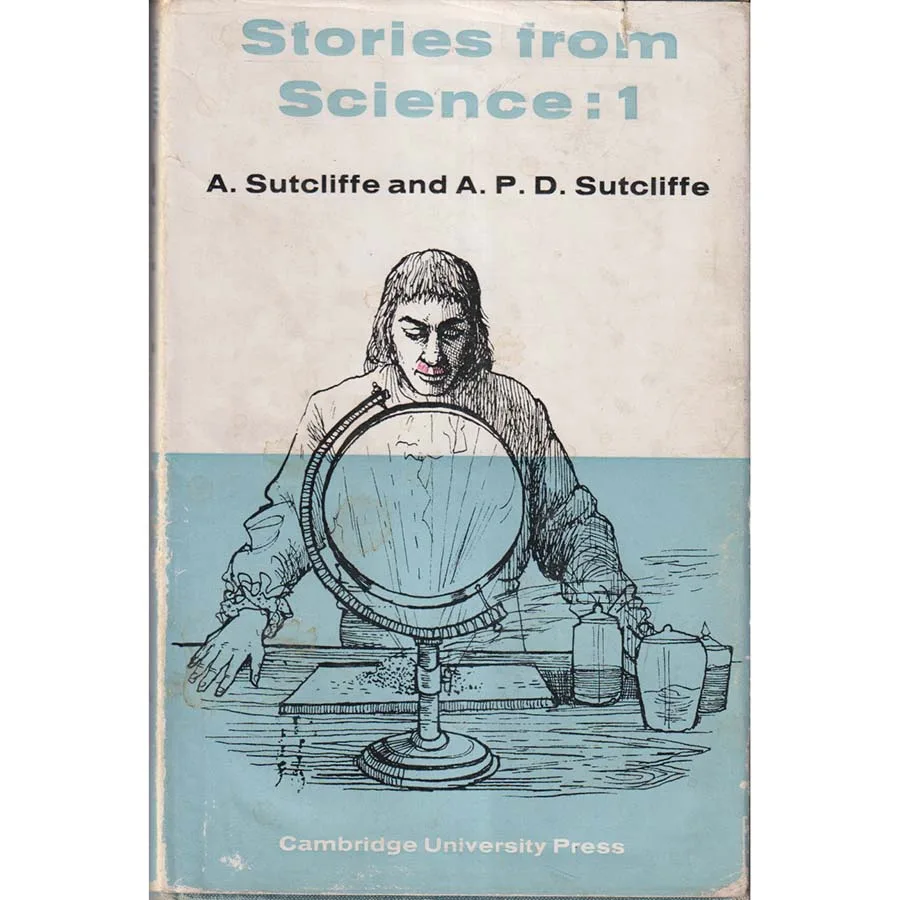
Publisher: Cambridge University Press
Format: Hardback
ISBN: none
Stories from Science 1 (1962) by A. Sutcliffe and A. P. D. Sutcliffe. Cambridge University Press. ISBN: None. Condition: Fair. Ex-Amman Valley Grammar School copy.
There was a time when science textbooks believed that the best way to explain the universe was not by dazzling animations, interactive simulations or someone on YouTube shouting, "Don’t try this at home!" Instead, they quietly sat on a classroom desk and invited you to discover, page by page, why the world behaved as it did.
Stories from Science 1 is a charming survivor from that more patient age.
Published in 1962 by Cambridge University Press, this volume belongs to an era when science was taught as a series of fascinating discoveries rather than a relentless succession of examinations. The title is rather telling. These are not merely "lessons" or "exercises" but stories—because every scientific principle, from the simplest magnet to the most complicated chemical reaction, has its own tale to tell. Somewhere behind every law of nature is a curious person who asked, "I wonder what happens if...?"
And thankfully, enough of them survived the experiment to write books about it.
The Sutcliffes understood that curiosity is far easier to teach than memorisation. Their approach gently encourages readers to observe the everyday world—the kettle boiling, the weather changing, a magnet attracting a nail—and realise that ordinary life is quietly full of extraordinary questions. The miracle isn’t that science explains these things; it’s that somebody thought to ask the questions in the first place.
Reading a school science book from the early 1960s is also rather like stepping into a classroom where everyone still writes neatly in fountain pen, the teacher wears a tweed jacket regardless of the weather, and a Bunsen burner is regarded as an educational aid rather than the opening act of a health-and-safety incident. There is a calm confidence throughout the book that knowledge can be built steadily, one carefully explained idea at a time.
Of course, some of the examples now feel delightfully nostalgic. Technology has transformed beyond recognition since 1962, but the principles remain reassuringly stubborn. Gravity continues to ignore fashion. Water still boils when sufficiently encouraged. Magnets remain inexplicably attractive. Science has an irritating habit of remaining correct even when everything else changes around it.
One particularly appealing aspect of books like this is that they remind us how much education has evolved. Modern textbooks often compete for attention with colourful graphics, sidebars, icons and enough visual stimulation to rival an airport departure lounge. Stories from Science 1 simply assumes that if the subject is interesting enough—and it is—you’ll keep turning the pages. There is something rather admirable about that quiet confidence.
This particular copy has enjoyed a working life rather than a sheltered existence. It comes from Amman Valley Grammar School, carrying the unmistakable character of an ex-school library or classroom book. One can almost picture generations of pupils leafing through its pages, some inspired towards careers in science, others merely wondering how many minutes remained until lunch. Such provenance gives it a quiet authenticity that a pristine copy could never quite replicate.
The book is in fair condition, reflecting its years of faithful educational service, but it remains entirely readable and full of period charm. It would make an excellent addition for collectors of vintage schoolbooks, educational history, or anyone who enjoys the reassuringly sensible style of mid-century British publishing.
From Crappy Old Books—because before science came with apps, virtual laboratories and downloadable worksheets, it came with books like this: honest, sturdy little companions that patiently explained the world without fanfare. And if a few thousand schoolchildren happened to spill the odd drop of ink on them along the way, that merely proves the lessons were being put to good use.
Keep browsing: See more Academic books Other books by A Sutcliffe and APD Sutcliffe
