


The Evolution Of Modern Sculpture - Tradition And Innovation
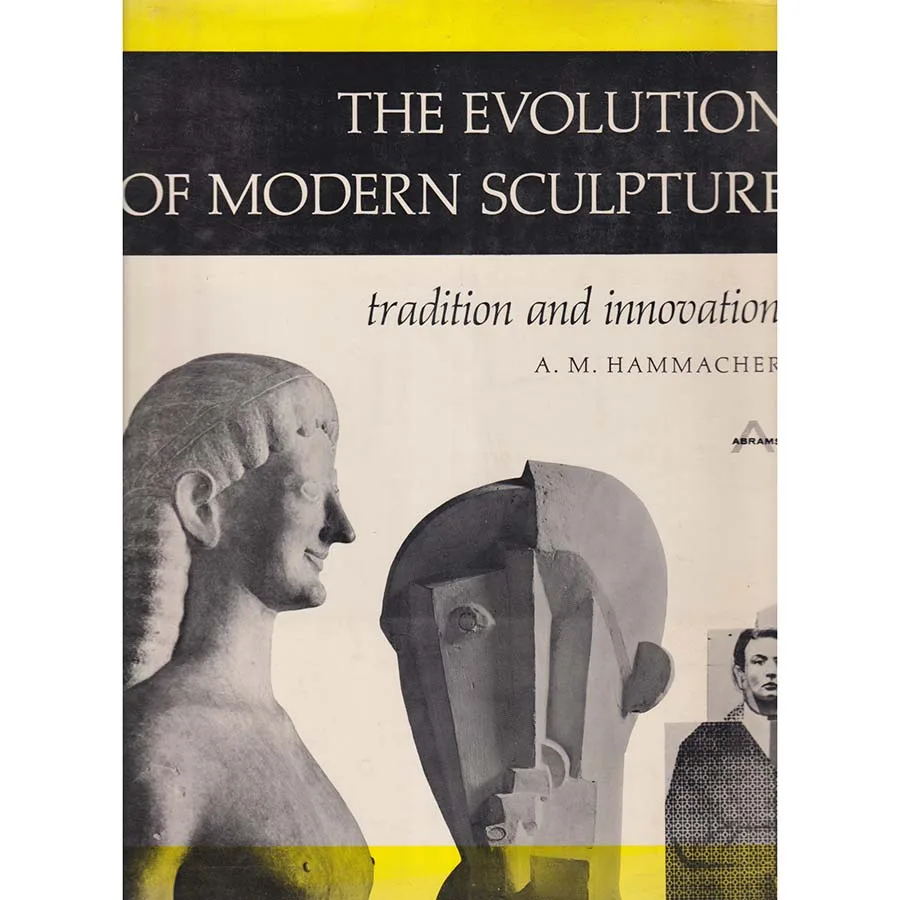
Publisher: Harry N Abrams
Format: Hardback
ISBN: none
The Evolution of Modern Sculpture – Tradition and Innovation (1969) by A. M. Hammacher. Harry N. Abrams. ISBN: None. Condition: Good. Dust jacket has a slight tear at the spine, which has been neatly repaired on the reverse with archival paper to prevent further deterioration.
There are two common reactions to modern sculpture. The first is, "What a fascinating exploration of form, space and material." The second is, "I’m fairly sure my neighbour has one of those in his front garden, and he calls it ’the bent bit of metal’."
This magnificent volume exists somewhere between those two opinions.
Published in 1969 by the ever-reliable Harry N. Abrams, The Evolution of Modern Sculpture – Tradition and Innovation is an ambitious survey of one of art history’s most dramatic revolutions. For thousands of years sculptors seemed broadly content with making people look like... well... people. Then, somewhere along the line, someone decided that perhaps a person could instead be represented by three intersecting cubes, a twisted bronze ribbon or an alarming collection of welded scrap that somehow conveyed "the human condition."
And, remarkably enough, they weren’t entirely wrong.
A. M. Hammacher guides the reader through this extraordinary transformation with intelligence and enthusiasm, exploring how sculpture escaped the marble pedestal and ventured into entirely new territory. The book traces the journey from traditional figurative work into abstraction, experimentation and the increasingly bold question that every modern sculptor eventually asks: "What actually counts as sculpture?"
The answer, it turns out, is "rather a lot."
Stone, wood, bronze, steel, concrete, found objects and materials that appear to have been borrowed from an engineering workshop all make their appearance. By the time you’ve finished the book, you’ll find yourself looking suspiciously at discarded machinery and wondering whether somebody simply forgot to put it in a gallery.
One of the pleasures of a large Abrams art book is that it understands an important truth: if you’re discussing sculpture, it really helps if the reader can actually see it. Consequently, these pages are generously illustrated, allowing you to admire everything from elegant classical influences to works that resemble the aftermath of a disagreement between geometry and gravity. Whether you adore modern sculpture or remain gloriously unconvinced by it, the visual feast alone makes this volume worth lingering over.
Reading it today also offers an intriguing glimpse into the art world of the late 1960s, when modernism still carried the intoxicating scent of revolution. Many of the artists featured were not yet the unquestioned giants they are today, and debates about abstraction, tradition and innovation still felt thrillingly alive. It reminds us that every movement we now call "established" was once dismissed by somebody as complete nonsense.
Of course, modern sculpture has a remarkable ability to divide opinion. One visitor will stand silently contemplating the relationship between mass and negative space. Another will quietly wonder whether the gallery accidentally left the maintenance equipment on display. Both, in their own way, are engaging with the artwork, and perhaps that is precisely the point.
This copy is in good condition. The dust jacket has a slight tear at the spine, which has been carefully repaired on the reverse with paper to stabilise it and prevent further damage. The repair is intended as sympathetic conservation rather than restoration, preserving the jacket while allowing it to continue protecting the book for many years to come.
From Crappy Old Books—because not every great work of art has to resemble something you can immediately identify. Sometimes it’s enough to stand in front of a curious arrangement of stone, bronze or twisted steel, nod thoughtfully, murmur, "It’s certainly saying something," and hope nobody asks you to explain exactly what. This book won’t necessarily give you all the answers—but it will leave you far better equipped to enjoy the questions.
Keep browsing: See more Art books Other books by AM Hammacher
