


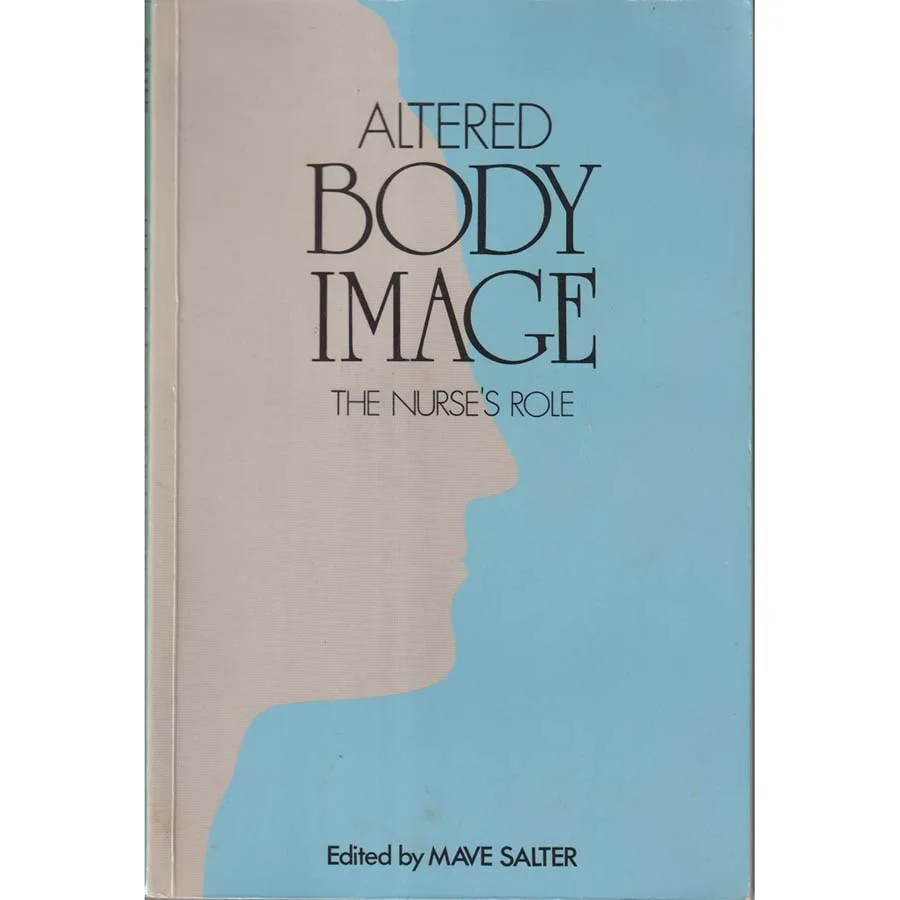
Altered Body Image - The Nurses Role
Publisher: John Wiley and Sons
Format: Paperback
ISBN: 9780471910428
Altered Body Image – The Nurse’s Role (1988) by Mave Salter. John Wiley & Sons. ISBN: 9780471910428. Condition: Good.
There are books that promise to transform your life in seven easy steps, usually by encouraging you to wake up at 5 a.m., drink something green and think positively at houseplants. This is not one of those books.
Instead, Altered Body Image – The Nurse’s Role deals with something considerably more real: how people cope when illness, injury or surgery changes the way they see themselves, and how nurses can help them navigate one of the most difficult aspects of recovery—the one that can’t simply be stitched, plastered or prescribed.
Published in 1988, this thoughtful work reminds us that healthcare has never been solely about repairing bodies. Long before "holistic care" became a favourite phrase in hospital mission statements and PowerPoint presentations, nurses already knew that treating the patient also meant understanding the person. A scar may heal in weeks; accepting it may take considerably longer.
Mave Salter explores the psychological and emotional impact of altered body image with sensitivity and practicality. Whether the changes result from surgery, burns, chronic illness, disability or other medical conditions, the book examines the nurse’s unique position in helping patients rebuild confidence, dignity and identity. It is quietly compassionate without becoming sentimental—a surprisingly difficult balance to achieve.
Of course, being a nursing textbook from the late 1980s, it also possesses that wonderfully reassuring air of academic seriousness. There are models, case discussions, professional frameworks and enough thoughtful analysis to remind you that nursing has always involved far more than handing out tablets and occasionally telling visitors that, no, they really can’t bring a takeaway curry into the intensive care unit.
Reading it today is also a fascinating reminder of how much healthcare has evolved—and how much has remained exactly the same. Medical technology has advanced dramatically since 1988. Hospital equipment now looks as though it belongs on a spacecraft, patient records have migrated into computers, and somebody somewhere is probably trying to solve everything with artificial intelligence. Yet the central challenge addressed by this book remains remarkably current: people recovering from illness still need empathy, understanding and professionals who recognise that emotional healing matters just as much as physical recovery.
For anyone interested in the history of nursing, medical education or healthcare ethics, this is an engaging snapshot of professional thinking during an important period. It is also a reminder that some of the best nursing practice has always relied less on technology than on conversation, observation and the simple ability to treat people as human beings rather than interesting collections of symptoms.
This copy is in good condition, making it an excellent addition to a nursing collection, a medical history library, or the shelves of someone who enjoys discovering specialist books that tackle important subjects with intelligence rather than melodrama. It may not be the obvious beach read—but then neither is Gray’s Anatomy, and that has done rather well for itself.
From Crappy Old Books—because hidden among the dusty shelves are books that quietly remind us of something important. Not every volume changes the world, but some help explain how compassionate people have been trying to make it a little kinder for decades. And that’s not a bad legacy for a second-hand book.
Keep browsing: See more Academic books Other books by Mave Salter
