


A New Face Of Hinduism - The Swaminarayan Religion
Publisher: Cambridge University Press
Format: Paperback
ISBN: 0521274737
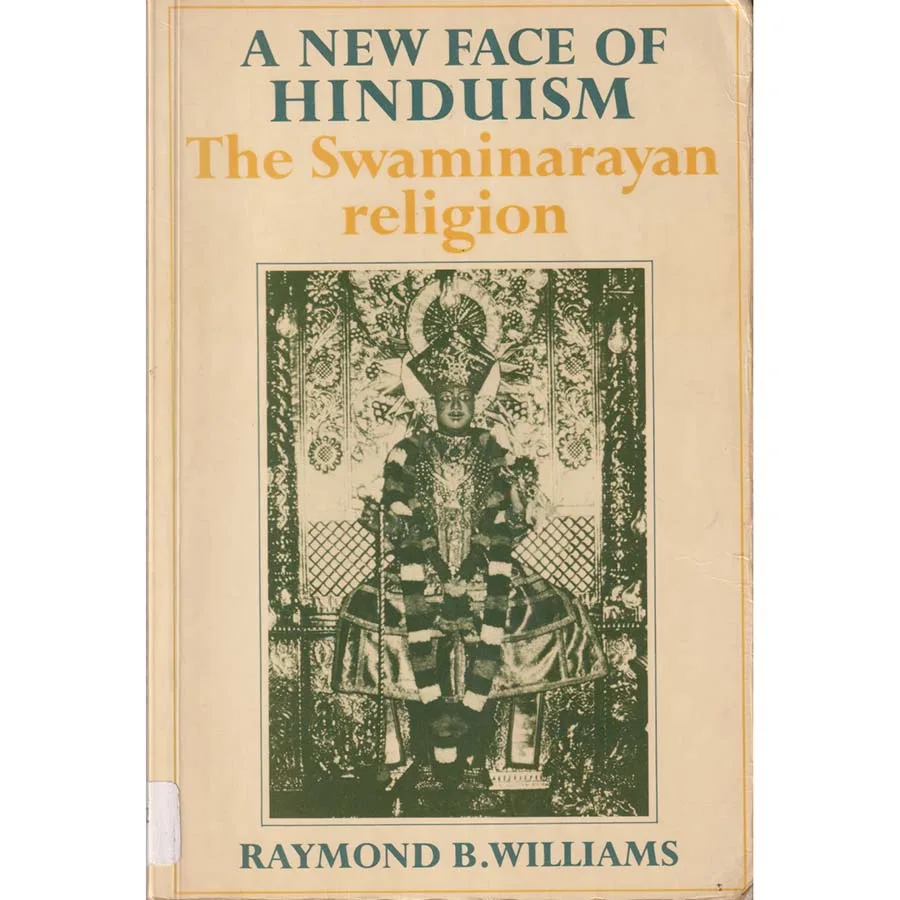
A New Face of Hinduism – The Swaminarayan Religion (1984) by Raymond B. Williams. Cambridge University Press. ISBN: 0521274737. Condition: Good.
One of the great joys of second-hand bookshops is discovering just how wonderfully specific academic publishing can become. Somewhere, at some point, a university committee sat around a table and enthusiastically agreed that what the world truly needed was a scholarly study of the Swaminarayan tradition within Hinduism. Thankfully, they were right.
In A New Face of Hinduism, Raymond B. Williams offers an accessible yet thoroughly researched examination of the Swaminarayan movement, one of the most influential reform traditions to emerge within Hinduism during the nineteenth century. Rather than treating Hinduism as a single, monolithic religion—which it emphatically isn’t—Williams explores how one particular movement developed its own beliefs, practices, organisation and identity while remaining firmly rooted within the broader Hindu tradition.
This is one of those books that quietly expands your understanding of the world. The Swaminarayan movement may be unfamiliar to many Western readers, yet today it has millions of followers across India, the United Kingdom, North America and beyond. If you’ve ever admired one of the magnificent Swaminarayan temples without knowing much about the community behind it, this book provides an informed and thoughtful introduction.
Published by Cambridge University Press in 1984, it comes from the reassuring era when academic books were expected to contain footnotes rather than hashtags, careful arguments rather than hot takes, and enough references to make postgraduate students simultaneously grateful and slightly nervous. Williams writes with the care of a scholar but without disappearing into impenetrable jargon, making this a genuinely readable work for anyone interested in comparative religion, South Asian history or the sociology of faith.
What is particularly refreshing is the book’s refusal to reduce a rich religious tradition into simplistic stereotypes. Instead, it examines history, doctrine, ritual, community life and the movement’s remarkable organisational success, allowing readers to appreciate both its distinctiveness and its place within the wider tapestry of Hindu belief. It is an excellent reminder that religions, like people, are generally far more complicated than the one-paragraph summaries they receive on the internet.
There is also something delightfully optimistic about books like this. They assume that readers are curious—that they might willingly spend an evening learning about a religious tradition they don’t belong to simply because understanding another culture is an interesting thing to do. It is an old-fashioned notion, perhaps, but one that has aged rather well.
This copy is in good condition, ready for its next curious owner. Whether you’re a student of religion, an academic, a traveller who likes to understand the places they visit, or simply someone who occasionally buys wonderfully obscure books because they looked lonely on the shelf, it deserves a place in your library.
From Crappy Old Books—because the world’s most interesting conversations usually begin with, "I picked up this rather obscure Cambridge University Press book..." and somehow end three hours later with everyone discussing theology over a cup of tea.
Keep browsing: See more Religion books Other books by Raymond B Williams
