


Microcar Mania - The Definitive History Of The Small Car
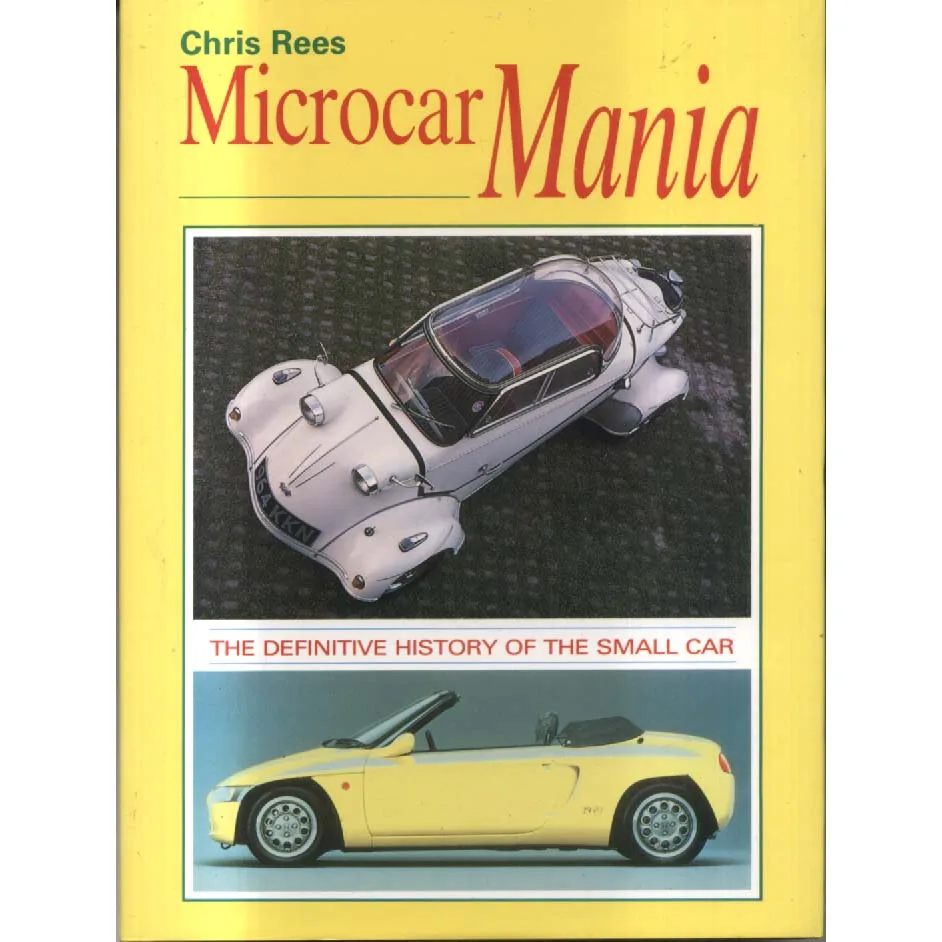
Publisher: Bookmarque Publishing
Format: Hardback
ISBN: 9781870519182
Microcar Mania – The Definitive History of the Small Car (1995) by Chris Rees
Bookmarque Publishing | ISBN: 9781870519182
Condition: Good
As sold by Crappy Old Books
If you’ve ever looked at a tiny bubble-shaped vehicle and thought, “That can’t possibly be a real car,” congratulations — you have already experienced the essential emotion of microcar appreciation: disbelief, followed by affection, followed by the quiet realisation that someone once drove one of these to work every day with a straight face and a packed lunch.
Microcar Mania is Chris Rees’ lovingly detailed celebration of the small car in all its brave, baffling glory — a definitive history of those glorious little machines that arrived when fuel was dear, roads were narrow, post-war budgets were tight, and “close enough” counted as engineering. This is the world of Isettas and Messerschmitts, Peel-sized improbabilities, three-wheel contraptions, door-on-the-front marvels, and vehicles that look like they should be dispensed with a coin slot and a gentle push.
And yet microcars weren’t jokes. They were solutions. They were mobility on a budget. They were ingenuity squeezed into ridiculous dimensions. They were the moment someone said, “I want the freedom of the open road,” and the open road replied, “Fine, but you’re taking half of it.”
Rees covers the full story: where these cars came from, why they existed, how different countries approached the same problem, and how manufacturers managed to produce machines that were part scooter, part aircraft cockpit, part optimistic tin box — and somehow still legal. It’s automotive history at its most entertaining, because the microcar era was essentially a giant experiment in how little “car” you can get away with while still calling it a car.
The joy is in the details: strange engines, strange layouts, strange styling decisions that now look like pop art. You get the cultural context too — the post-war need for cheap transport, the social shift from two wheels to four, and the way microcars became symbols of thrift, modernity, and occasionally quiet embarrassment. (There is a special kind of courage involved in arriving at a date in something that looks like a friendly toaster.)
And there’s something deeply likeable about microcars precisely because they’re not macho. They don’t posture. They don’t roar. They buzz. They toddle. They do their best. They’re the antidote to oversized modern motoring: a reminder that travel can be an adventure even at 40mph, and that “performance” is relative when you’re negotiating a hill with a tailwind and a prayer.
This copy is Good, meaning it’s been enjoyed as intended — flipped through, admired, perhaps used to settle an argument about which microcar had the front-opening door or which one could technically carry two adults if both adults were agreeable and not too attached to personal space.
Perfect for:
-
classic car fans who like the odd, the ingenious, and the adorable
-
anyone who enjoys the weirder corners of engineering history
-
readers who suspect the golden age of motoring might have been the age of smallness
From Crappy Old Books: because bigger isn’t always better. Sometimes the most lovable cars are the ones that look like they were designed during a tea break, built with optimism, and then driven heroically into history.
Keep browsing: See more Transport books Other books by Chris Rees
