


Joint Operating Agreements
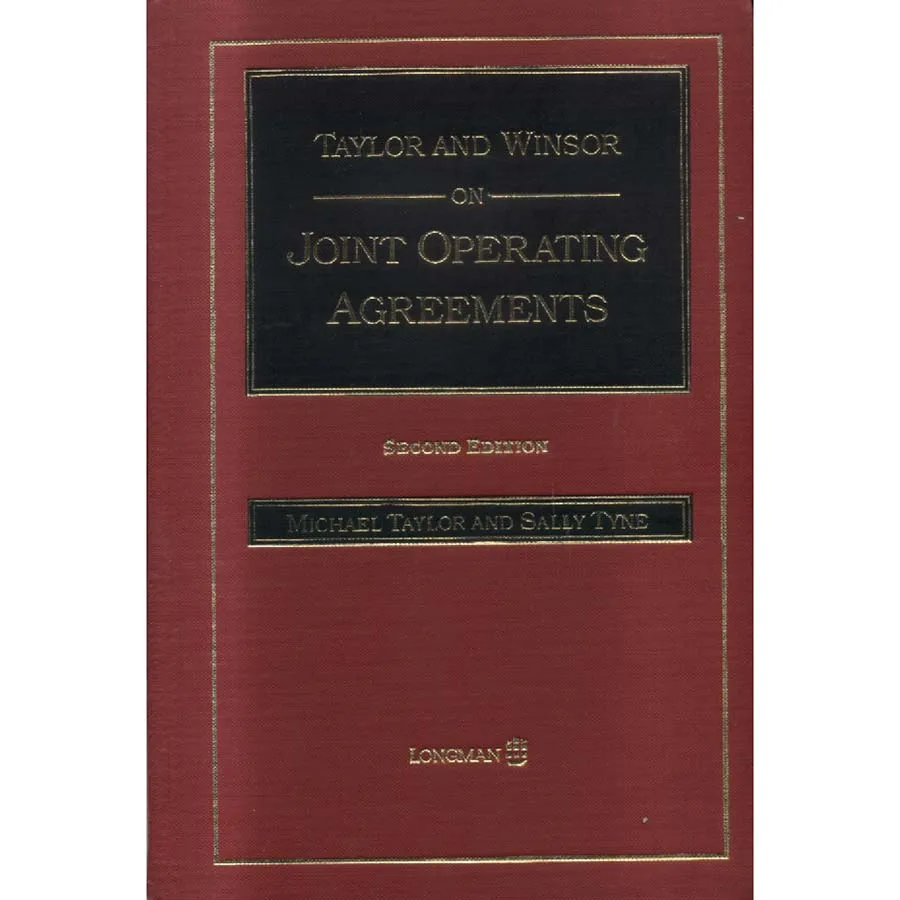
Publisher: Longman Law
Format: Hardback
ISBN: 0851218547
There are books that promise adventure, romance and mystery. Then there are books entitled Joint Operating Agreements, which boldly abandon all such frivolity in favour of the infinitely more exhilarating prospect of legally binding commercial arrangements. At first glance it sounds like the literary equivalent of watching paint negotiate with drying plaster. Look a little closer, however, and you’ll discover that contracts are where fortunes are made, businesses survive, and expensive arguments begin.
Published by Longman Law in 1992, this authoritative work by Michael Taylor and Sally Tyne examines one of the less glamorous—but undeniably essential—corners of commercial law. Joint operating agreements govern situations in which multiple parties attempt the remarkably optimistic exercise of working together while simultaneously protecting their own interests. It is, in essence, the legal science of cooperation, prepared on the perfectly reasonable assumption that one day somebody, somewhere, will disagree about almost everything.
The title deserves admiration for its complete lack of theatrical ambition. Joint Operating Agreements sounds exactly like what it is. There are no dragons, no haunted abbeys, no secret societies and, disappointingly, very few car chases. Instead, there are carefully considered legal principles, practical drafting guidance and the accumulated wisdom of people who have spent years ensuring that commercial ventures don’t collapse the first time someone asks, "Yes, but whose responsibility is that?"
For lawyers, business professionals and students of commercial law, this is precisely the sort of book that quietly earns its place on the shelf. It explores how collaborative ventures are structured, how risks are allocated, how responsibilities are defined and, perhaps most importantly, how everyone hopes to avoid spending the next five years introducing themselves in court. It is a reminder that behind every successful partnership lies an impressive quantity of paperwork, drafted long before anyone started shaking hands and smiling for the brochure.
There is something oddly reassuring about legal textbooks from this era. Published before email chains grew to the length of Victorian novels and before contracts routinely arrived as downloadable PDFs requiring seventeen separate passwords, books like this reflect a period when careful drafting still involved large desks, annotated precedents and enough paper to alarm a small forest. The legal principles remain remarkably relevant, even if the fax numbers have become charming historical curiosities.
This copy is in fine condition, having clearly escaped the fate that befalls many professional law books: being repeatedly opened at exactly the same page while someone mutters, "That can’t possibly be what clause 14.3 means." The binding is excellent, the pages are clean and crisp, and it presents beautifully. In truth, it looks rather more organised than many of the commercial ventures it was written to support.
As always, Crappy Old Books delights in rescuing volumes that prove not every important book announces its significance with dramatic titles or colourful dust jackets. Joint Operating Agreements may never become anyone’s favourite beach read, but it occupies that admirable category of books that quietly prevent expensive misunderstandings while asking for very little recognition in return. If you’ve ever wondered how businesses manage to cooperate without immediately descending into glorious contractual chaos, this book has been patiently explaining the answer since 1992—and, rather fittingly, does so with all the measured confidence of a solicitor who has already seen what happens when nobody reads it.
Keep browsing: See more Business books Other books by Michael Taylor and Sally Tyne
