


The Blue Bird
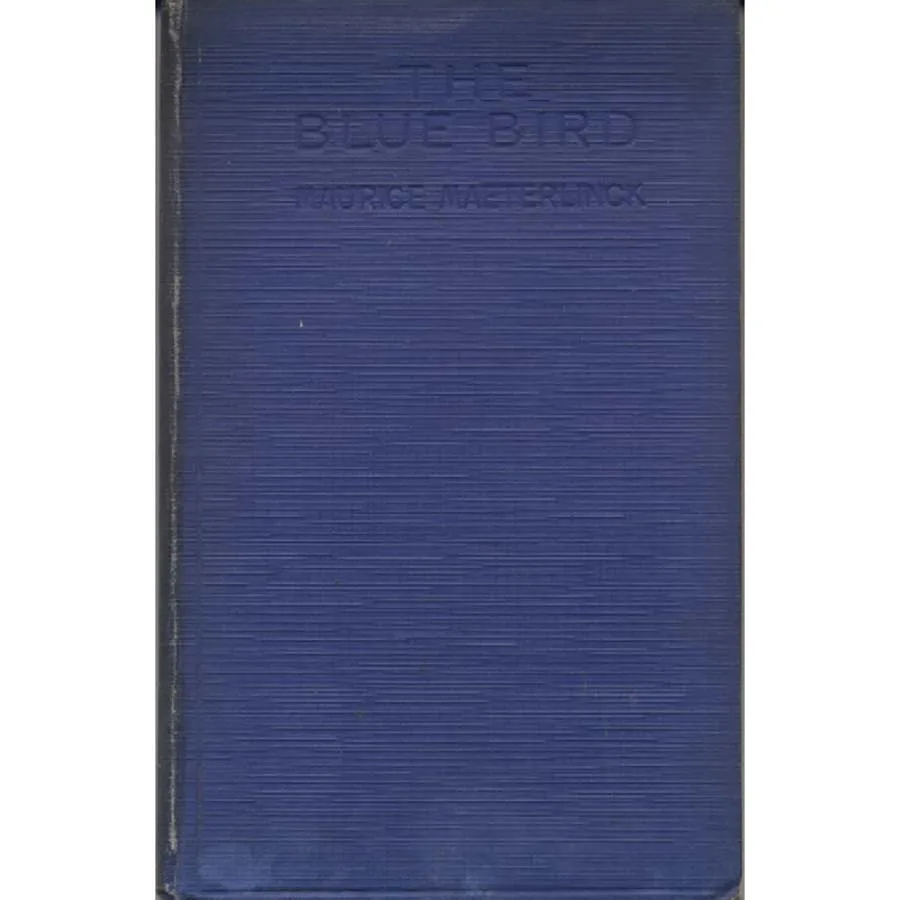
Publisher: Methuen and Co
Format: Hardback
ISBN: none
Some books promise adventure. Others promise romance. The Blue Bird promises a metaphysical expedition accompanied by animated household objects, philosophical woodland creatures and enough symbolism to keep generations of English literature students employed. Maurice Maeterlinck clearly looked at the humble fairy tale and decided it wasn’t nearly ambitious enough.
Published here in 1927 by Methuen and Co., this is one of those gloriously old-fashioned books that belongs to an era when authors believed children could cope perfectly well with existential questions, conversations with Light itself, and a lengthy search for the meaning of happiness before tea. Modern children’s books tend to involve dragons who discover self-esteem. Maeterlinck gives you Death, Memory, Time and the Soul of Bread. Standards have slipped.
The story follows brother and sister Tyltyl and Mytyl, who are sent by a mysterious fairy to find the elusive Blue Bird of Happiness. Naturally, they don’t simply visit the nearest aviary. Instead they wander through enchanted kingdoms populated by talking animals, personified elements, departed relatives, unborn children, mysterious forests and enough allegorical characters to fill an entire theatrical costume department. It is simultaneously charming, bewildering and quietly profound.
What makes the book so enjoyable is that it never quite behaves as you expect. Every time you think it has become an ordinary fairy story, somebody starts discussing the nature of existence or the hidden soul of a loaf of bread. It’s the literary equivalent of setting off for a pleasant country walk and accidentally stumbling into a philosophy lecture conducted by woodland spirits.
Maurice Maeterlinck, later awarded the Nobel Prize in Literature, wrote The Blue Bird at the height of the Symbolist movement, when writers were convinced that reality was merely the understudy for something much stranger happening behind the scenery. The play became an international sensation after its 1908 premiere and has since inspired films, operas, television adaptations and countless references to the phrase "the blue bird of happiness."
The language possesses that wonderfully theatrical elegance peculiar to the early twentieth century. Nobody simply enters a room when they can instead glide into a Palace of Night or converse with the embodiment of Fire. Every page feels as though it expects velvet curtains to part before it can properly begin.
And then there is the central irony, which has aged remarkably well. The entire adventure is a search for happiness across impossible realms, only to suggest that perhaps the thing everyone desperately seeks has been quietly waiting at home all along. It is either deeply comforting or the most elaborate way ever devised to tell readers they needn’t have left the house in the first place.
Our copy is in good condition, especially considering that it has spent almost a century patiently waiting for somebody willing to follow a pair of children into one of literature’s strangest dreamscapes. The pages have survived far longer than many modern self-help books explaining happiness in considerably more words and with significantly fewer talking cats.
An enchanting curiosity, a theatrical landmark, and proof that 1920s publishers had absolutely no fear of confusing their audience in the most beautiful possible way. Exactly the sort of wonderfully eccentric volume that Crappy Old Books delights in rescuing from obscurity.
Keep browsing: See more Fantasy books Other books by Maurice Maeterlinck
