


The Age Of Reformation
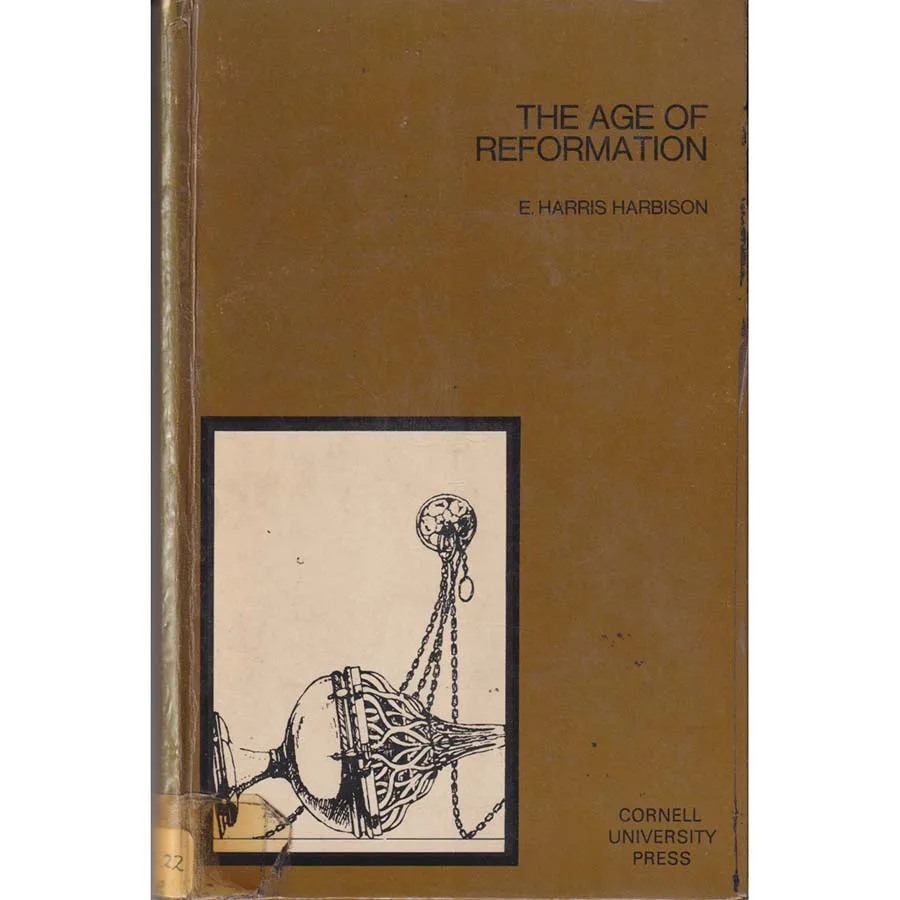
Publisher: Cornell University Press
Format: Hardback
ISBN: none
History has produced many arguments. The Reformation managed to produce enough arguments for several centuries, alter the religious map of Europe, reshape politics, transform culture and leave historians happily employed ever since. The Age of Reformation takes readers into this extraordinary period and attempts to explain how a theological dispute became one of the most significant turning points in Western history.
Written by E. Harris Harbison and published by Cornell University Press, this respected historical study examines the turbulent centuries in which Europe was transformed by religious reform, political upheaval and intellectual change. It is the sort of book that reminds readers that history is rarely tidy and that human beings are remarkably talented at disagreeing with one another on a grand scale.
The Reformation itself began with questions about doctrine and church practice but quickly expanded into something far larger. Kings, princes, scholars, clergy and ordinary citizens all found themselves drawn into debates whose consequences would echo for generations. Harbison guides readers through this complex landscape with clarity and scholarly insight.
There is a delightful irony in the period. Many of the individuals involved believed they were restoring certainty and truth. The result was an explosion of competing interpretations, new denominations and arguments vigorous enough to keep Europe occupied for centuries. Few historical movements have generated so much disagreement in pursuit of agreement.
What makes the book particularly rewarding is its broad perspective. Harbison does not limit himself to theology alone. Politics, culture, society and intellectual life all receive attention, creating a fuller picture of a continent undergoing profound change. Readers gain an understanding not merely of what happened, but why it mattered.
The author also possesses the enviable ability to make complex history accessible. The Reformation can sometimes appear intimidating, populated by unfamiliar names and intricate disputes. Harbison succeeds in making these events understandable without sacrificing their complexity.
Modern readers may be surprised by how contemporary some of the themes feel. Questions about authority, individual conscience, institutional power and the circulation of information remain remarkably relevant. The technologies have changed. Human nature appears to have remained reassuringly consistent.
There is also something fascinating about watching ideas reshape the world. Armies and governments may dominate many historical narratives, but the Reformation demonstrates the extraordinary power of beliefs. Few periods illustrate more clearly how ideas can influence politics, culture and everyday life.
As a work of mid-twentieth-century scholarship, the book also serves as a historical artefact in its own right. Readers encounter not only the Reformation itself but also the perspective of a historian writing about it during the 1960s, adding an extra layer of intellectual interest.
This 1967 Cornell University Press edition remains in good condition and comes from the shelves of Crappy Old Books. It is an ex-library copy and bears some underlining from a previous reader, suggesting that somebody took the subject seriously enough to engage directly with the text. Consider it evidence of a conversation across the decades rather than a flaw.
An excellent acquisition for students of history, theology, religious studies or anyone interested in one of the most consequential periods in European history. Scholarly, engaging and richly informative, The Age of Reformation offers a compelling journey through an era when ideas changed the world and nobody could quite agree on what the new world ought to look like.
Keep browsing: See more History books Other books by E Harris Harbison
