


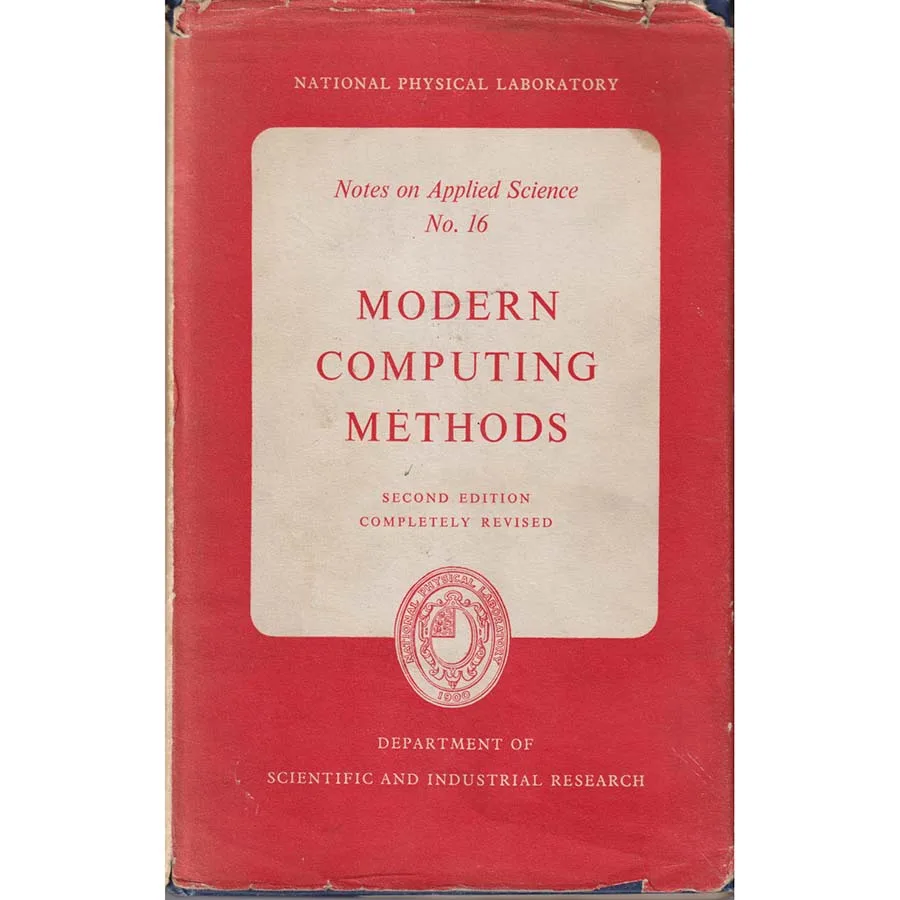
Modern Computing Methods
Publisher: HMSO
Format: Hardback
ISBN: none
Modern Computing Methods (1961) by the National Physical Laboratory
Publisher: HMSO
ISBN: None
Condition: Fair
Today, "modern computing" usually involves artificial intelligence, cloud infrastructure, quantum processors and heated debates about whether your phone is secretly listening to you.
In 1961, however, Modern Computing Methods represented the cutting edge of human achievement and the thrilling future of electronic calculation. Published by the National Physical Laboratory and HMSO, this volume emerged from a world in which computers occupied entire rooms, consumed enough electricity to illuminate a small village and possessed less memory than a modern digital wristwatch.
Within these pages lies the state of the art as Britain understood it during the early years of the computer age. Here are the methods, theories and techniques that helped transform computing from an obscure scientific curiosity into the force that would eventually dominate modern life. The authors could scarcely have imagined that future readers might browse this book while carrying a supercomputer in their pocket and simultaneously complaining that a website takes three seconds to load.
What makes this volume so fascinating is that it captures computing before computers became ordinary. Every calculation was precious. Every programme was carefully planned. Every minute of machine time mattered. There were no endless software updates, no pop-up notifications and certainly no desperate attempts to remember forgotten passwords.
The National Physical Laboratory occupied a pivotal place in British computing history. This was the institution associated with pioneering developments such as the ACE computer, inspired by Alan Turing’s groundbreaking work. Consequently, this book is more than a technical manual. It is a glimpse into the intellectual workshop where some of Britain’s earliest computing ideas were forged.
Our copy is in Fair condition, which feels strangely appropriate for a book devoted to machines. It bears the signs of a working life rather than a decorative one. Like an ageing mainframe that has spent decades faithfully crunching numbers in a government laboratory basement, it may show evidence of use, but it remains entirely capable of performing its intended function.
Collectors of computing history, engineers, programmers and anyone fascinated by the origins of the digital world will find much to enjoy here. The terminology may occasionally seem quaint and some of the "modern" methods are now old enough to claim a pension, but that is precisely the appeal.
Reading this book today is a little like opening a time capsule from the dawn of the Information Age. The future described within eventually arrived, just not quite in the form anyone expected. The room-sized computers became pocket-sized. The specialist users became everyone. The calculations became invisible. And somehow humanity ended up using unimaginable computational power to share photographs of cats.
A remarkable relic from the age when computing was genuinely modern, optimism about technology was almost limitless, and the digital revolution still fitted neatly between the covers of a government publication.
Keep browsing: See more Academic books Other books by National Physical Laboratory
