


The Zimmermann Telegram
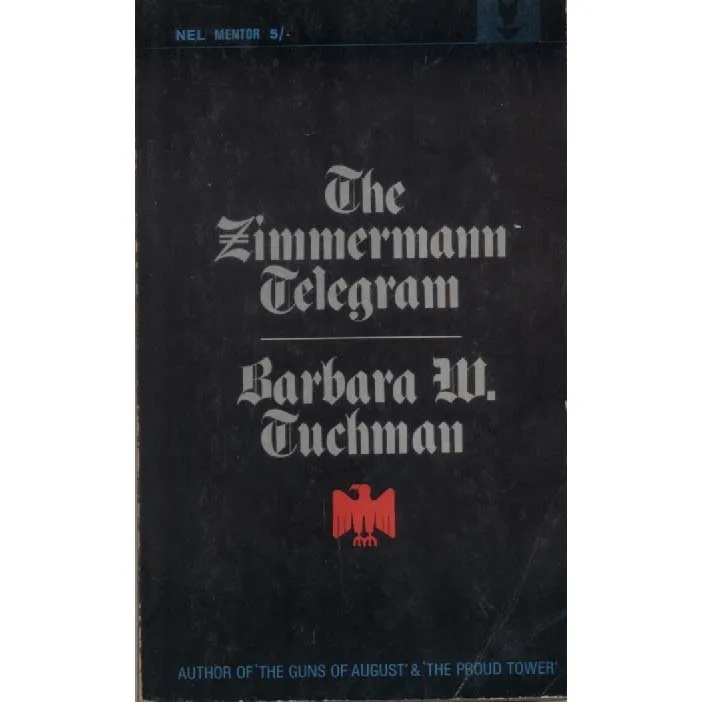
Publisher: NEL Mentor
Format: Paperback
ISBN: none
Few documents in history have managed to alter the course of world events while simultaneously sounding like the plot of a rather far-fetched spy thriller. The Zimmermann Telegram is one of them. The remarkable fact, however, is that it actually happened.
In this engrossing work, Barbara W. Tuchman takes a single intercepted message and unravels an extraordinary tale of diplomacy, espionage, codebreaking, international intrigue, and political miscalculation. In January 1917, German Foreign Secretary Arthur Zimmermann sent a secret telegram proposing an alliance with Mexico in the event of war with the United States. The British intercepted it, deciphered it, and somehow had to convince the Americans it was genuine without revealing that they were reading German communications. What could possibly go wrong?
As Tuchman demonstrates, quite a lot.
The result is a narrative that often feels less like a history book and more like an espionage novel in which nobody has informed the participants that future generations will be studying their mistakes. Governments scheme, diplomats manoeuvre, intelligence officers perform feats of ingenuity, and politicians attempt to navigate events that are rapidly spiralling beyond anyone’s control.
One of the book’s enduring pleasures is its reminder that history is frequently shaped not by grand theories but by individual decisions, misunderstandings, lucky breaks, and moments of astonishing bad judgement. The telegram itself was intended to remain secret. Instead, it became one of the most famous diplomatic messages ever sent, helping to influence American public opinion and ultimately contributing to the United States entering the First World War.
Barbara Tuchman, one of the twentieth century’s finest popular historians, writes with such clarity and pace that even readers who normally regard diplomatic history as a form of punishment may find themselves unexpectedly captivated. She possesses the rare ability to make government paperwork feel exciting, which is a skill that should perhaps have earned its own medal.
This 1967 NEL Mentor edition comes from a period when serious historical works were routinely squeezed into affordable paperbacks and carried around by students, teachers, military enthusiasts, and curious readers who somehow survived without podcasts explaining everything first. There is no ISBN because the publishing world had not yet fully embraced the idea that every object required a unique identifying number and several filing cabinets.
Condition is Good. The book remains in commendably sound shape despite chronicling a century-old communications disaster. The pages are clean, the binding remains respectable, and the contents are considerably more reliable than the security arrangements employed by certain governments featured within.
Perfect for readers interested in the First World War, espionage, diplomacy, intelligence history, and the comforting realisation that bureaucratic blunders long predate the invention of email. It is a story of secrets, codes, unintended consequences, and the remarkable capacity of human beings to create international crises through a combination of confidence and optimism.
As sold by Crappy Old Books: because sometimes the most influential message in history wasn’t a declaration of war, but a confidential telegram that really should have stayed confidential.
Keep browsing: See more History books Other books by Barbara W Tuchman
