


Vanity Fair
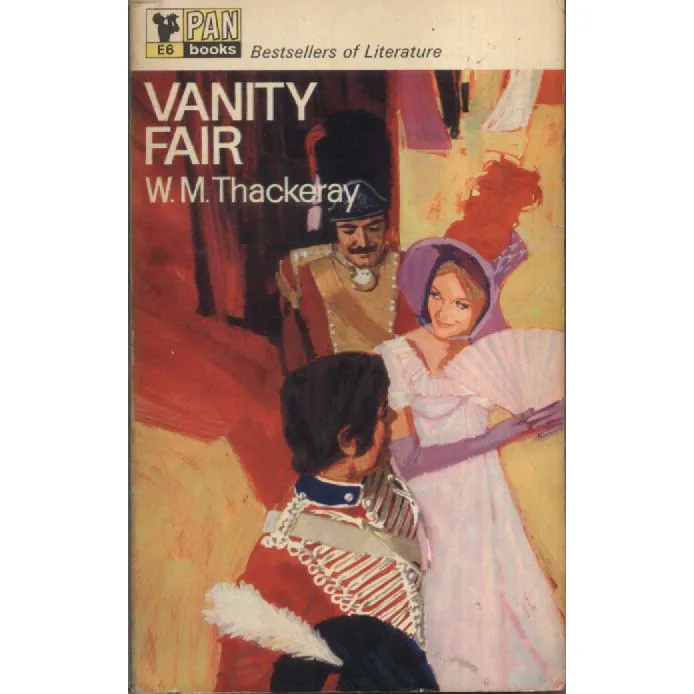
Publisher: Pan Books
Format: Paperback
ISBN: none
There are novels that politely invite you into another world, and then there is Vanity Fair, which more or less kicks the door open, steals the silverware, flirts outrageously with your relatives and then spends 800 pages explaining why society was doomed from the start. William Makepeace Thackeray’s great rolling carnival of greed, ambition, hypocrisy and social climbing remains one of the most entertainingly savage books ever written, which is impressive considering most of its characters would be absolutely unbearable at a dinner party.
This 1967 Pan Books edition arrives from that glorious period when publishers believed classic literature should be stuffed into cheap paperbacks and sold to commuters, students and mildly depressed men smoking Players No.6 on railway platforms. The result is wonderfully democratic: one of the towering monuments of Victorian fiction repackaged as something you could read on a damp coach trip to Margate while eating a slightly flattened cheese sandwich.
And what a book it is. Becky Sharp storms through English society with the energy of somebody trying to survive a particularly vicious season of The Apprentice while armed only with wit, charm and a near-complete absence of moral restraint. Around her swirls a vast parade of foolish aristocrats, sentimental idiots, military men, social climbers and wealthy bores, all desperately trying to maintain dignity in a world where dignity is clearly an optional extra. Thackeray called it “A Novel Without a Hero,” which was probably Victorian code for “everybody in this book is at least slightly awful.”
What makes Vanity Fair so oddly modern is how little people have changed. The hairstyles may have altered and fewer people now perish dramatically on campaign in Belgium, but the essential machinery of status anxiety remains gloriously intact. Everyone still wants money, admiration, influence and advantageous connections; they simply use LinkedIn instead of carriages. Becky Sharp herself would probably thrive online. One suspects she could destroy three marriages and launch a wellness brand before lunchtime.
The Pan edition has exactly the right atmosphere for this sort of thing. The cover almost certainly promises more glamour than the average Victorian drawing room could realistically provide, while the pages carry that familiar slightly browned texture suggesting decades of earnest reading, abandoned resolutions to “finally read the classics,” and at least one university essay written at 2am under catastrophic caffeine conditions. These old Pan classics have a kind of battered intellectual dignity about them, like retired schoolmasters who secretly know where all the bodies are buried.
Condition-wise, this copy is listed as good, which in the world of Crappy Old Books means it has survived remarkably well considering the average life expectancy of paperback classics is somewhere between “holiday casualty” and “accidentally donated to a church fete in 1984.” It may show signs of age, because so do we all. Unlike many modern books, however, it has acquired character rather than merely damage.
So if you fancy a sprawling Victorian masterpiece full of vanity, manipulation, war, snobbery, heartbreak and social absurdity — essentially human civilisation compressed into paperback form — then Vanity Fair is waiting patiently for you. Cynical, funny, humane and gloriously observant, it remains proof that people have always been ridiculous, merely with better tailoring in the nineteenth century.
Keep browsing: See more Literary Classics books Other books by WM Thackeray
