


Gone To Earth
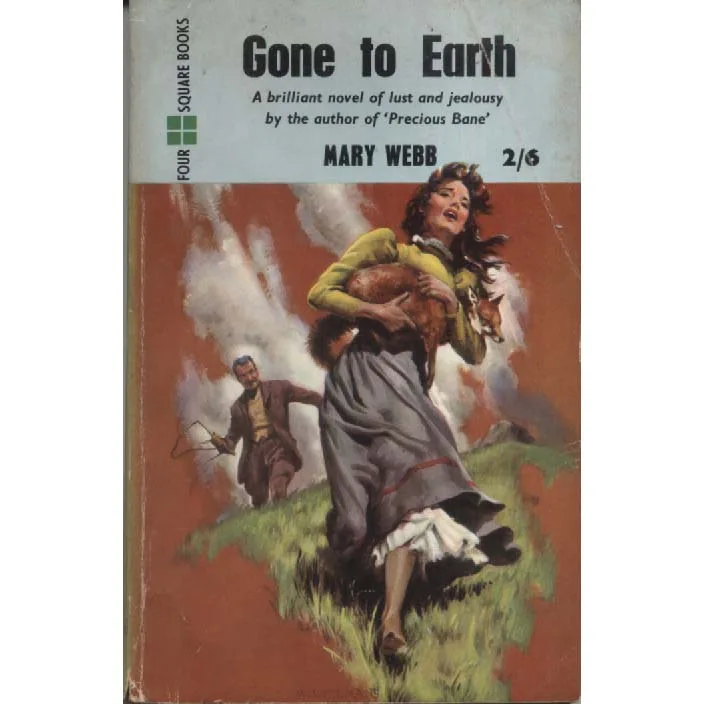
Publisher: Four Square Books
Format: Paperback
ISBN: none
Gone to Earth is one of those gloriously intense English novels where everybody seems permanently on the verge of either spiritual revelation, romantic catastrophe or running barefoot across a hillside while overwhelmed by feelings. Mary Webb does not really believe in moderation. Nature is wild, emotions are volcanic and civilisation appears to be a thin temporary inconvenience imposed upon people who would frankly rather be communing with foxes.
Published here in a beautifully period 1959 Four Square Books edition, Gone to Earth drags the reader deep into the Shropshire countryside where passion, superstition and doomed yearning drift about the hills like weather systems. At the centre is Hazel Woodus, part wild-child, part tragic heroine, accompanied by animals, instincts and the sort of untamed energy Victorian society generally attempted to suppress using stern conversations and upholstery.
The countryside itself practically becomes a character. Not the sanitised “country living” version involving tasteful kitchens and artisanal jam. This is older, stranger rural England full of woods, silence, folklore and the lurking suspicion that civilisation may not entirely hold together once you leave the railway line behind.
Mary Webb writes nature with such feverish intensity that the landscape seems constantly moments away from developing opinions of its own. Trees brood. Hills threaten. Weather arrives emotionally. Modern literary fiction often prides itself on restraint. Gone to Earth instead throws open the windows and lets all the symbolism gallop directly into the room.
And honestly, it is magnificent for that.
The novel occupies that fascinating literary territory where everybody’s emotions are so enormous they become almost geological. People do not simply fall in love. They descend into elemental states of longing and doom while surrounded by owls. It is wildly sincere in a way modern fiction rarely dares attempt anymore, which makes reading it now strangely refreshing.
There is also the wonderful irony that this intensely earthy, untamed novel survived into the late-1950s paperback era where it could suddenly be purchased beside bus stations and smoked over by commuters in raincoats. One imagines bewildered readers expecting a gentle countryside romance and instead receiving pagan emotional thunderstorms in prose form.
This Four Square edition almost certainly possesses the exact atmosphere one hopes for from an old literary paperback. Slightly mellowed pages. A softening spine. Perhaps the faint scent of dust, damp air and old shelves. Condition is Good, which in Crappy Old Books terms means it has weathered the decades with commendable resilience and remains entirely ready for another generation of emotionally overwhelmed readers.
There is no ISBN because books of this vintage still moved through the world under ancient magical systems involving railway kiosks, instinct and the quiet assumption that readers would somehow find them.
A lush, haunting and gloriously overgrown classic of rural passion and English mysticism. Equal parts love story, folklore fever dream and emotional landslide, wrapped in a perfectly atmospheric old Four Square paperback that already feels half reclaimed by nature itself.
Keep browsing: See more Fiction books Other books by Mary Webb
