


The Thames Valley
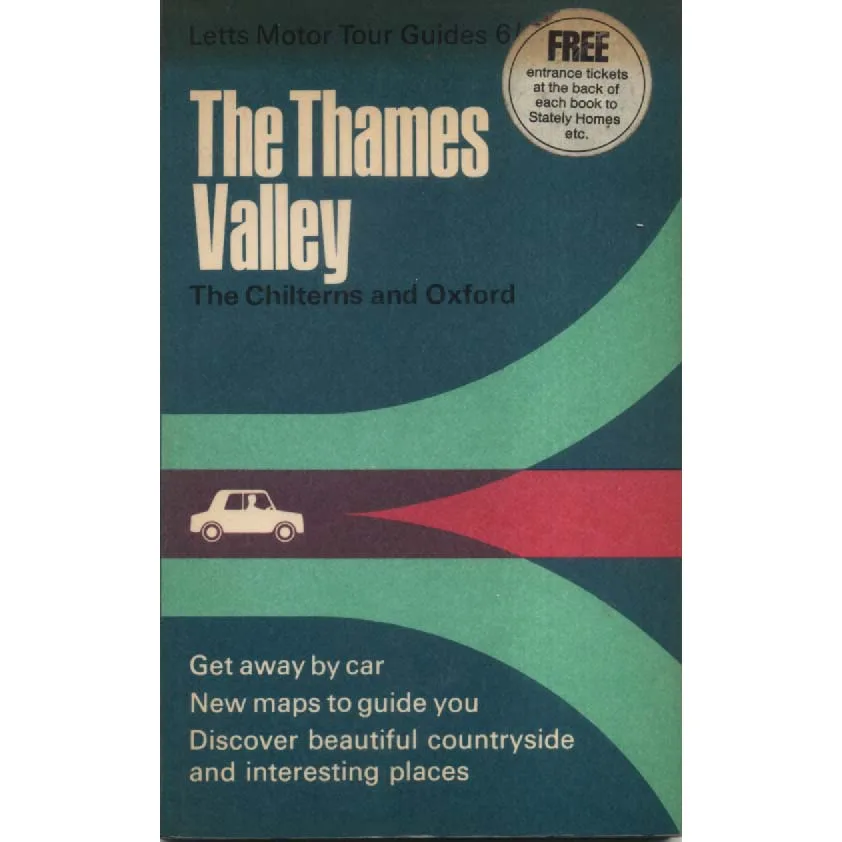
Publisher: Charles Letts
Format: Paperback
ISBN: none
The Thames Valley is one of those beautifully earnest late-1960s regional guides that assumes the average reader longs to spend their leisure time contemplating market towns, river bends and Norman churches with almost spiritual intensity. Written by F.R. Banks and published by Charles Letts in 1969, it captures southern England at that peculiar moment just before modern Britain fully arrived with business parks, ring roads and Costa Coffee.
This is not the Thames Valley of corporate headquarters and commuter despair. This is the older Thames Valley. The one of sleepy riverside pubs, damp meadows, ancient bridges and villages where everyone appears to own either a Labrador or unresolved opinions about parish councils.
The book drifts affectionately through Berkshire, Oxfordshire and Buckinghamshire with the calm confidence of an era when guidebooks still believed scenery itself was enough entertainment. Nobody here is “maximising their weekend getaway.” Instead, readers are gently encouraged to appreciate church towers, old coaching inns and stretches of river where absolutely nothing dramatic happens for several centuries.
And somehow, that becomes oddly wonderful.
There is a marvellous slowness to books like this. Modern travel writing tends to scream at you about hidden gems and unforgettable experiences before directing you towards a burger van decorated with fairy lights. The Thames Valley simply points at a market town and says, in effect, “Quite pleasant, really.” The understatement becomes almost hypnotic.
What also makes the book fascinating now is the accidental social archaeology. The Thames Valley of 1969 still carried traces of old England everywhere. Steam trains had only recently vanished. Motorways still felt futuristic. Villages had proper village shops instead of artisanal bakeries selling £5 focaccia. Reading it now feels like stepping into a country that existed just before modernity accelerated everything into retail parks and traffic.
Naturally, the guide takes churches extremely seriously. Mid-century British topographical books always do. Entire pages may be devoted to fonts, memorial brasses and the subtle beauty of perpendicular tracery. One senses the author quietly hoping readers will share his enthusiasm for medieval masonry, and after a while, against all odds, you probably will.
As a 1969 Letts publication, this edition likely possesses exactly the sort of gentle wear one hopes for. Condition is Good, meaning it has probably travelled in glove compartments, sat in holiday cottages and accompanied several respectable afternoons beside the river. Expect softened corners, mellowing paper and perhaps a faint scent of old maps, raincoats and forgotten picnic baskets.
There is no ISBN because books of this period still inhabited that wonderfully analogue world where local guides simply appeared in bookshops and trusted readers to find them through mild curiosity and proximity to a railway station.
A quietly charming time capsule of the English landscape before everything became branded, optimised and accompanied by online reviews. Perfect for lovers of rivers, old towns and the deeply British art of finding profound satisfaction in a reasonably attractive church followed by tea.
Keep browsing: See more Travel books Other books by FR Banks
