


Tring 1951 - 2000
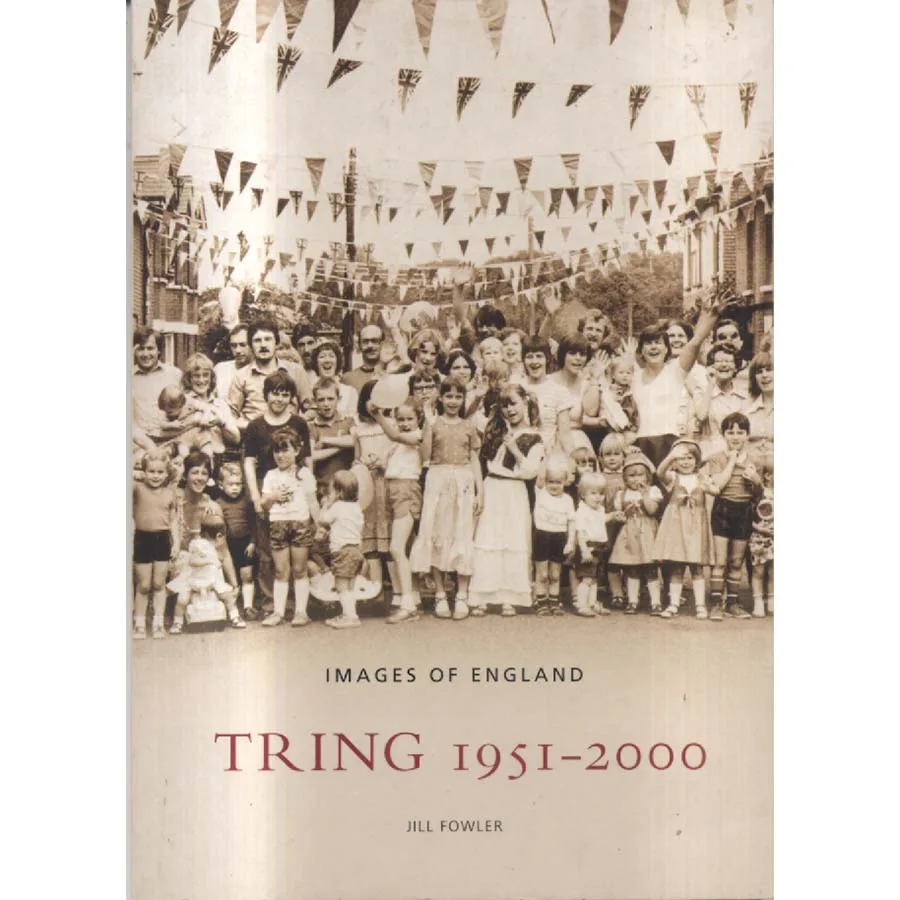
Publisher: Tempus
Format: Paperback
ISBN: 9780752446202
There is something wonderfully, almost aggressively British about a book devoted to the history of Tring between 1951 and 2000. Not London. Not Paris. Not “Europe in Crisis.” Just Tring. A market town quietly getting on with things while the rest of the world obsessed over nuclear annihilation, decimalisation, flared trousers and the internet.
And honestly, that is precisely why this book is so fascinating.
Jill Fowler’s Tring 1951–2000 is one of those gloriously specific local history books that begins innocently enough and then quietly absorbs your entire evening. You pick it up expecting a few old photographs and perhaps a paragraph about a bypass, and suddenly you are emotionally invested in the fate of long-demolished shopfronts and wondering whether Woolworths really did look happier in 1963. It is the literary equivalent of accidentally spending three hours on Google Street View comparing bus stops.
The real charm here lies in the ordinary details. Not ordinary in the dull sense, but ordinary in the deeply human sense. The changing high street. The vanished cafés. The fashions people once considered acceptable. The municipal optimism of post-war Britain slowly colliding with the strange fluorescent consumerism of the 1980s and 1990s. Somewhere in these pages there is probably a photograph of a parade nobody remembers attending, featuring at least one man proudly dressed like a geography teacher on holiday in Benidorm.
Books like this also perform a quiet act of rebellion against modern life. Today every moment is photographed, uploaded, tagged, filtered and forgotten within six minutes. But local history books preserve the things nobody thought important enough to preserve at the time. A bakery sign. A road before redevelopment. A scout troop posing awkwardly beside a church hall radiator. Tiny fragments of normal existence which, decades later, become oddly moving.
And of course there is the delicious irony that places once dismissed as unfashionable or unremarkable now inspire deep nostalgia. The 1970s precinct with concrete planters and brown tiles may have looked mildly depressing at the time, but now it appears in sepia-toned books accompanied by phrases like “a vanished era.” Humanity has an extraordinary ability to sentimentalise municipal paving.
The Tempus publishing style deserves praise too. These books have a very particular energy: sturdy, photograph-heavy, deeply sincere and produced with the quiet determination of people who understand that local memory matters. They are less concerned with grand historical theories and more concerned with making sure someone remembers where the old cinema used to be before it became a carpet warehouse.
Condition-wise, this copy is listed as Good, meaning it has survived admirably despite likely being consulted repeatedly by people saying things like, “Oh look, that used to be Johnson’s bakery,” before launching into a forty-minute monologue nobody under thirty can properly follow. A proper local history book should look faintly handled. If it appears untouched, one suspects it has failed in its civic duty.
As sold by Crappy Old Books, this volume occupies that perfect cultural territory somewhere between historical archive and cheerful charity-shop treasure. The sort of book you buy thinking, “This might be mildly interesting,” only to find yourself later pointing excitedly at black-and-white photographs of traffic systems.
If you enjoy nostalgia, disappearing Britain, old shopfronts, post-war social history, or simply the strange comfort of seeing how ordinary people lived before everyone carried a surveillance device in their pocket, Tring 1951–2000 is an unexpectedly compelling little time machine. At the very least, it will make you deeply suspicious of modern supermarket signage and oddly sentimental about municipal flower displays.
Keep browsing: See more History books Other books by Jill Fowler
