


Nature - 2019 March - Vol 567 No 7747
Publisher: Nature
Format: Paperback
ISBN: 9770028083095
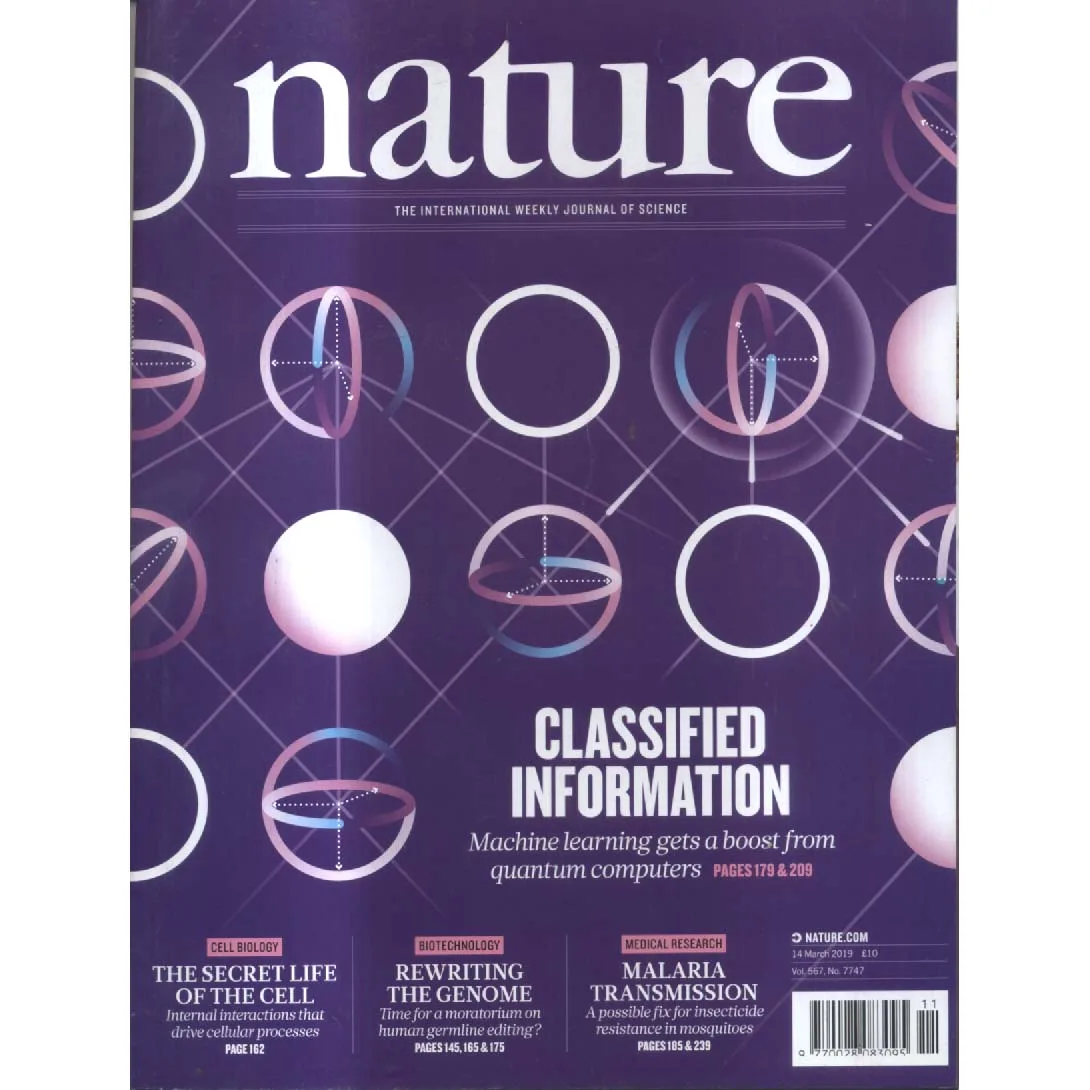
There are magazines that gently introduce readers to science. Nature – March 2019, Vol. 567 No. 7747 instead plunges directly into the phrase “CLASSIFIED INFORMATION” beneath floating quantum diagrams and calmly informs humanity that machine learning is now receiving assistance from quantum computers. Which feels less like a magazine feature and more like the beginning of a highly expensive technological uprising.
The cover design is gloriously abstract: glowing circles, orbital forms, and interconnected geometries floating against deep purple space like a classified presentation accidentally left on a physicist’s desk. Somewhere inside these pages are scientists attempting to combine machine learning with quantum computation — effectively merging two of the most intimidating phrases available to modern civilisation.
There is something wonderfully ironic about the headline “Classified Information”. It sounds vaguely bureaucratic and dull, when in reality the issue is discussing systems so advanced that most readers will begin nodding thoughtfully somewhere around paragraph three while internally admitting they no longer understand what dimension the article occupies.
And naturally, because this is Nature, the issue immediately broadens into a full survey of humanity attempting to redesign life, intelligence, and disease simultaneously. Alongside quantum-enhanced machine learning are features on cellular interactions, human germline genome editing, and mosquito resistance to insecticides. Few publications can pivot from quantum computing to malaria transmission without causing intellectual whiplash.
The “Secret Life of the Cell” article is especially delightful because biology increasingly resembles an invisible metropolitan system operating beneath ordinary existence. Cells are no longer simply “cells”; they are dynamic societies engaged in constant communication, negotiation, transport, and structural management. Humanity spent centuries imagining the body as machinery, only to discover it is more like a densely populated biochemical city with poor documentation.
Meanwhile, “Rewriting the Genome” captures the unmistakable late-2010s scientific atmosphere: the growing realisation that humanity had acquired tools capable of editing life itself, accompanied immediately by urgent debates about whether perhaps everyone should pause for a moment and think carefully before proceeding.
Then there are the mosquitoes — eternal reminders that evolution remains one of the most relentless arms races in existence. Every time humanity invents a new method of control, nature quietly begins work on a workaround.
One of the enduring pleasures of Nature is its extraordinary composure. “Machine learning gets a boost from quantum computers,” it says politely, as though combining quantum mechanics with artificial intelligence is an entirely routine administrative upgrade and not the sort of thing that would terrify a 1980s science-fiction writer.
Owning a copy of Nature also creates a very particular atmosphere. It suggests someone deeply engaged with frontier science and perhaps capable of discussing quantum algorithms over coffee without visibly panicking. Whether you actually read the full quantum-computing paper or simply admired the elegant cover while feeling pleasantly underqualified is entirely secondary.
This March 2019 issue now feels like a perfect time capsule from the late-2010s technological mood — a period when AI, genetics, and quantum research all accelerated simultaneously, creating the growing sense that humanity was rapidly inventing tools whose implications nobody fully understood yet.
Condition is listed as Good, meaning this copy has survived the traditional hazards faced by elite scientific journals: overloaded backpacks, coffee-adjacent office desks, abandoned “serious reading” piles, and years spent intimidating perfectly intelligent people from bookshelves.
A superb issue for science enthusiasts, AI-curious readers, quantum-computing obsessives, or anyone who enjoys magazines that casually combine cellular secrets, genome editing, and quantum-enhanced machine learning into one beautifully intimidating package.
Keep browsing: See more Nature Journal books Other books by Nature
