


Nature - 2019 May - Vol 569 No 7756
Publisher: Nature
Format: Paperback
ISBN: 0770028083095
There is something wonderfully optimistic about a copy of Nature. It assumes, with absolute confidence, that at some point during your busy modern life you will sit down and casually absorb several civilisation-altering scientific discoveries between cups of tea. Nature – May 2019, Vol. 569 No. 7756 is no exception, presenting itself less as a magazine and more as an intellectual endurance event disguised as light reading.
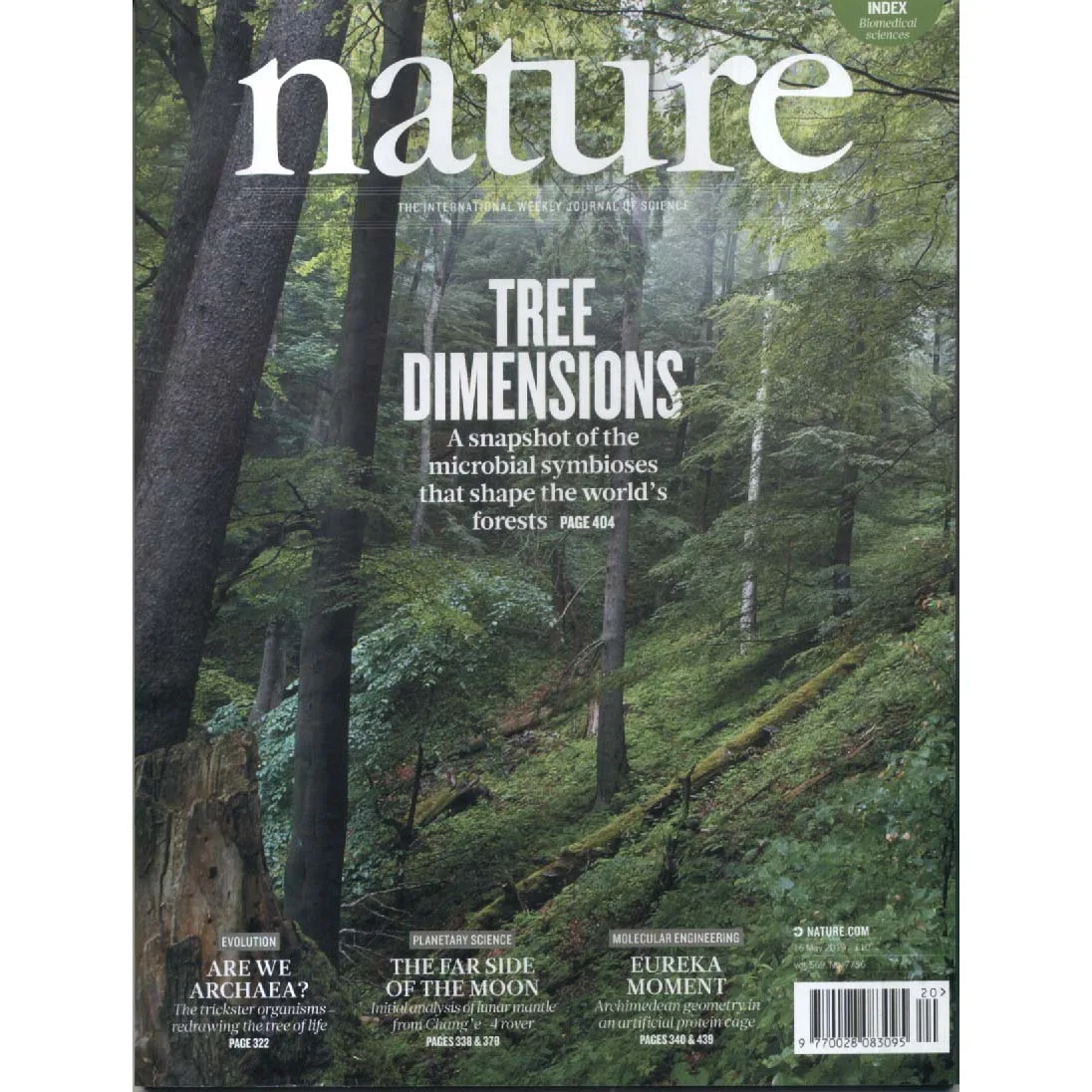
This issue’s majestic forest cover and the headline “TREE DIMENSIONS” immediately suggest a calming woodland ramble. In reality, it is about the microbial symbioses shaping the world’s forests, because modern science can no longer simply let trees be trees. No, now every oak apparently contains a hidden biochemical metropolis engaged in molecular negotiations beyond the comprehension of ordinary mortals. Somewhere beneath those peaceful leaves, fungi are conducting transactions more sophisticated than most governments.
Elsewhere inside, researchers are redrawing the tree of life with “trickster organisms”, proving once again that biology is essentially a never-ending process of scientists discovering that everything they confidently stated twenty years ago was wrong. Meanwhile, planetary scientists explore “the far side of the Moon”, a phrase that still sounds faintly illegal, while molecular engineers revisit Archimedes to redesign proteins because apparently even ancient Greek mathematicians are now being drafted into biotech start-ups.
The beauty of Nature is that it always maintains a tone of serene professionalism whilst describing ideas that should really cause collective existential panic. One page calmly discusses microbial networks sustaining forests; another implies we are rearranging life itself at the molecular level. Yet the layout remains wonderfully restrained, as though these are perfectly ordinary developments one might ponder before gardening.
And then there is the performative ownership factor. A copy of Nature on a shelf signals tremendous intellectual aspiration. Visitors see it and immediately assume you possess opinions on lunar mantle composition or microbial ecology. In truth, many owners have read approximately half a paragraph before thinking, “Good heavens,” and wandering off to look at biscuits. That is entirely part of the Nature experience.
This 2019 issue also captures a very particular scientific mood: late-decade confidence mixed with creeping awareness that the planet, biology, and perhaps reality itself are vastly more interconnected and complicated than previously imagined. Trees are ecosystems, microbes are puppet masters, proteins are geometry projects, and the Moon still refuses to stop being mysterious despite humanity having literally visited it half a century earlier.
Condition is listed as Good, meaning this copy has survived the hazards faced by serious scientific periodicals: overfilled university bags, coffee stains from graduate students operating on four hours of sleep, and bookshelves owned by people who insist they are “just catching up on some light research”. It remains perfectly respectable and ready to once again intimidate readers with its dense brilliance.
An ideal acquisition for scientists, ex-scientists, woodland enthusiasts, people who miss the era when journals still felt gloriously physical, or anyone who enjoys owning publications that quietly imply they might understand protein geometry if given enough uninterrupted weekends.
Keep browsing: See more Nature Journal books Other books by Nature
