


Ethics
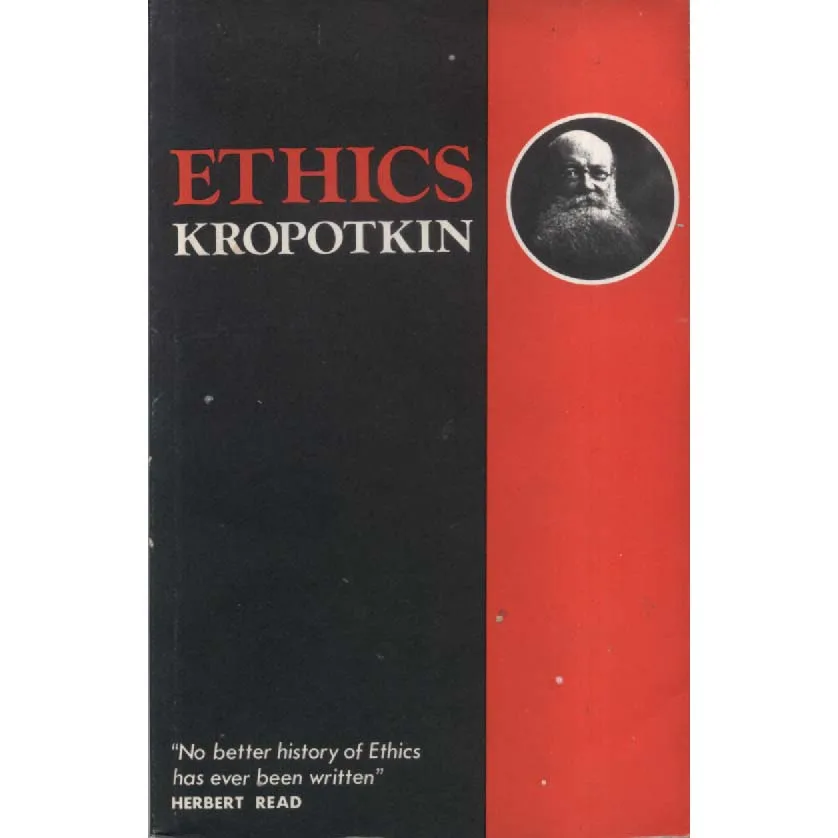
Publisher: Prism Press
Format: Paperback
ISBN: 0904727041
Prince Peter Kropotkin remains one of history’s more gloriously improbable intellectual combinations: aristocrat, geographer, revolutionary, anarchist theorist and relentless critic of authority, all wrapped into a single bearded Russian nobleman who looked as though he ought to be presiding over an imperial estate while instead arguing for the abolition of hierarchical power structures altogether. Naturally, his book Ethics is not exactly a quiet guide to polite behaviour and thank-you notes.
This is philosophy with revolutionary intent. Kropotkin sets out to explore where morality actually comes from and, inconveniently for kings, empires, prisons and assorted ruling classes, concludes that human cooperation and mutual aid are far more natural foundations for ethical life than fear, coercion or institutional authority. One senses he would have had complicated opinions about modern corporate management seminars.
The book emerges from the intellectual turbulence of the late nineteenth and early twentieth centuries, when industrial capitalism, empire, scientific theory and political radicalism were colliding at alarming speed. Kropotkin attempts nothing less than a rethinking of morality itself. Ethics, he argues, does not descend magically from divine decree or state enforcement but develops organically through social cooperation, solidarity and shared human experience.
Which sounds remarkably uplifting until one remembers he was writing amid political repression, class conflict and revolutionary upheaval across Europe. There is a wonderful irony in the image of this deeply thoughtful moral philosophy being developed by a man viewed by many governments as a dangerous subversive. Somewhere in the background of all those elegant ethical arguments lurks the possibility of barricades.
Unlike some philosophers who appear to write primarily to punish graduate students, Kropotkin remains surprisingly readable. His arguments possess warmth, conviction and a genuine belief in humanity’s capacity for cooperation. Even when one disagrees with him, there is something deeply refreshing about encountering a thinker who seriously believed people might organise society around mutual support rather than endless competition and bureaucratic misery.
The title itself carries a faintly misleading simplicity. Ethics sounds like the sort of textbook one might encounter in a mildly depressing university seminar room. In reality, this is a passionate attempt to connect morality, science, history and politics into a vision of human life fundamentally at odds with authoritarian structures. It is philosophy written by someone who genuinely thought ideas mattered enough to change civilisation.
There is also an unintentionally comic historical contrast between Kropotkin’s idealism and the century that followed. Reading his hopeful belief in cooperation while knowing the twentieth century is waiting impatiently around the corner with mechanised warfare, totalitarianism and nuclear weapons gives the entire work a poignant and strangely moving quality.
An important and fascinating read for anyone interested in anarchism, political philosophy, radical thought, social theory or the long human tradition of trying to imagine better ways for society to function than “a handful of powerful people telling everyone else what to do.”
Condition: Good. Sold by Crappy Old Books, where revolutionary philosophy, aristocratic anarchists and ethically ambitious nineteenth-century optimism continue to coexist peacefully on the shelves.
Keep browsing: See more Academic books Other books by Prince Kropotkin
