


Kobenhavnske Skildringer
Publisher: Gyldendal
Format: Paperback
ISBN: none
There is something wonderfully sophisticated about old Scandinavian literary books that appear to contain nothing more dramatic than people quietly walking through cities and observing one another, yet somehow manage to leave readers emotionally dismantled by page seventy-three. Herman Bang specialised in precisely this sort of elegant psychological ambush, and Københavnske Skildringer (“Copenhagen Sketches”) is a perfect example of the art.
Bang was one of Denmark’s great literary impressionists, which essentially means he could describe a room, a glance or a rainy street corner with such delicate emotional precision that entire human tragedies seemed to unfold silently between paragraphs. Modern fiction often arrives waving explosions and plot twists around like a man trying to attract attention in a pub. Herman Bang merely describes a woman standing near a window and somehow makes civilisation itself feel fragile.
This collection turns its gaze toward Copenhagen — not the aggressively cheerful modern Copenhagen of bicycle tourism, minimalist cafés and suspiciously expensive pastries, but an older city of gas lamps, fading respectability, nervous bourgeois etiquette and emotionally complicated people trying very hard not to embarrass themselves in public.
The title itself is beautifully understated. Copenhagen Sketches. No dramatic subtitle. No “A Gripping Scandinavian Saga.” Just sketches. Readers in the early and mid-20th century were apparently trusted to discover literary greatness without needing to be informed every six seconds that the book was “unputdownable.”
Naturally, Herman Bang’s Copenhagen is not merely a place but a mood. Streets, drawing rooms and theatres become stages upon which loneliness, social aspiration and quiet desperation perform their subtle little dances beneath carefully maintained appearances. Scandinavian literature has always understood that emotional catastrophe is considerably more devastating when delivered politely.
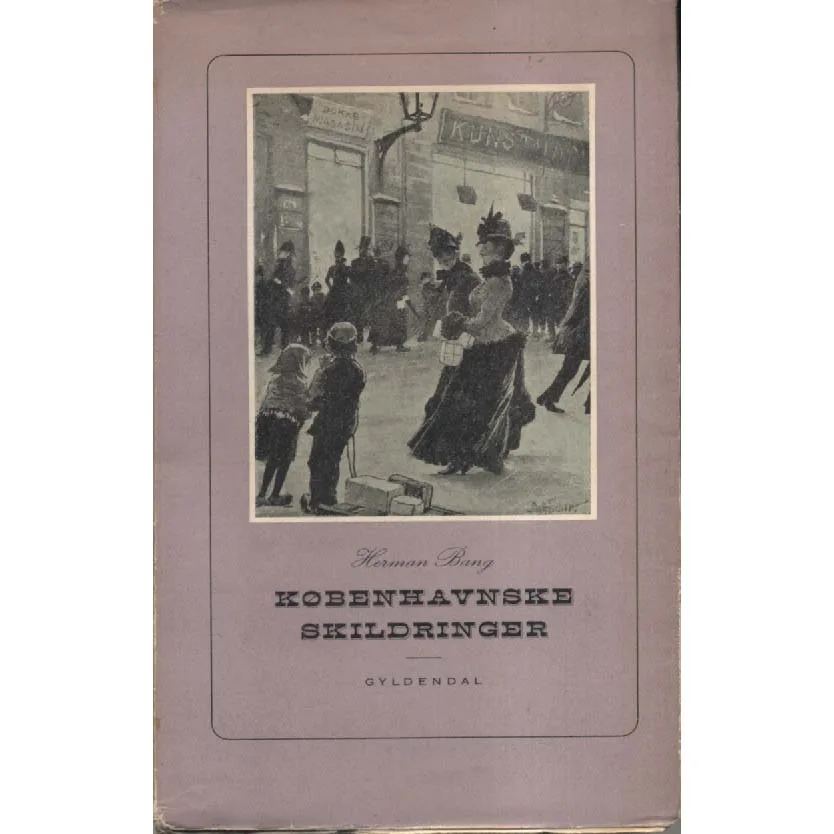
The cover art only deepens the atmosphere: elegantly dressed figures drifting through an old city street while children watch nearby, all rendered with the sort of nostalgic melancholy that makes one instinctively want to drink coffee beside a rainy window and reconsider every life choice ever made.
There is also something deeply ironic about how modern readers now approach books like this. Once considered serious literary portraits of urban society, they now function partly as cultural archaeology from a vanished European world where people communicated through implication, posture and devastating silences rather than sending each other exhausted emoji combinations at midnight.
Bang himself remains fascinating because he wrote with extraordinary sensitivity toward outsiders, loneliness and emotional fragility during an era when society generally preferred not to discuss such things directly. Beneath the elegant prose lies a sharp observer of human vulnerability, quietly dissecting the performance of everyday life long before psychology became fashionable dinner-party conversation.
This 1954 Gyldendal edition carries all the charm of mid-century Scandinavian publishing: restrained design, tasteful typography and the reassuring sense that books were still considered objects of cultural importance rather than temporary algorithmic distractions. It feels exactly like the sort of volume one might discover on the shelf of a quietly intellectual aunt who smoked discreetly and possessed unexpectedly strong opinions about theatre.
Condition-wise, this copy is listed as Good, meaning it has survived admirably despite decades of possible ownership by literature students, melancholic intellectuals and people who sincerely believed books should improve the soul rather than merely entertain commuters for forty minutes.
Today, Københavnske Skildringer survives as both literature and atmosphere: a beautifully preserved glimpse into old Copenhagen and the emotionally intricate world Herman Bang captured so delicately. Even sitting unopened on a shelf, it radiates cultivated sadness in the most stylish possible manner.
An excellent acquisition for lovers of Scandinavian literature, city writing, literary impressionism or anyone who occasionally suspects modern life could benefit from more quiet observation and significantly fewer productivity podcasts.
Keep browsing: See more Danish books Other books by Herman Bang
