


Rytteren
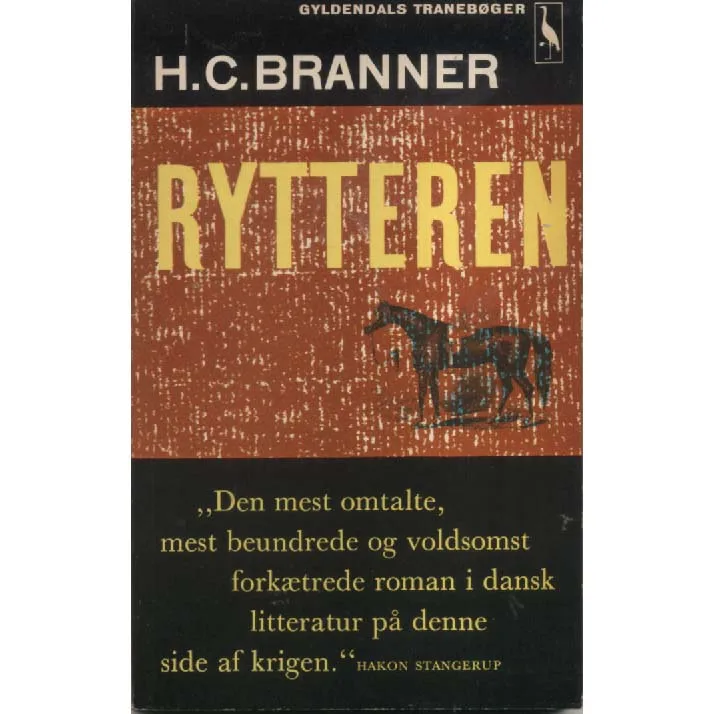
Publisher: Gyldendals Traneboger
Format: Paperback
ISBN: none
There is a particular kind of mid-century Scandinavian novel that arrives looking deceptively slim and manageable, only to proceed calmly into the darkest corners of human psychology while everyone involved smokes heavily and avoids direct emotional communication. H.C. Branner’s Rytteren (“The Rider”) belongs magnificently to that tradition.
This is not the sort of book where cheerful things happen to cheerful people beneath reassuring narrative arcs. No, this is post-war Danish literature: psychologically intense, morally ambiguous and deeply suspicious of easy answers. Scandinavian writers of this period seemed collectively determined to examine the fragile machinery of civilisation itself, preferably during rain.
Branner was one of Denmark’s major literary figures, known for exploring fear, guilt, identity and the uneasy condition of modern humanity after the Second World War. Which means that somewhere inside Rytteren there is almost certainly emotional devastation unfolding beneath apparently civilised surfaces while somebody stares meaningfully out of a window wondering whether existence itself has become fundamentally unstable.
The title is wonderfully enigmatic. The Rider. Who is the rider? What is being ridden? Is it symbolic? Existential? Traumatised? Scandinavian literature rarely rushes to explain itself, preferring instead to let readers drift gradually into a beautifully written psychological crisis while pretending they are fully keeping up.
And then there is the cover. Magnificent. Stark typography, distressed textures and a lonely horse-like figure standing against a field of burnt orange existential unease. Modern publishing departments would spend six months and seventeen meetings trying unsuccessfully to recreate this level of accidental intellectual cool. Instead, 1960s Denmark simply produced it naturally while carrying on with its day.
The quote on the front only adds to the drama:
“The most discussed, most admired and most violently condemned novel in Danish literature on this side of the war.”
Which is exactly the sort of endorsement that makes one immediately want to own the book even before understanding a single word of Danish. Violently condemned Scandinavian literary fiction is almost always worth investigating.
Naturally, there is something deeply ironic about novels like this surviving into the modern era. Once treated as serious interventions into post-war cultural and moral debate, they now sit quietly in secondhand bookshops waiting to be rediscovered by people who mostly encounter Scandinavia through flat-pack furniture, detective dramas and minimalist lamps.
Yet books like Rytteren preserve an entirely different Scandinavia: intellectual, anxious, artistically ambitious and profoundly concerned with the psychological consequences of modern life. Reading Branner is less like consuming entertainment and more like being invited into an extended philosophical discomfort conducted with impeccable literary taste.
This 1967 Gyldendals Tranebøger edition also carries that lovely aura of European student-paperback respectability. One can easily imagine it travelling around universities in coat pockets beside cigarettes, lecture notes and deeply complicated romantic relationships. It almost certainly spent part of the 1970s on a shelf next to Sartre, Kafka and records nobody danced to.
Condition-wise, this copy is listed as Good, meaning it has survived decades of intellectual handling remarkably well. Somewhere along the line it may have belonged to a literature student determined to understand post-war alienation before eventually becoming distracted by wine, politics and emotional catastrophe of their own.
An ideal acquisition for collectors of Scandinavian literature, existential fiction, beautifully designed European paperbacks or anyone who occasionally feels modern novels could benefit from more psychological dread and significantly fewer blurbs calling things “unputdownable.”
Keep browsing: See more Fiction books Other books by HC Branner
