


Udvalgte Noveller
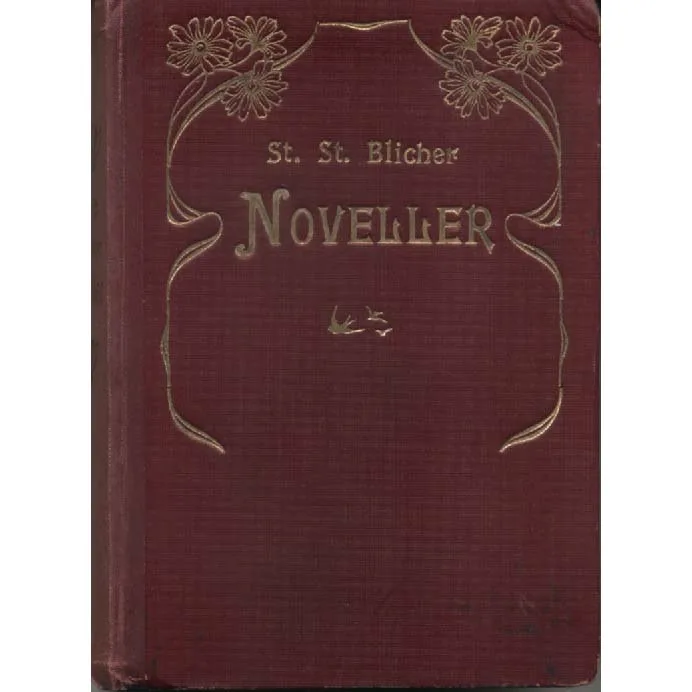
Publisher: Kunstforlaget
Format: Hardback
ISBN: none
There is something deeply satisfying about old Scandinavian books that look as though they have survived both existential despair and several minor European political upheavals without particularly caring. Udvalgte Noveller (“Selected Short Stories”) by Steen Steensen Blicher is precisely that sort of object: a handsome 1909 Danish literary volume from an age when books were built with alarming seriousness and authors were expected to understand the human soul rather than merely produce content.
Blicher himself occupies a towering place in Danish literature, often regarded as one of the great pioneers of the Scandinavian short story. Which sounds very respectable and academic until one realises that his stories are frequently filled with loneliness, tragedy, doomed emotions, rural hardship and the general unsettling atmosphere that Scandinavia later turned into an international cultural export.
Long before Nordic Noir detectives started wandering moodily across television screens in wool jumpers, Blicher was already perfecting the art of Scandinavian melancholy. His world is populated by isolated people, emotional misunderstandings and vast landscapes that seem personally invested in reminding humanity of its fragility. Cheerful beach reading this is not. Beautiful, haunting literary craftsmanship? Absolutely.
The title itself, Udvalgte Noveller, has that wonderful old-world confidence about it. No marketing gimmicks. No subtitles promising “A Gripping Scandinavian Masterpiece.” Just “Selected Stories.” Readers in 1909 were apparently expected to possess enough cultural discipline to discover greatness without being shouted at by a fluorescent sticker declaring it “Life-Changing.”
And physically, what a magnificent survivor this is. Early 20th-century continental hardbacks possess a kind of quiet dignity modern publishing rarely attempts anymore. Decorative cloth boards, gilt lettering and thick pages combine to create an object that feels less like a disposable paperback and more like something rescued from a candlelit library belonging to a melancholic professor who drank coffee at alarming hours.
The irony, of course, is glorious. In 1909 this would have been a respectable literary volume for educated readers in Copenhagen and beyond. Today it sits wonderfully out of time: too old for mass-market modernity, too literary for casual consumption and far too elegant to compete with algorithm-driven bestseller culture. It belongs to that endangered species known as “books purchased because people believed reading serious literature was part of becoming a proper human being.”
Naturally, there is also something faintly intimidating about owning old Scandinavian literature in the original Danish. Even people who cannot read a word of it immediately feel more intellectual simply by placing it visibly on a shelf. Visitors will assume profound things about your inner life. They may even suspect you understand existential philosophy or own a collection of Ingmar Bergman films.
Condition-wise, this copy is listed as Good, which is remarkably respectable for a book published while Edward VII was still king and the Titanic had yet to discover its unfortunate design limitations. The fact that it has survived more than a century of readers, shelves, house moves and changing literary fashions only adds to its charm. Somewhere along the way it may have sat in schoolrooms, private libraries or quietly disapproving Scandinavian sitting rooms while generations contemplated life’s sadness beneath oil lamps.
Today, books like this function partly as literature and partly as historical artefacts from a slower intellectual world. Even untouched, it has presence. Opened and read, it offers entry into the roots of Scandinavian literary tradition before the region became globally synonymous with flat-pack furniture, detective dramas and aggressively sensible urban planning.
An excellent acquisition for collectors of antique literature, Scandinavian books, decorative bindings or anyone who believes books should occasionally look as though they might contain either timeless wisdom or a tragic fjord-related emotional collapse.
Keep browsing: See more Danish books Other books by Steen Steensen Blicher
