


Working With Words - Literacy Beyond School
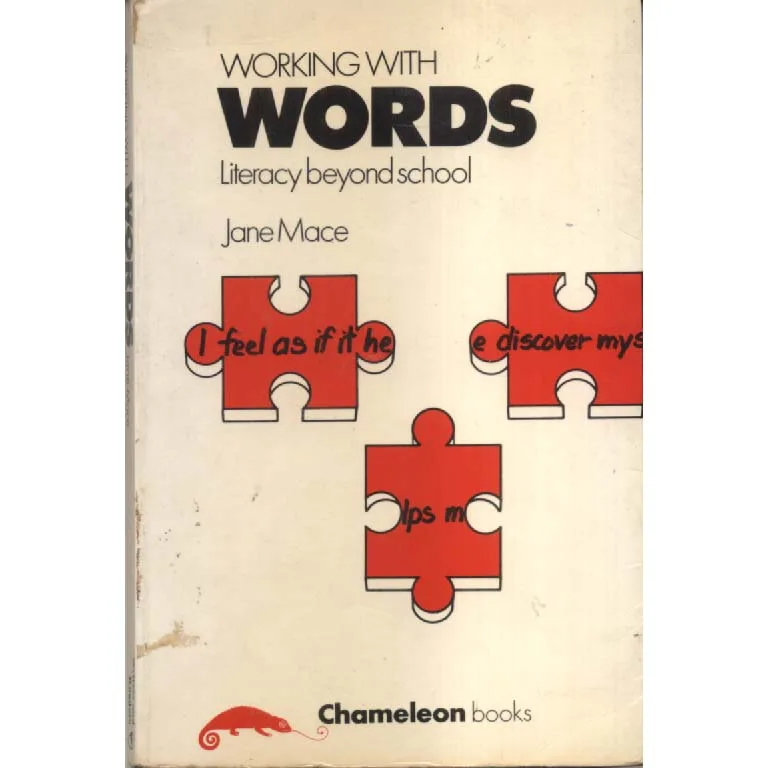
Publisher: Chameleon Books
Format: Paperback
ISBN: 0906495016
There are books about literacy that assume it begins and ends somewhere between the classroom door and the final exam, and then there are books that quietly point out that people have been getting on with reading and writing perfectly well in all sorts of places without waiting for permission. Working with Words – Literacy Beyond School (1979) by Jane Macw, published by Chameleon Books, belongs very much to the latter category: a thoughtful, slightly subversive look at what happens when language escapes the timetable.
At its core, the book suggests that literacy is not a neatly packaged skill to be delivered in lessons and assessed in tidy increments, but something lived, adapted, and occasionally improvised in everyday life. Letters are written, forms are filled, signs are interpreted, conversations shift between spoken and written forms, and all of this takes place quite happily outside the carefully managed environment of formal education. The implication, gently but persistently made, is that people may be more capable than they are often given credit for, even when they are not doing it “properly.”
Macw’s approach is observational rather than prescriptive. She looks at how words function in real contexts, how meaning is negotiated, and how individuals engage with language in ways that may not align with official expectations but are nonetheless effective. It is the kind of perspective that does not so much argue as demonstrate, leaving the reader to reconsider where literacy actually resides and who gets to define it.
Published in 1979 by Chameleon Books—a name that feels quietly appropriate given the subject—the volume has the practical, slightly earnest appearance of a book intended to be used rather than admired. This particular copy is listed as Good, which in Crappy Old Books terms suggests it has been opened, handled, and perhaps consulted by someone with an interest in how people actually use language, rather than how they are told they should. The cover may show some wear, the spine may have softened, and the pages may carry the faint traces of previous engagement—nothing dramatic, just the reassuring signs of a book that has existed in the real world.
It is not a book that demands to be read in one go. More likely, it will be dipped into, set aside, and returned to when a particular idea or example comes to mind. Whether you approach it from an educational perspective, a sociological curiosity, or simply the sense that literacy might be a broader concept than it is sometimes allowed to be, it offers a quietly persuasive alternative view.
A measured, thoughtful exploration of language in everyday life, and a perfectly respectable way to suggest that your reading habits extend into territory where words are not just learned, but lived—often in ways that do not require a classroom to make them meaningful.
Keep browsing: See more Academic books Other books by Jane Macw
