


America
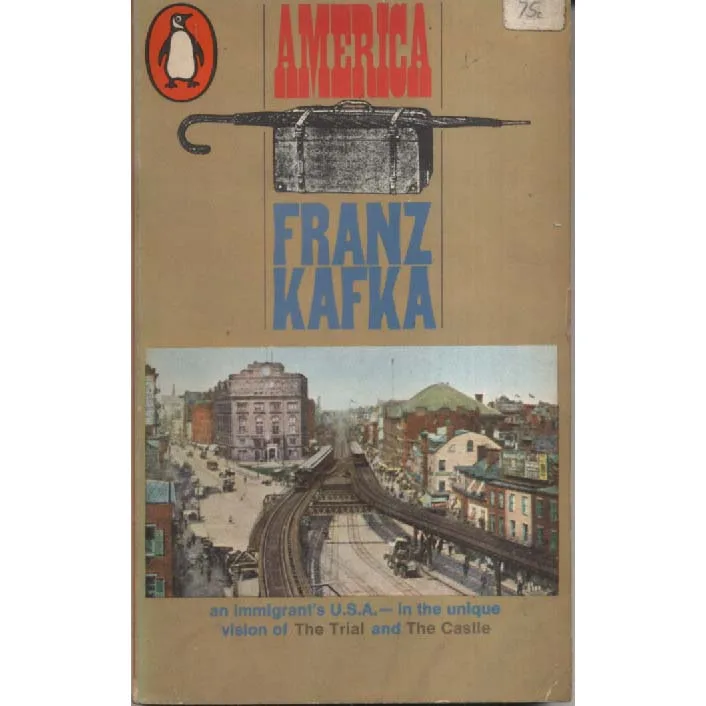
Publisher: Penguin Books
Format: Paperback
ISBN: none
There are novels about opportunity, and then there are novels that take the idea of opportunity, examine it from a distance, and quietly wonder what happens when it refuses to behave as advertised. America (1967) by Franz Kafka, published by Penguin Books, occupies that slightly awkward space: a book that begins with promise and proceeds, with admirable consistency, to complicate it.
Kafka’s America is not quite the America one might expect. It is a place of vastness, possibility, and systems that seem to operate with their own internal logic, occasionally acknowledging the presence of the people moving through them. The story follows a young man who arrives in this new world and attempts, with varying degrees of success, to find his place within it. From there, the narrative unfolds in a series of episodes that feel at once grounded and faintly unreal, as though reality has been adjusted just enough to keep everything slightly off balance.
The tone is characteristically Kafkaesque—calm, precise, and just a little disconcerting. Situations arise that appear straightforward, only to become increasingly complex, while authority figures and institutions present themselves with confidence, though not always with clarity. The result is a novel that feels less like a journey towards a destination and more like a sequence of encounters, each one offering the possibility of resolution without ever quite delivering it.
Published in 1967, this Penguin edition has the familiar, understated design of the period: practical, readable, and entirely unconcerned with drawing attention to itself. This particular copy is listed as Good, which in Crappy Old Books terms suggests it has been opened, handled, and perhaps read with a mixture of curiosity and quiet persistence. The cover may show some wear, the spine may have softened, and the pages may carry the faint traces of previous readers who may have followed the narrative with interest, even if they were not entirely certain where it was leading.
It is not a novel that demands to be read in a single sitting, nor one that necessarily rewards such an approach. More likely, it will be read in stages, paused over, and occasionally revisited, as though one might, on a second or third pass, discover what exactly was happening the first time. Whether you approach it as an early work of a major writer, a reflection on displacement, or simply a book you feel one ought to have attempted, it offers an experience that is less about certainty and more about the process of navigating uncertainty.
A quietly intriguing, gently disorienting novel that treats the idea of a new beginning with a certain measured scepticism, and a perfectly respectable way to suggest that your reading habits extend into territory where expectations are examined, adjusted, and occasionally left unresolved.
Keep browsing: See more Fiction books Other books by Franz Kafka
