


Malte Laurids Brigge
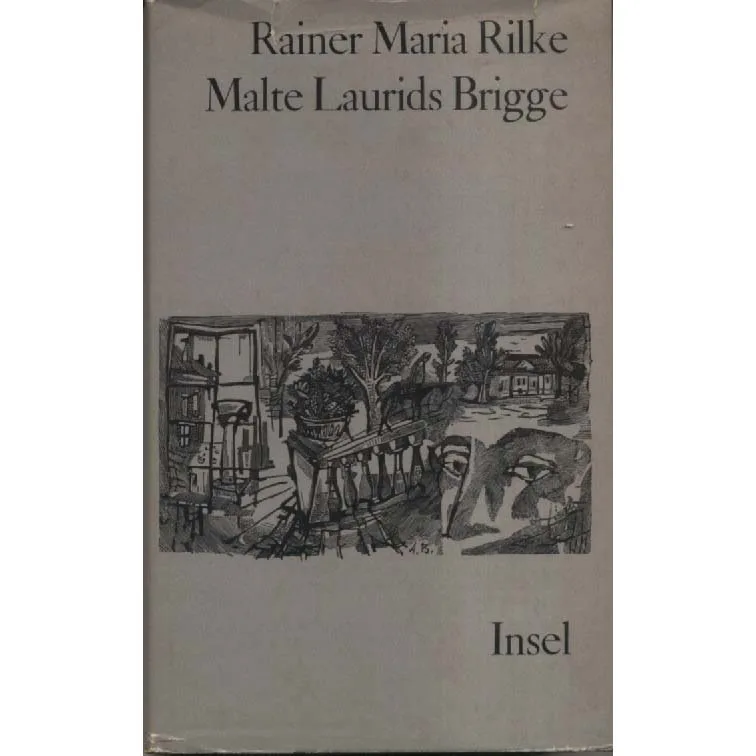
Publisher: Insel Verlag
Format: Hardback
ISBN: none
There are novels that tell a story, and then there are novels that appear to be thinking out loud, occasionally remembering to include the reader. Malte Laurids Brigge (1963) by Rainer Maria Rilke, published by Insel Verlag, belongs firmly to the latter category: a book that presents itself less as a narrative and more as a series of impressions, reflections, and carefully arranged moments of unease.
The premise, such as it is, follows a young man in Paris, observing the world around him with a level of attention that suggests he may be noticing rather more than is strictly comfortable. From this starting point, the text unfolds in fragments—memories, encounters, thoughts—each one contributing to a portrait that is never quite complete, though always compelling. It is less about what happens than about how it feels to be present while it does.
Rilke’s writing carries the same elusive quality found in his poetry, moving between clarity and ambiguity with remarkable ease. Ordinary scenes take on a heightened significance, while moments of introspection drift into something approaching revelation, or perhaps just a deeper uncertainty. It is not always clear where observation ends and imagination begins, but the distinction seems, at times, beside the point.
This 1963 Insel Verlag edition has a certain understated elegance, presenting the text without unnecessary distraction. It looks like a book that expects to be taken seriously, though it makes no effort to make that seriousness immediately accessible. This particular copy is listed as Good, which in Crappy Old Books terms suggests it has been handled, read, and perhaps revisited in moments of quiet determination. The cover may show some wear, the spine may have softened, and the pages may carry the faint traces of previous readers who may have paused, reconsidered, and then continued, if only to see where it might lead.
It is not a novel that invites hurried reading. More likely, it will be approached in stages, set aside, and returned to, offering different impressions depending on the reader’s mood and patience. Whether you come to it with a background in literature or simply the sense that Rilke is someone worth encountering in more than one form, it provides an experience that is less about resolution and more about immersion.
A quiet, introspective work that resists easy classification, and a perfectly respectable way to suggest that your reading habits extend into territory where narrative gives way to reflection, and where understanding may be something that emerges slowly, if at all.
Keep browsing: See more German books Other books by Rainer Maria Rilke
