


The Diaries Of Franz Kafka - 1910-23
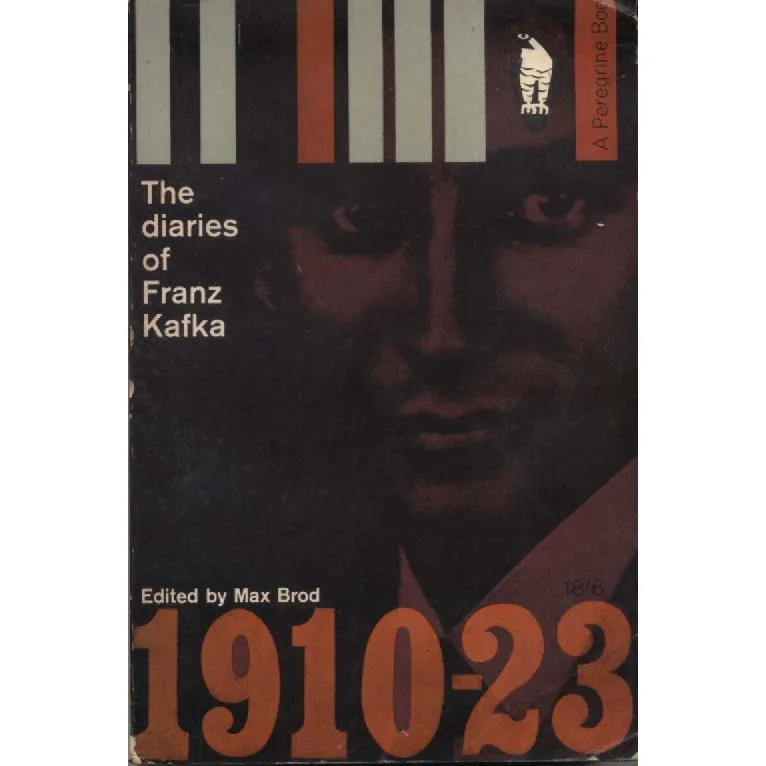
Publisher: Peregrine Books
Format: Paperback
ISBN: none
There are diaries kept for posterity, and then there are diaries kept for entirely private reasons which, through a series of literary accidents, end up becoming posterity anyway. The Diaries of Franz Kafka – 1910–23 (1964), edited by Max Brod and published by Peregrine Books, belong very much to the latter category: a record of thoughts, fragments, observations, and occasional anxieties that were never quite intended to be read in this way, and yet now sit patiently between two covers, awaiting inspection.
Kafka’s diaries do not behave like a conventional narrative. There is no tidy arc, no reassuring progression, and certainly no obligation to explain themselves. Instead, they offer glimpses—sometimes sharp, sometimes elusive—into the working mind of a writer who appears to have been perpetually engaged in the act of thinking, questioning, and occasionally doubting the entire enterprise. Notes on writing sit alongside reflections on daily life, fleeting ideas share space with more sustained passages, and the whole arrangement carries the distinct impression of something unfolding in real time rather than being carefully arranged for effect.
What makes the diaries particularly compelling is not that they reveal some hidden, definitive version of Kafka, but that they refuse to do so. The entries shift in tone and focus, moving between clarity and uncertainty with an ease that suggests this is simply how the mind operates when left to its own devices. There are moments of insight, moments of hesitation, and more than a few instances where the reader is left to make sense of something that may never have been fully resolved in the first place.
Max Brod’s role as editor—indeed, as the reason these diaries exist in published form at all—adds a further layer of quiet irony. Without him, much of Kafka’s work might have remained unseen; with him, it is presented in a way that allows readers to engage with the material while still being aware that what they are encountering is, in some sense, unfinished. It is a delicate balance, and one that gives the book its particular character.
This Peregrine Books edition from 1964 carries the understated, slightly earnest design typical of mid-century paperbacks: practical, readable, and entirely unconcerned with modern notions of presentation. This particular copy is listed as Good, which in Crappy Old Books terms suggests it has been opened, handled, and perhaps consulted with a mixture of curiosity and quiet persistence. The cover may show some wear, the spine may have softened, and the pages may bear the faint signs of previous readers who may have dipped in, paused, and returned later, as one does with diaries not one’s own.
It is not a book to be read straight through, though it can be approached that way by the particularly determined. More often, it invites a slower, more intermittent engagement—picked up, set aside, and revisited when the inclination arises. Whether you come to it in search of literary insight, personal curiosity, or simply the sense that one ought to have some acquaintance with Kafka beyond the novels, it offers an experience that is less about answers and more about the process of thinking itself.
A quietly absorbing collection that reveals just enough to intrigue without ever quite settling the matter, and a perfectly respectable way to suggest that your reading habits extend into territory where even the most private of writings can acquire a public life of their own.
Keep browsing: See more Biography books Other books by Max Brod
