


Utilitarianism
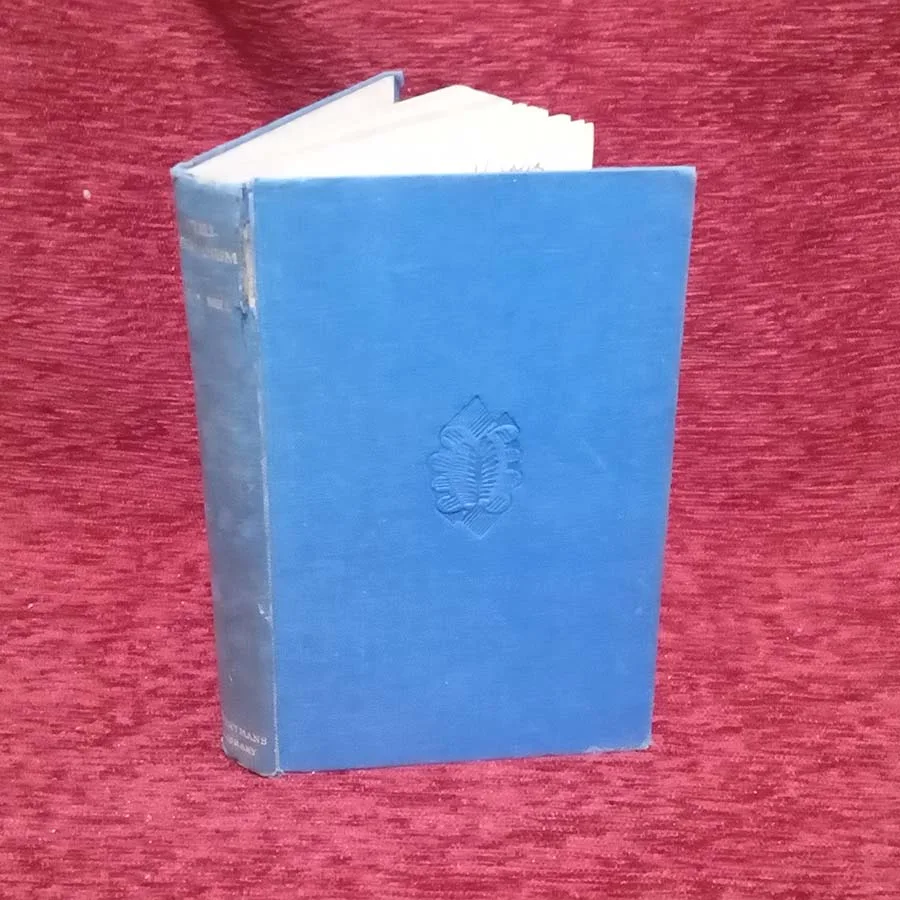
Publisher: Everymans Library
Format: Hardback
ISBN: none
There are books that promise happiness, and then there are books that attempt, with admirable Victorian seriousness, to calculate it.
Utilitarianism by J. S. Mill is one of those quietly formidable works that takes a simple-sounding idea—“the greatest happiness of the greatest number”—and proceeds to examine it with such care, logic, and persistence that you begin to suspect happiness may be rather more complicated than first advertised. First published in the 19th century and presented here in a 1936 Everyman’s Library edition, this is philosophy in its most purposeful form: clear, direct, and entirely unconcerned with whether you were hoping for something a little lighter.
Mill writes with the calm confidence of someone who believes that moral questions can, in fact, be thought through properly if only one is willing to sit still long enough. There are no slogans here, no shortcuts, and certainly no reassuring conclusions wrapped up in a tidy bow. Instead, you get a careful unpacking of what we mean by “good,” “pleasure,” and “right,” delivered in prose that is both accessible and quietly demanding. It is the sort of book that does not shout, but gently insists that you keep up.
This Everyman’s Library edition adds its own understated charm. Designed to make serious works available to ordinary readers, it has that familiar mid-20th-century solidity—compact, practical, and faintly austere. It looks like a book that expects to be read rather than displayed, and it carries itself accordingly.
Condition-wise, this is a fair copy as sold by Crappy Old Books. There is a small tear to the top front of the spine, which gives it a touch of visible character without compromising its overall integrity. Beyond that, it is in surprisingly fine shape: clean, stable, and entirely ready to continue its philosophical duties. In other words, a book that has endured a minor structural disagreement but otherwise remains entirely composed.
And perhaps that is fitting. A work devoted to weighing consequences and balancing outcomes now presents itself with a small imperfection and a great deal of substance—an object lesson, if one were inclined to see it that way.
A thoughtful and quietly enduring classic for readers who like their philosophy clear, their questions difficult, and their books just worn enough to suggest they have already been part of a few serious conversations.
Keep browsing: See more Academic books Other books by JS Mill
