


Specification For Road And Bridge Works
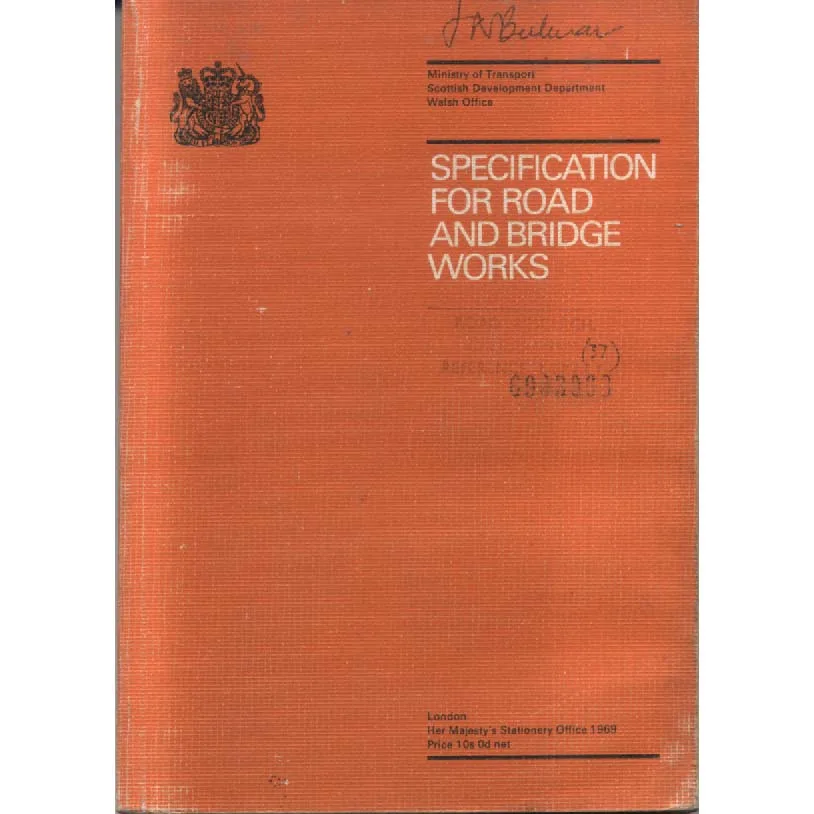
Publisher: HMSO
Format: Paperback
ISBN: none
There are books that tell stories, books that ask questions, and books that quietly ensure the road beneath your feet does not fall apart. Specification for Road and Bridge Works (1969), issued by the Ministry of Transport, belongs firmly—and proudly—to the third category.
This is not a book that flirts with you. It does not charm, persuade, or entertain. It specifies. In careful, methodical detail, it sets out how roads should be built, how bridges should behave, what materials should be used, and how everything ought to fit together so that lorries, cars, and the occasional misplaced sheep can pass over it all without incident. It is, in short, civilisation written in clauses.
There is a quiet grandeur to this kind of document. While novels concern themselves with human drama, this concerns itself with gradients, aggregates, tolerances, and the delicate art of making infrastructure look inevitable. You rarely notice a well-built road, which is precisely the point. Somewhere behind that unnoticed smoothness is a document very much like this, insisting that things be done properly.
The real charm, however, lies in this particular copy. Fair condition, a little worn and stained, it carries the marks of use—the sort of honest wear that suggests it may once have been consulted in earnest rather than merely admired. Tucked inside are a technical memorandum dated May 1972 and several additional notes, like small fragments of working life preserved between the pages. It feels less like a book and more like a tool that has seen service.
There is an irony here too. A document designed for precision, permanence, and standardisation now arrives slightly rumpled, annotated, and individual. The rules remain, but the copy has lived.
As sold by Crappy Old Books, this is ideal for collectors of engineering history, vintage technical manuals, and anyone who appreciates the understated literature of how things actually get built. Not glamorous, perhaps—but then neither is a bridge, until it fails.
Keep browsing: See more Architecture books Other books by Ministry of Transport
