


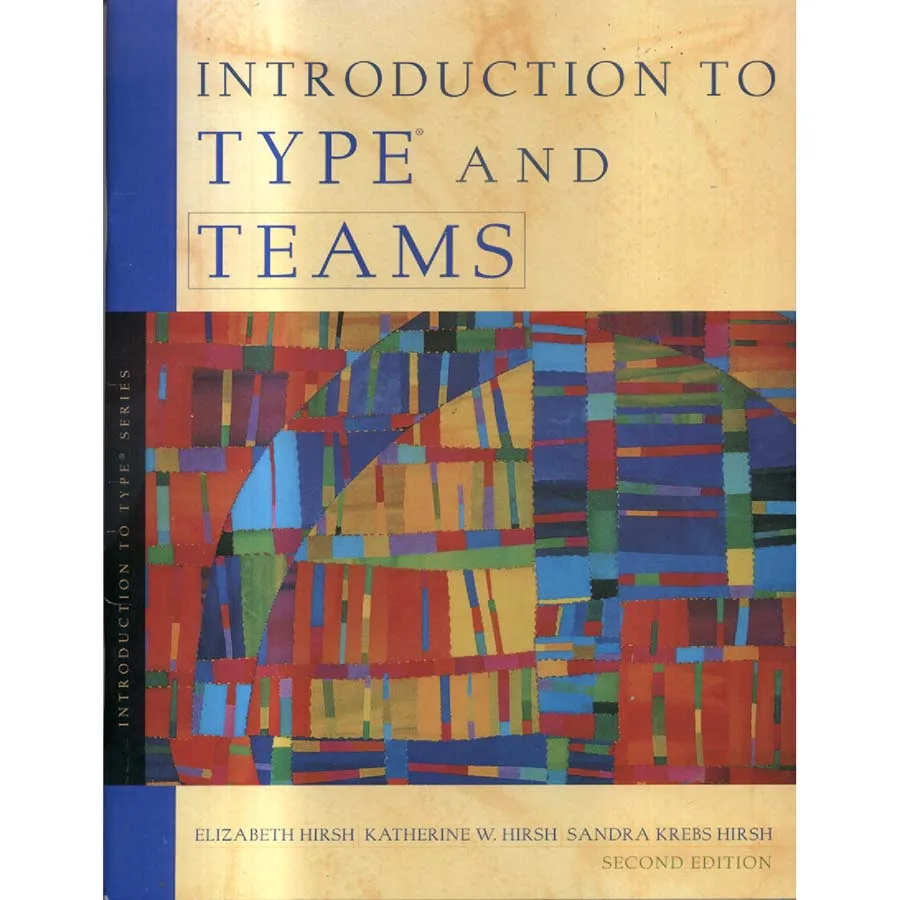
Introduction To Type And Teams - 2nd Edition
Publisher: CPP
Format: Paperback
ISBN: none
There are books that promise to explain human nature, and then there are books that promise to explain human nature at work, which is a much riskier undertaking because it involves not only personalities but meetings, agendas, passive-aggressive email phrasing, and the peculiar group dynamics produced when six adults are asked to “brainstorm” before coffee. Introduction to Type and Teams – 2nd Edition by Elizabeth Hirsh steps bravely into this territory, offering guidance on how different personality types function together in the workplace, and why one person wants a spreadsheet, another wants a vision statement, and a third would simply like everyone to stop talking and make a decision.
Published by CPP, a name long associated with personality tools and professional development materials, this is one of those quietly formidable guides that has probably sat in conference rooms, training sessions, management seminars and HR departments for years, gently trying to persuade organisations that people are, in fact, different from one another. A shocking revelation, perhaps, but one that offices somehow manage to rediscover every week. Hirsh’s book is there to lend structure to this rediscovery, mapping the mysterious territories of preference, communication, conflict, collaboration and all the other things that become very noticeable the moment a team is formed and expected to achieve something by Friday.
The word “type” here, of course, carries a whole civilisation of implications. It suggests that your colleague is not being deliberately awkward, merely expressing their authentic cognitive orientation in a way that makes you want to close the laptop and walk into the sea. It hints that the person who colour-codes everything may have strengths you have overlooked, just as the one who keeps changing direction mid-project may, in some broader sense, be useful. The beauty of books like this lies in their noble attempt to transform irritation into insight. Instead of saying “Graham is impossible,” they invite you to consider that Graham may simply be processing information through a framework that was always going to become a problem in a shared document.
There is also something deeply enjoyable about professional books that seek to render team behaviour legible. Offices are, after all, among the strangest habitats modern humans have devised: places where personality, ambition, boredom, competence, insecurity and biscuits all interact under fluorescent lighting. Any text that tries to make sense of that deserves some admiration. One suspects Hirsh does so with clarity and a reassuring degree of calm, guiding readers through the patterns and tendencies that shape group work while gently implying that not every disagreement is a moral failing. Sometimes it is simply a clash between preferences, priorities and the unfortunate fact that nobody explained the brief properly.
As a good copy sold by Crappy Old Books, this edition has exactly the right feel. A workplace psychology guide in immaculate untouched condition would be faintly worrying, suggesting it had been bought for self-improvement and then tactically ignored. A good copy, by contrast, implies it may actually have been used—as intended—by someone trying to survive a team exercise, improve a department, or work out why every planning meeting dissolved into confusion by minute twenty-three. A little wear only adds to its credibility. These are not books meant to be admired from afar. They are meant to be deployed.
The absence of a publication year and ISBN only adds a pleasingly elusive quality to the whole affair, as though the book itself prefers not to be overly pinned down by bibliographic certainty. That feels oddly appropriate for a volume about personality and interaction, where everything is ostensibly classified yet remains stubbornly human. Titles like this always sit at that fascinating crossroads between science, self-knowledge and corporate optimism, offering just enough structure to make people feel that better teamwork is possible, while quietly acknowledging that Keith from operations may still be Keith from operations no matter how many frameworks are introduced.
In the end, Introduction to Type and Teams is the sort of book that appeals to managers, trainers, facilitators, HR professionals, and anyone who has ever left a meeting wondering how so many interpretations of the same sentence could exist simultaneously. It promises insight, a little order, and the comforting suggestion that other people’s baffling habits may, under the right model, become almost understandable. A sensible, slightly earnest, and unexpectedly revealing guide to the fine art of getting different sorts of people to work together—or at least to stop sending “just circling back” emails at 4.57pm on a Friday.
Keep browsing: See more Academic books Other books by Elizabeth Hirsh
