


The Medieval World - Europe 1100-1350
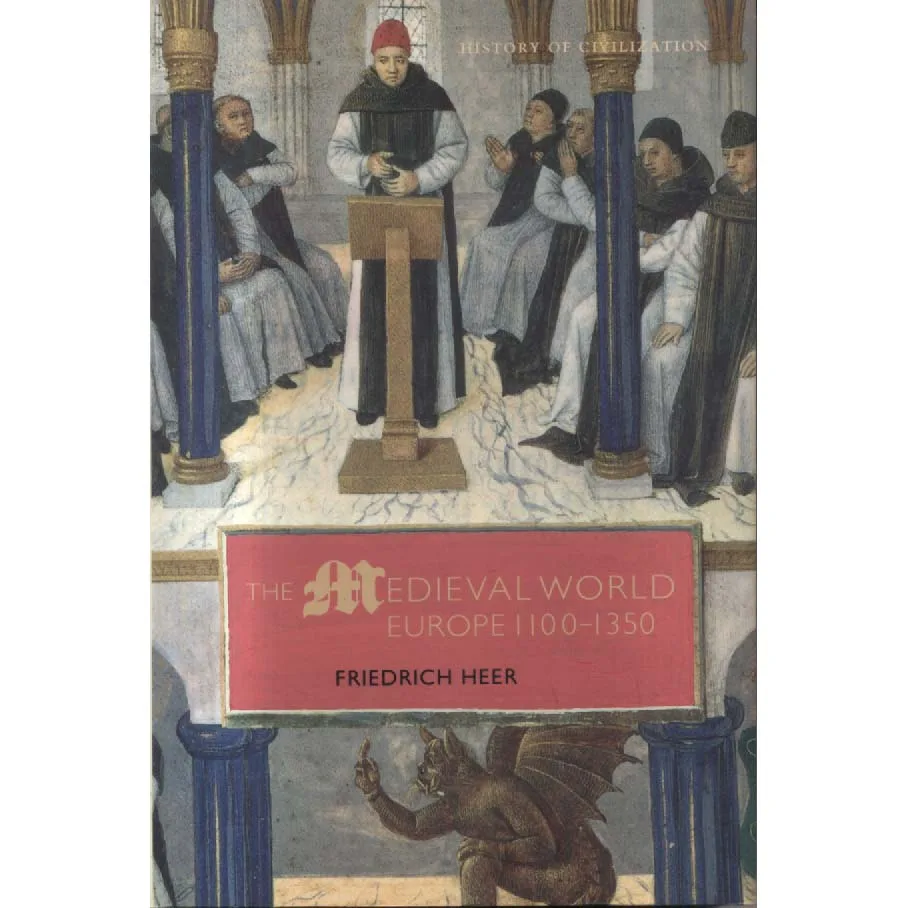
Publisher: Weidenfeld
Format: Paperback
ISBN: 9780297813828
There are history books that glide serenely across the centuries, and then there are history books that invite you straight into the mud, incense, stonework, theology, famine, pageantry and low-grade existential dread of the Middle Ages. The Medieval World – Europe 1100–1350 by Friedrich Heer is very much the latter: a grand survey of an age that gave us cathedrals, crusades, scholastics, saints, heretics, merchants, manuscripts and a great many people whose daily lives were only ever one failed harvest away from catastrophe.
This is Europe in its full medieval complication, spanning the years when the continent was busily inventing many of the institutions, anxieties and obsessions it would be unable to shake for centuries. Universities were taking shape, kings were consolidating power, towns were growing, the Church was everywhere, and everyone seemed to be simultaneously building upwards in stone and worrying about the fate of their immortal soul. It was, in short, an age of immense creativity conducted under conditions of almost comical discomfort. One cannot help but admire the achievement while quietly thanking modern plumbing.
Friedrich Heer, a historian with the sort of range and seriousness that makes the word “sweep” entirely appropriate, appears to treat the medieval world not as a quaint pageant of chainmail and illuminated initials, but as a living, contradictory civilisation. This is not merely a parade of kings and battles for people who like castles. It is a book about structures of belief, political change, intellectual ambition, social upheaval and the strange, durable mental world of medieval Europe. In other words, the really interesting stuff—the things people thought they were doing, and the frameworks that made their world seem not only possible but inevitable.
And what a world it was. We moderns are apt to caricature the medieval period as either barbaric darkness or picturesque romance, depending on whether we have recently seen a documentary or a gift shop. The truth, of course, is much less convenient and therefore far more engaging. This was a society capable of sublime art and appalling cruelty, deep faith and relentless violence, dazzling intellectual subtlety and hygiene standards best left unexamined. It produced Gothic cathedrals and torture devices, troubadours and inquisitors, saints who embraced poverty and princes who collected taxes with grim enthusiasm. No wonder historians keep returning to it. It contains almost everything.
There is also a pleasing irony in attempting to summarise the medieval world in one volume, because the medieval world itself was never especially keen on neatness. It sprawls. It multiplies. It develops side chapels of argument and annexes of doctrine. Every answer breeds three more questions, preferably in Latin. A book like this must therefore perform a noble balancing act: bringing order to a civilisation that often seems to have mistaken complexity for a moral good. If Heer manages that with intelligence and energy, as one suspects he does, then this is precisely the kind of work that earns a permanent place on the serious history shelf.
As a good copy sold by Crappy Old Books, this one has just the right feel. A book on the medieval world should not look too pristine; one wants some faint suggestion that it has already accompanied a few readers through the plague-free safety of late twentieth-century scholarship. Good is the ideal condition for a volume like this: sound, respectable, and lived-in enough to suggest it has been opened with intent rather than merely displayed to imply civilisation. It is ready to do its duty once more, whether for the committed medievalist, the curious general reader, or the kind of person who begins by looking up monasteries and ends three hours later deep in feudalism.
Published by Weidenfeld in 1993, this edition comes from that admirable era of substantial historical books made for readers who wanted proper content and were not overly troubled by the idea of concentrating for more than seven minutes at a time. It likely carries that reassuring air of seriousness that large historical surveys do so well: not flashy, not coy, just quietly confident that the medieval centuries contain enough drama, thought and strangeness to keep anyone occupied.
In the end, The Medieval World – Europe 1100–1350 is exactly the sort of book that reminds you the Middle Ages were not a pause between the Romans and the Renaissance, but a vast and unruly civilisation in their own right. Full of grandeur, misery, devotion, ambition and endless human complication, it offers all the pleasures of historical immersion without requiring you to sleep on straw or fear wolves on the road to Chartres. A rich, serious, faintly intimidating and deeply rewarding volume—ideal for anyone who likes their history broad, dense and gloriously alive.
Keep browsing: See more History books Other books by Friedrich Heer
