


House Of Lilies
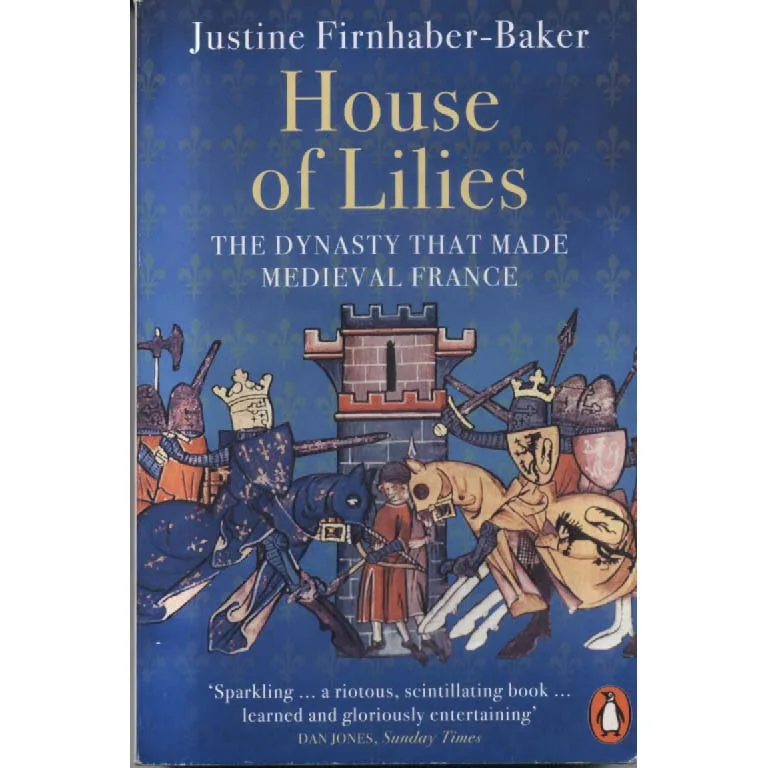
Publisher: Penguin Books
Format: Paperback
ISBN: 9780141999241
House of Lilies is the sort of title that sounds as though it ought to involve scented gardens, delicate embroidery, and perhaps a faintly tragic aristocrat gazing from a stone window. Which, in a way, it does — except that this is the House of Valois, so the flowers are mostly symbolic, the elegance is heavily armed, and the atmosphere is less peaceful bloom than dynastic peril dressed in velvet.
Justine Firnhaber-Baker takes the history of the Valois kings of France and reminds us that monarchy, for all its polished portraits and ceremonial grandeur, is very often a family business run under extreme pressure by people with crowns on their heads and crisis in their diaries. This is medieval and early modern France in all its splendour and instability: courts, claims, rivalries, warfare, piety, personality, ceremony, ambition, and the constant low hum of somebody, somewhere, being deeply inconvenient to the succession.
The lilies, of course, are the fleur-de-lis of French royalty — an emblem of majesty, continuity, and divine right. Very impressive on banners. Slightly less impressive when attached to a dynasty trying to hold together a kingdom beset by faction, foreign war, internal tension, and the awkward tendency of kings to die, disappoint, or produce heirs with all the strategic reliability of a tossed coin. Firnhaber-Baker is excellent on precisely this contradiction: monarchy as both magnificent performance and alarmingly fragile machine.
What makes the book such a pleasure is that it refuses to leave royal history trapped inside a glass case. This is not a dry procession of reigns and dates, nor a solemn parade of crowned mannequins. Instead, the Valois emerge as human beings operating within a system that demanded they appear larger than life while being, in reality, prey to the usual human weaknesses: vanity, fear, indecision, overconfidence, family trouble, and the occasional catastrophic misjudgement with international consequences.
There is a rich irony running all the way through the story. Here is a dynasty wrapped in sacred symbolism and public ritual, constantly projecting authority, stability, and permanence — while behind the scenes the whole enterprise can look suspiciously like controlled panic in expensive fabric. The court glitters, the chroniclers flourish, the heraldry shines, and yet the kingdom remains one bad marriage, one lost battle, or one badly timed death away from fresh trouble. Royal majesty, it turns out, is often just anxiety with better tailoring.
Firnhaber-Baker writes with the kind of intelligence that makes a complex period feel inviting rather than forbidding. She gives the reader politics, personality, and context in satisfying proportion, so that the Valois world feels neither simplistically romantic nor tediously institutional. You get both the grand architecture of kingship and the far more entertaining reality of what happens when real people are placed inside it.
And what a world it is: war with England, princely rivalries, religious seriousness, courtly display, territorial pressures, and the ever-present problem of ruling a realm that was theoretically united but practically full of interests, egos, and armed men. France under the Valois was not short of splendour, but nor was it short of drama. If anything, the splendour seems partly designed to distract from the drama, which is a very old ruling technique and seldom entirely effective.
This 2024 Penguin edition, ISBN 9780141999241, is in Good condition — thoroughly respectable for a book about a dynasty that spent much of its existence trying to remain the same. It has the pleasingly intelligent feel of modern history writing at its best: accessible, authoritative, and quietly alive to the absurdities as well as the significance of the past.
Ideal for readers who enjoy medieval and early modern history, French monarchy, dynastic politics, and books that understand that power is never just an institution but also a performance. Also perfect for anyone who likes their history full of crowns, crises, ceremony, and the unnerving realisation that a great deal of the past was held together by symbolism, luck, and people trying to look calmer than they felt. A handsome, thoughtful, and faintly wicked account of a royal house that bloomed magnificently, even when conditions were far from favourable.
Keep browsing: See more History books Other books by Justine Firnhaber-Baker
