


Our Island Stories
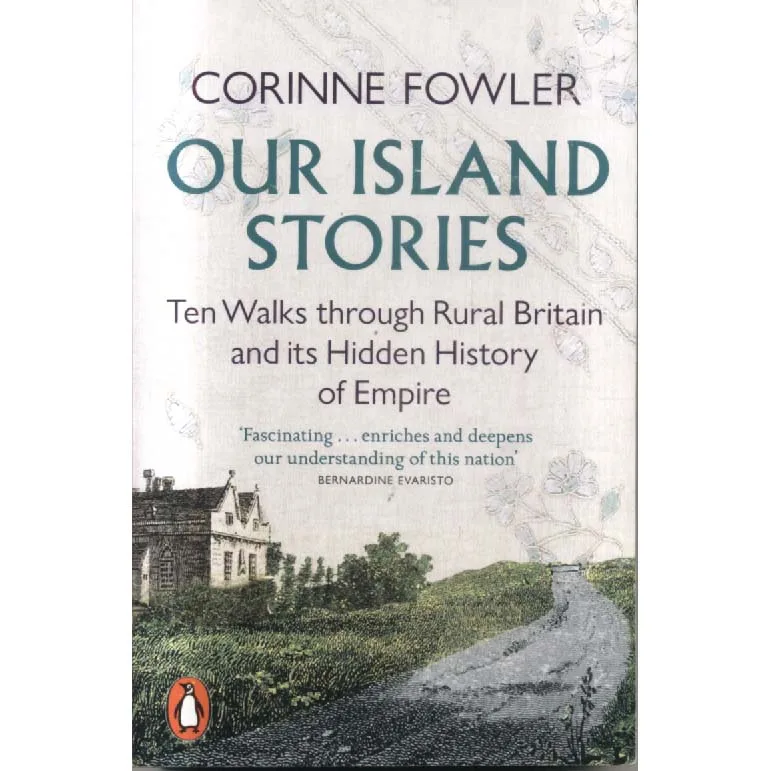
Publisher: Penguin Books
Format: Paperback
ISBN: 9780141999838
Our Island Stories is the sort of title that sounds comfortingly familiar, as though it might involve cosy tales of kings, queens, plucky victories, and a nation quietly congratulating itself in between cups of tea. Corinne Fowler, however, has other plans. What begins as something that looks like a reassuring stroll through British history turns, rather deftly, into a far more searching and occasionally uncomfortable walk through the stories we tell—and the ones we tend to leave out.
Fowler takes aim, gently but firmly, at the idea of a single, tidy national narrative. Instead of a neatly packaged “island story,” she presents a layered, complicated, and sometimes contradictory picture of Britain’s past, one that stretches far beyond the shoreline and refuses to stay politely within it. Empire, migration, race, identity, culture—all the threads that have long been woven into British life but not always acknowledged in its storytelling—are brought forward and examined with clarity and care.
This is not a book that seeks to replace one grand narrative with another equally convenient version. Rather, it invites the reader to notice how history is shaped: what gets remembered, what gets simplified, what gets celebrated, and what quietly disappears between editions. It is, in a sense, a book about storytelling itself—how nations construct their sense of self, and how those constructions can both illuminate and obscure.
There is a quiet irony in the exercise. For centuries, Britain has been very good at exporting stories—literature, language, culture, institutions—while maintaining a rather selective account of how those global connections came to be. Fowler gently unpicks this habit, revealing that the “island” has never been quite as isolated, nor quite as straightforward, as it sometimes likes to imagine. The result is less a demolition job and more a careful widening of the lens.
What makes the book particularly engaging is its tone. It is serious without being heavy, critical without being strident, and thoughtful without losing sight of the human dimension of history. Fowler moves between past and present with ease, showing how these narratives continue to shape contemporary debates about identity, belonging, and national memory. The effect is not to scold, but to encourage a more curious, more inclusive way of understanding the past.
Reading it now, there is an added layer of relevance. Questions about who “we” are, what “our” story means, and how history should be told are very much alive—and, as ever, not entirely settled. Fowler’s book does not pretend to offer final answers. Instead, it does something more valuable: it makes the questions harder to ignore.
This Penguin edition (2024, ISBN: 9780141999838) is in Good condition—perfectly suited to a book that deals in ideas rather than ornament. It has the reassuringly modern feel of a work that knows it is part of an ongoing conversation, rather than the final word on the subject.
Ideal for readers interested in British history, cultural identity, and the stories nations tell about themselves. Also well suited to anyone who has ever suspected that the phrase “our island story” might conceal as much as it reveals. A thoughtful, quietly provocative, and highly readable exploration of Britain’s past—not as a single tale, but as many voices speaking at once, some of them only just being heard.
Keep browsing: See more History books Other books by Corinne Fowler
