


From Empire To Europe
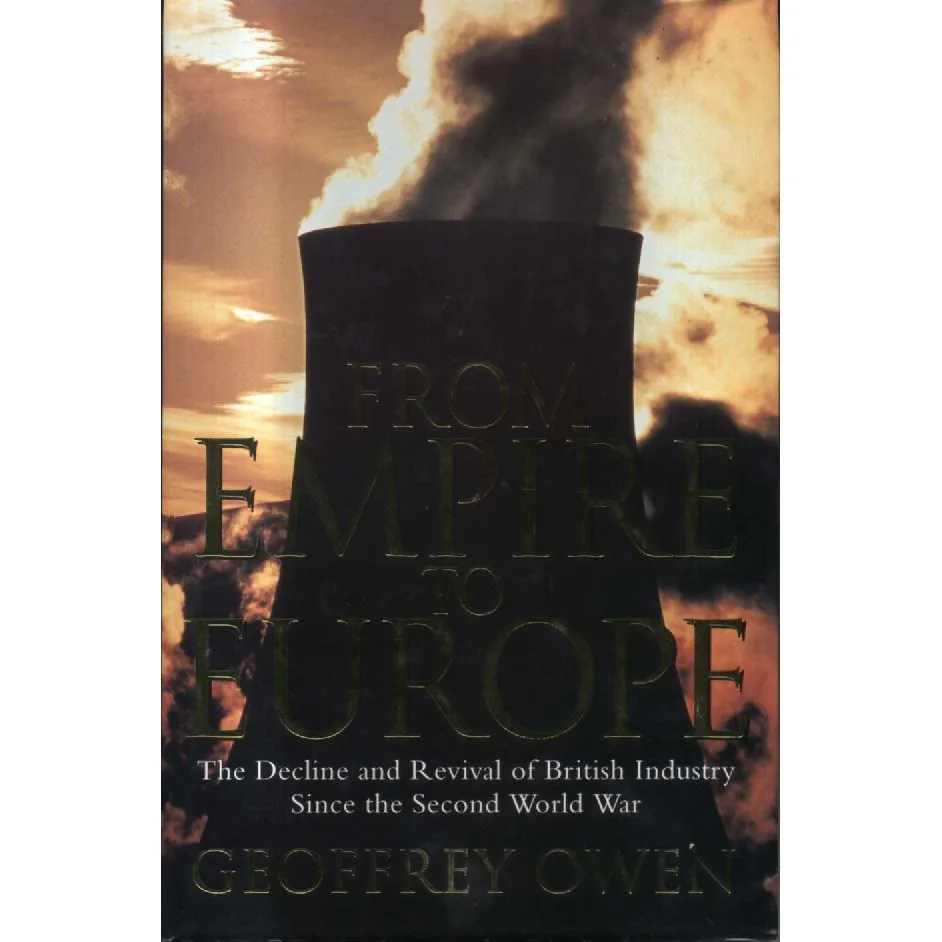
Publisher: Harper Collins
Format: Hardback
ISBN: 9780002556828
From Empire to Europe is the sort of title that sounds calm, measured, and faintly administrative, as though Britain simply popped down from one global destiny and into another with a brief stop for tea. Geoffrey Owen, quite sensibly, knows better. What this book actually offers is the long, elegant, occasionally exasperated story of Britain trying to adjust to the rather awkward fact that the age of empire had ended and that the future, inconveniently, seemed to involve the Continent.
This is modern British history seen through one of its great national discomforts: the slow, reluctant, often bad-tempered shift from imperial self-image to European entanglement. It is a tale of economics, politics, identity, prestige, decline, adaptation, and the peculiar British gift for acting as though a thing is beneath one’s dignity even while applying to join it. The empire fades, Europe looms, and the country spends much of the twentieth century wondering whether this is a practical necessity, a humiliating comedown, or somehow both at once.
Owen charts this transformation with the steady confidence of a man who has watched governments, industries, and national assumptions all attempt to keep a straight face while history rearranged the furniture. The old world of imperial trade, Commonwealth preference, and global reach gives way to the new realities of European markets, institutions, regulation, and the alarming discovery that sovereignty is much easier to praise in speeches than to sustain in economic isolation. Britain, in other words, finds itself moving from commanding an empire to negotiating with Belgium, which must have felt like quite a change of atmosphere.
What makes the subject so enjoyable—at least for the reader, if not always for the participants—is the sheer density of irony. Here is a country that once saw itself as gloriously offshore, uniquely global, and not quite like everybody else, slowly realising that geography has a vote. Here are politicians insisting Britain has a special destiny while quietly calculating tariffs. Here are grand narratives of national purpose colliding with balance-of-payments problems, industrial weakness, and the uncomfortable realisation that sentiment does not, by itself, generate growth.
And yet this is not merely a gloomy tale of shrinking horizons. Owen is too intelligent for that. He understands that the move from empire to Europe was not just loss, but reorientation: messy, contested, and emotionally loaded, yes, but also deeply bound up with Britain’s search for prosperity and relevance in a changed world. The result is a book that treats economics and politics not as dry abstractions, but as the stage on which a nation attempts to redefine itself without admitting how difficult that is.
Reading it now, there is of course an extra layer of delicious hindsight. Published in 1999, this book belongs to that charming late-20th-century moment when Britain’s European question had already generated decades of wrangling, but had not yet achieved the full operatic absurdity of the 21st century. The arguments are all there in embryo: identity, trade, power, independence, practicality, memory. One reads with the faintly unfair advantage of knowing that Britain was by no means finished arguing with itself.
This HarperCollins edition, ISBN 9780002556828, is in Near Fine condition, which is pleasingly crisp for a book about a national transition that was anything but. It looks authoritative, respectable, and entirely composed—rather more composed, in fact, than many of the policies and personalities it describes.
Ideal for readers of political history, modern Britain, Europe, and the slow-motion drama of national reinvention. Also perfect for anyone who enjoys books about large historical shifts in which nobody entirely gets what they want, everyone invokes destiny, and economic reality keeps turning up like an unwelcome but persistent civil servant. A thoughtful, urbane, and quietly biting account of Britain’s long journey from ruling far-flung territories to wrestling with its nearest neighbours.
Keep browsing: See more History books Other books by Geoffrey Owen
