


The Family Sex And Marriage In England 1500-1800
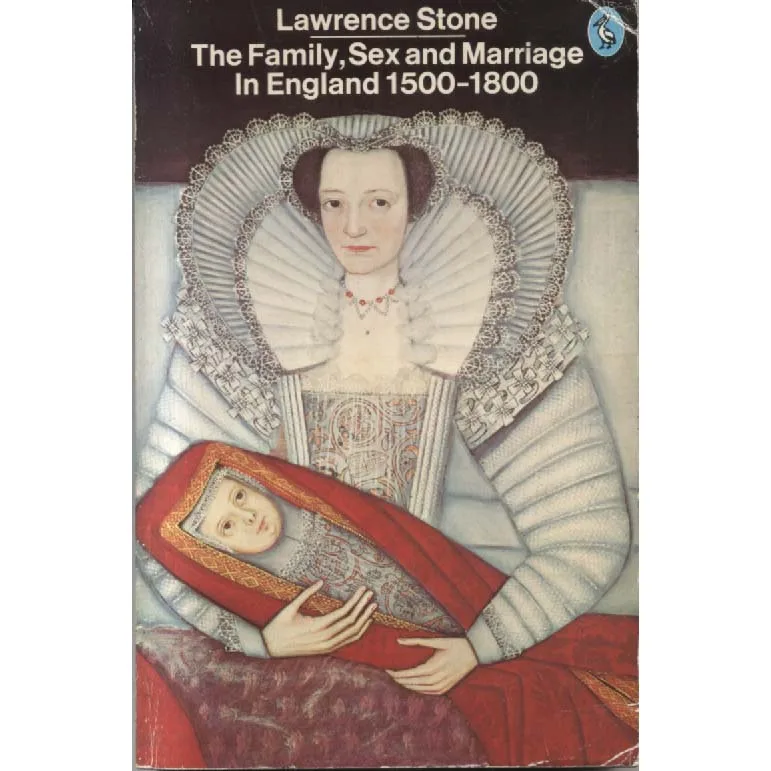
Publisher: Pelican Books
Format: Paperback
ISBN: 0140221654
The Family, Sex and Marriage in England 1500–1800 is one of those glorious Pelican paperbacks that appears, at first glance, to promise several hundred pages of sociological oatmeal and then turns out to be absolutely packed with the private chaos of human life. Lawrence Stone, with formidable scholarship and a distinctly unembarrassed interest in what people actually did with their emotions, households, expectations and bedchambers, takes three centuries of English domestic existence and lays it out for inspection with the calm assurance of a man who knows that nothing is more revealing than how people marry, reproduce, quarrel, inherit and try to love one another under pressure.
This is history stripped of its wigs-and-battles public school varnish. Kings and wars may still be rattling about in the background, but Stone is interested in the more intimate machinery of society: courtship, patriarchy, household structure, parental authority, affection, property, legitimacy, emotional restraint, emotional change, and the long, strange business of how marriage evolved from something dangerously close to a family merger into something that at least occasionally aspired to companionship. In other words, it is about the bit of history that most people are actually living, whether or not the textbooks bothered to mention it.
And what a world it was. England between 1500 and 1800 was not merely changing politically or economically; it was reorganising the architecture of everyday life. Families were large, mortality was rude, children arrived with determined frequency, fathers wielded legal and moral authority of a sort that would now provoke three documentaries and a podcast, and marriage itself sat somewhere between sacred institution, economic arrangement and highly personal gamble. Stone follows these shifts with the kind of intelligence that makes you realise “domestic history” is only boring if you enjoy ignoring the emotional foundations of an entire civilisation.
Naturally, the title does much of the work here. The Family, Sex and Marriage in England 1500–1800 has the marvellous quality of sounding both deeply respectable and faintly scandalous, which is usually a sign of a good historical study. It invites the serious reader while quietly promising the nosier one that behind all those sermons, legal records and inheritance customs lies a great deal of human awkwardness. And indeed there is. People fell in love, or thought they did. They married for money, pressure, necessity, convenience, hope or lust. They had children, lost children, managed households, fought over property and negotiated the impossible balance between duty and desire. Stone’s great skill is to show that these are not side notes to history but history itself in one of its most enduring forms.
There is something especially satisfying about the way books like this puncture the fantasy that the past was either morally cleaner or emotionally simpler than the present. It was not. It was just differently arranged, less photographed, and generally conducted in heavier fabric. The English family of earlier centuries could be affectionate, brutal, strategic, tender, oppressive, loyal, transactional and sentimental, often all before luncheon. The idea that there was once a stable golden age of marriage and domestic certainty is exactly the sort of myth a book like this arrives to dismantle with scholarly relish.
As a 1979 Pelican edition, it also carries that excellent air of serious popular history from the age when publishers assumed readers might cheerfully spend an evening learning about household formation in early modern England. A noble assumption, and one Crappy Old Books is always pleased to support. Pelicans have a way of making difficult subjects feel approachable without insulting the reader’s intelligence, and this is very much one of those books: weighty in substance, portable in form, and quietly transformative if you actually sit down and read it.
This copy, offered in Good condition by Crappy Old Books, sounds exactly right. A book on family life ought not to be too pristine; it should look as though it has already participated in a few conversations. One imagines it previously belonged to a student of social history, a feminist scholar, a curious general reader, or perhaps someone who simply picked it up for the word “sex” and stayed for the transformation of emotional life across three centuries. Whatever its past, it now stands ready to educate a new owner in the pleasingly subversive truth that inheritance law and intimacy are rarely far apart.
So here we have a book that is scholarly without being dry, bold without being vulgar, and broad enough to make one see that “private life” is among the most public and consequential subjects history can study. The Family, Sex and Marriage in England 1500–1800 is about how people lived together, controlled one another, cared for one another, reproduced society, and slowly changed what they expected from love itself. That is not a narrow subject. That is practically everything.
A rich, clever, faintly nosy masterpiece of social history, and exactly the sort of volume Crappy Old Books delights in rescuing from obscurity and sending back into the world. Perfect for readers who like their history intimate, intelligent, and just a little bit improper under the respectable cover.
Keep browsing: See more History books Other books by Lawrence Stone
