


The Dam Busters Story
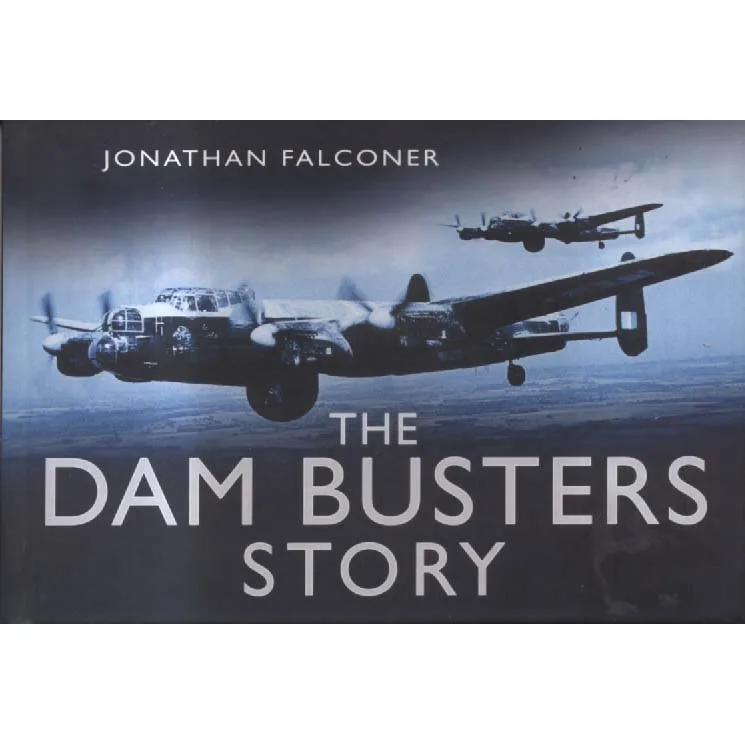
Publisher: Sutton Publishing
Format: Hardback
ISBN: 9780750947589
Few wartime stories have achieved quite the peculiar afterlife of The Dam Busters: part military history, part national legend, part engineering audacity so improbable it sounds as though someone in a smoke-filled room simply kept saying “yes, but what if the bomb bounced?” until history, against all expectation, agreed to try it. The Dam Busters Story by Jonathan Falconer, published in 2007 by Sutton Publishing, revisits one of the most famous operations of the Second World War — an episode so bound up with courage, invention and myth that it has scarcely stopped reverberating since.
At the heart of the story is Operation Chastise, the 1943 RAF raid on Germany’s Ruhr dams, carried out by the newly formed 617 Squadron using Barnes Wallis’s remarkable bouncing bomb. It is one of those wartime schemes that sounds faintly mad even after you know it worked: low-flying bombers, at night, over enemy territory, using highly specialised weapons against heavily defended targets in the hope of producing a strategic and symbolic blow. It had all the ingredients of either glorious success or catastrophic disaster, which is generally how history prefers its most famous episodes.
What makes this subject so compelling is that it combines several irresistible strands at once. There is the sheer technical ingenuity of the thing — the kind of wartime British inventiveness that seems to have thrived on being told that something was impossible. There is the bravery of the crews, flying at dangerous low altitude under terrible pressure. There is the strategic question of whether the raid achieved what was hoped. And then there is the long shadow of memory: how the raid came to be remembered, retold, dramatised and folded into the mythology of the war. In other words, this is not merely a tale of bombs and aircraft, but of how nations turn extraordinary operations into enduring legend.
Jonathan Falconer is exactly the sort of guide one wants for this territory. A good aviation and military historian knows that readers want more than just admiration; they want detail, context, hardware, planning, personalities, consequences, and a sober grasp of what the event actually meant. Books like this work best when they respect both the drama and the complexity — because the Dam Busters story is too interesting to be left as either simple hero worship or easy revisionism. It deserves the full treatment: the invention, the risk, the losses, the achievement, and the uncomfortable questions that always follow once legend settles into history.
There is, naturally, a certain irony in how warfare so often turns acts of destruction into stories of engineering beauty. The bouncing bomb itself remains one of those inventions people describe with a kind of awe, because it was ingenious, precise and technically fascinating — all in the service of smashing dams in the middle of a brutal war. History is not always tidy about these things. It is perfectly possible to admire the skill, mourn the cost, and remain slightly astonished that such a plan was ever conceived outside the pages of a thriller.
And that, really, is part of the enduring appeal. The Dam Busters raid has everything that keeps military history alive on the shelf: daring, innovation, elite crews, impossible odds, famous names, contested results, and a legacy large enough to outgrow the operation itself. It has been remembered as a feat of courage, as a triumph of design, as a propaganda moment, as a tactical strike, and as a subject for later re-examination. The story keeps renewing itself because it contains both heroism and argument, which is the surest route to historical longevity.
Published in 2007, this volume also benefits from the perspective of distance. It arrives long after the immediate wartime and post-war mythmaking, but while public interest in Bomber Command, RAF operations, and the deeper realities of the air war remained strong. That makes it a useful sort of book: one able to draw on established historical work while still speaking to readers who came to the subject through films, family memory, aviation enthusiasm, or simple fascination with one of the war’s most improbable missions.
This Good copy, sold by Crappy Old Books, has the honest appeal of a serious history book that may well have been read by someone who likes their wartime narratives with real substance attached. It is in sound, readable condition and ready to take another reader into one of the most famous episodes of the RAF story — a tale of low flying, high risk, extraordinary invention and the strange machinery by which history becomes legend.
A strong choice for readers of military history, aviation history and Second World War operations, The Dam Busters Story is a reminder that some of the most famous wartime episodes endure because they sit right at the intersection of courage, technology and myth. Also because, every now and then, history produces a plan so audacious that even decades later it still sounds like someone should have stopped the meeting and asked whether everyone had gone completely mad.
Keep browsing: See more War books Other books by Jonathan Falconer
