


Manual Of Nutrition
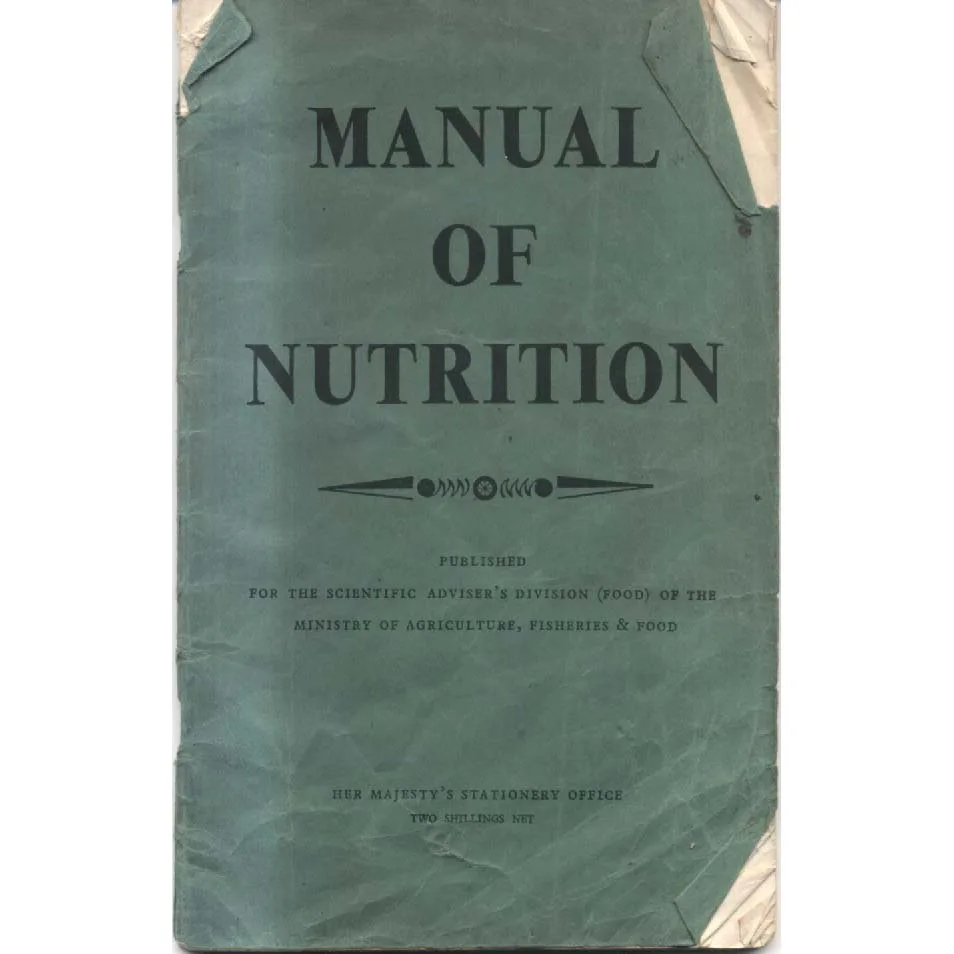
Publisher: HMSO
Format: Paperback
ISBN: none
Manual of Nutrition (1955) by Ministry of Agriculture, Fisheries and Food
HMSO
ISBN: none
Condition: Fair
As sold by Crappy Old Books
There are cookbooks that promise delight, indulgence, and dinner-party triumph. Then there are books like Manual of Nutrition, which arrive from the sober offices of the Ministry of Agriculture, Fisheries and Food with a very different energy indeed: less “let us dazzle our guests” and more “let us ensure the nation remains adequately fuelled.” It is nutrition with a clipboard.
Published in 1955 by HMSO, this is exactly the sort of official British publication that now carries an appeal far beyond its original practical purpose. In its day, it would have served as a serious guide to diet, health, food values, and the sensible arrangement of human eating. Today it also offers something rather wonderful to the modern reader: a glimpse into the post-war bureaucratic mind at the point where science, policy, domestic life, and national improvement all sat down together for a measured meal.
One of the pleasures of older nutrition books is that they come from a world before wellness became a lifestyle industry and before breakfast was expected to perform emotional labour. This is not a book about “mindful superfoods” or “glowing from within.” It is a manual, which is to say it assumes nutrition is a matter to be understood properly, tabulated where necessary, and applied with calm efficiency. There is something deeply reassuring about that.
The 1950s were, of course, a fascinating period for food and health in Britain. The country was still close enough to wartime rationing and post-war austerity for nutrition to carry a distinctly national significance. Food was not merely private pleasure; it was public health, household economy, and social planning. A government-issued Manual of Nutrition from this period therefore has genuine historical interest. It speaks of a Britain in which ministries took a keen interest in what people ought to eat, and did so with all the brisk confidence of a state that believed instruction manuals could improve society.
There is also a certain dry comedy in the title. Manual of Nutrition sounds almost magnificently untempting, which is part of its charm. It has none of the seductive language modern food writing relies upon. No “delicious hacks,” no “guilt-free treats,” no invitation to discover your best self by means of lentils. Instead, it offers the sternly respectable promise of organised knowledge. If that does not set the pulse racing, it should at least improve the posture.
Books like this can be appreciated on several levels. For some readers, it will be a genuine source of historical information about food science, dietary advice, and public health thinking in mid-century Britain. For others, it is a lovely piece of social history: a record of how official Britain explained the relationship between food and the body in an age of practical seriousness. And for collectors of old government publications, domestic science, or post-war ephemera, it has exactly the right sort of plain-spoken, institutional authority.
This copy is in fair condition, which seems entirely honourable for a 1955 government manual. It will show noticeable signs of age and use, as one might expect from a volume devoted to improving the nation through careful nourishment. But it remains a perfectly serviceable and characterful copy, with all the worn dignity that suits a survivor from the age of official instruction.
A splendid item for collectors of vintage cookery and nutrition books, British social history, HMSO publications, or anyone who enjoys the peculiar charm of practical mid-century non-fiction. Manual of Nutrition is a reminder that there was once a time when the state, in its infinite wisdom, thought it entirely reasonable to issue a proper manual on eating—and, in fairness, it probably was.
Keep browsing: See more Non-Fiction books Other books by Ministry of Agriculture Fisheries and Food
