


European Porcelain
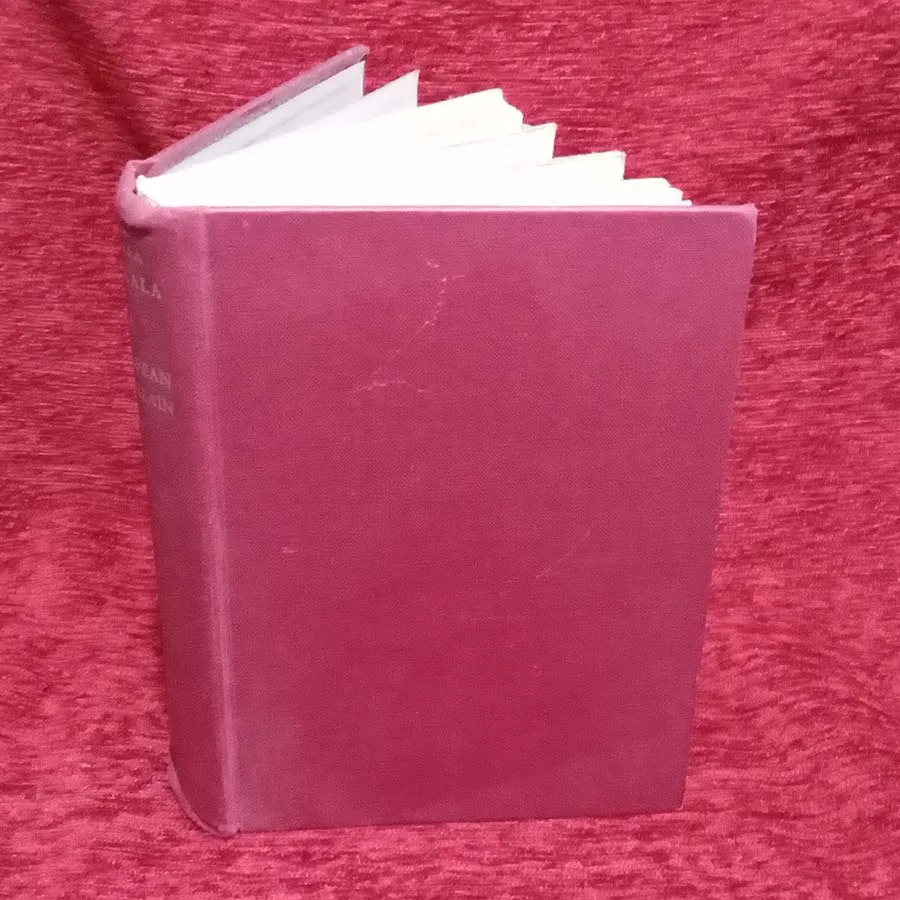
Publisher: RW Haentjens Dekker
Format: Hardback
ISBN: none
Ah yes, European Porcelain (1947) by Maria Penkala — a book devoted to one of civilisation’s most elegant obsessions: the transformation of fragile white clay into objects so refined that entire aristocracies spent centuries pretending they could not possibly live without them.
Published by R. W. Haentjens Dekker in 1947, this is a wonderfully poised survivor from the immediate post-war years, when Europe was still busy reconstructing cities, economies, and its general sense of self, and yet there remained ample justification for a serious book about porcelain. Quite right too. If humanity is to persist, it may as well do so with a decent cup, a delicately painted plate, and some grasp of Meissen.
Porcelain, after all, is one of those subjects that appears harmless until one looks properly. At first glance it is merely crockery for people with stronger nerves than average. Then, gradually, it reveals itself as a whole theatre of taste, trade, chemistry, status, empire, fashion, collecting, imitation, theft, and social aspiration. What seems to be a nice little figure in a cabinet turns out to involve royal patronage, industrial espionage, and a continent-wide determination to make tableware into a branch of high culture.
Maria Penkala guides the reader into this polished and faintly perilous world, where factories such as Meissen, Sèvres, Vienna, and others compete for beauty, prestige, and the right to be admired from behind glass by people who would be terrified to dust them. This is not merely a picture book for lovers of pretty china. It is a doorway into the curious seriousness with which Europe approached decorative arts, especially when kings, courts, and collectors were involved.
There is something especially charming about a 1947 book on this subject. It belongs to that great tradition of European art books that assume the reader is capable of caring deeply about glaze, form, decoration, provenance, and the subtle distinctions between one national school of porcelain and another. No frantic simplification, no “five things you need to know about plates,” just the old-fashioned belief that beauty, craftsmanship, and history are worthy of sustained attention. A noble assumption, and one Crappy Old Books is always happy to encourage.
This copy, now in Good condition, has survived nearly eight decades with commendable poise, which is rather fitting for a book about objects famed for breakability. The volume itself is sturdier than its subject matter, though one suspects it has spent much of its life near glass cabinets, sideboards, drawing rooms, or shelves belonging to someone who knew the difference between porcelain and mere pottery and was not afraid to mention it.
And that, really, is part of the delight. Books like this open onto entire lost worlds of connoisseurship. They remind us that once upon a time a great many cultivated people were perfectly willing to have vigorous opinions about figurines, tea services, underglaze blue, and the proper merits of continental manufacture. They were, in their way, absolutely right. If one is going to care about beautiful things, one may as well care properly.
Of course, to the modern eye, there is also a faint and wonderful comedy to porcelain as a subject. So much human effort, wealth, science, artistry, and social theatre, all concentrated on objects whose long-term survival depends chiefly on nobody knocking the cabinet. Yet this only makes porcelain more endearing. It is beauty with built-in suspense.
So here we have European Porcelain: a thoughtful post-war study of Europe’s most refined ceramic ambitions, offered in Good condition and now quietly available through Crappy Old Books, where the grand cultural achievements of the continent are as likely to arrive in mildly scuffed cloth as in marble halls.
A book about porcelain, then.
Which is to say: a book about taste, fragility, vanity, craftsmanship, history, and the extraordinary lengths to which human beings will go in order to make a plate seem important.
Quite wonderfully so.
Keep browsing: See more Antiques books Other books by Maria Penkala
