


The Georgian Literary Scene 1910-1935
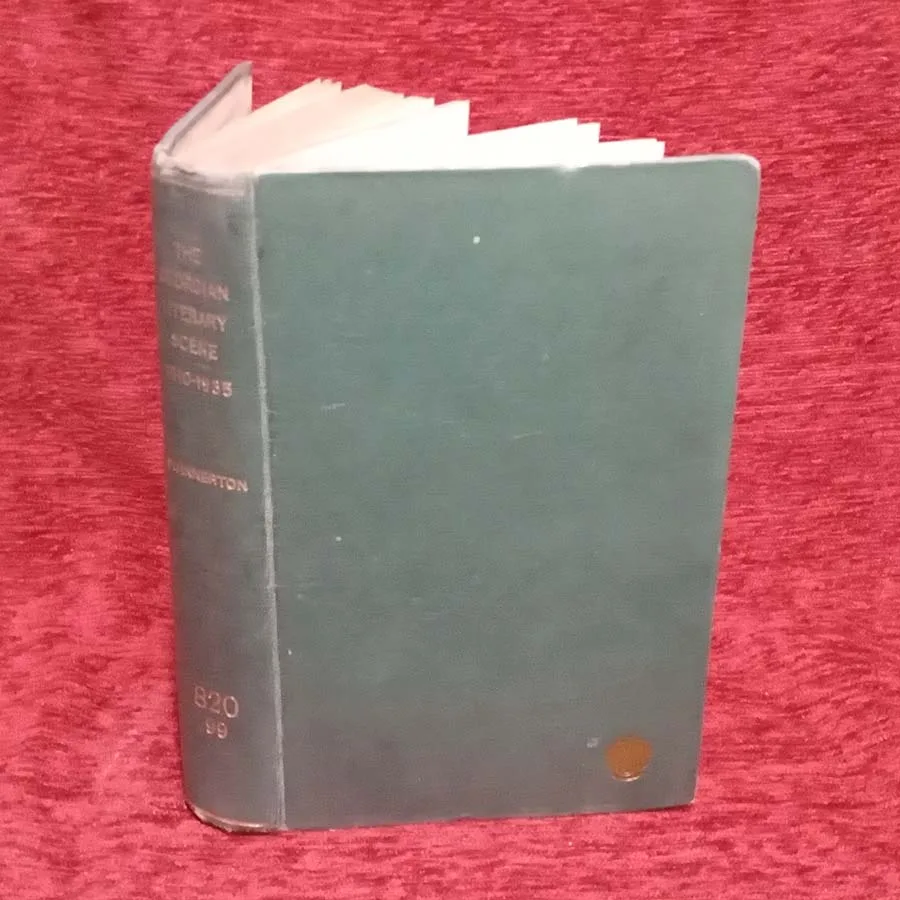
Publisher: Hutchinson
Format: Hardback
ISBN: none
Some books promise gossip, others criticism, and a few manage the agreeable feat of offering both under the respectable cover of literary history. The Georgian Literary Scene 1910–1935 is one of those. Frank Swinnerton’s book arrives from 1950 to survey that curious, transitional stretch of English literary life when the Edwardian world was fading, modernism was elbowing its way into the room, and writers, publishers, reviewers and reputations were all busily arranging themselves into the shape of twentieth-century literature.
Published by Hutchinson, this is exactly the sort of book that makes second-hand shelves feel more intelligent. It deals not merely with books, but with the atmosphere around books: the literary world as a habitat, complete with tastes, fashions, alliances, rivalries, reputations and those wonderfully English currents of approval and disapproval by which entire careers were nudged along or quietly smothered. Swinnerton knew this world from the inside, which gives the book much of its charm. It is not a remote academic reconstruction but a record informed by memory, proximity and the kind of knowingness that comes from having actually inhabited the scene one is describing.
The period itself is irresistible. Between 1910 and 1935, British literary culture went through one of its most fascinating upheavals. Georgian poetry bloomed and withered, the old order loosened, the war broke everything open, and the modernists began rearranging the furniture while declaring most of what came before hopelessly inadequate. It was an age of review columns, drawing rooms, little magazines, publishers’ lists, literary lunches, reputations built on slim volumes, and a great many people being quite sure that literature was either in glorious transition or terminal decline. Possibly both.
What makes Swinnerton so enjoyable is that he writes as someone deeply interested not only in the books themselves but in the society of letters that produced them. Literature here is not an abstract body of work floating in pure aesthetic air. It is a living scene, full of personalities, tendencies and quiet absurdities. One senses that authors are not merely writing, but also being introduced, reviewed, compared, underestimated, overpraised, dined with, ignored, rediscovered and placed into movements they may or may not have wanted to join. The literary world, then as now, was never short of theatre.
There is something wonderfully ironic about the title, too. “The Georgian Literary Scene” sounds calm, curated, almost decorative, as though one were about to inspect a tasteful arrangement of poets and novelists under excellent lighting. In reality, the period contains all sorts of instability: changing tastes, collapsing certainties, postwar exhaustion, new styles forcing their way in, and the peculiar spectacle of one generation of writers watching another announce that history has just restarted without them. A “scene” it certainly was, but not always a tranquil one.
Published in 1950, the book also occupies a particularly appealing vantage point. Swinnerton is looking back from just enough distance to see the period whole, but not from so far away that its figures have frozen into textbook monuments. Many of the writers involved would still have felt close, perhaps irritatingly so. The result is literary history with warmth still in it. One is not reading the dust of the canon, but the afterimage of a world still half-remembered, with its quarrels, enthusiasms and vanished assumptions not yet fully embalmed by scholarship.
This Hutchinson edition has exactly the right sort of mid-century seriousness for such a subject. It looks like the kind of book intended for actual readers rather than decorative intellectual posing: solid, civilised, and quietly certain that literary history deserves a proper binding. In Good condition, this copy has survived neatly, which suits it well. A book about literature’s social machinery ought itself to look as though it has lived among other books, and this one appears entirely at home in that role.
For the modern reader, The Georgian Literary Scene 1910–1935 offers several pleasures at once. It is part criticism, part memoir, part social history, and part guided tour through one of the most interesting literary transitions in English culture. It will appeal to readers of twentieth-century literature, collectors of literary criticism, admirers of forgotten book-world gossip, and anyone who likes the idea that novels and poems do not simply appear in isolation but emerge from cliques, fashions, personalities and the occasional beautifully judged dismissal.
As a Crappy Old Books item, it is exactly the right kind of treasure: intelligent, observant, slightly insiderish, and full of the quiet satisfactions of a book that knows the literary world is made not only of masterpieces, but of people. And people, fortunately, remain just as odd, vain, perceptive and entertaining as ever.
In short, this 1950 Hutchinson edition of The Georgian Literary Scene 1910–1935 is a highly attractive piece of literary history: sharp, informed, companionable and gently revealing about the making of modern English letters. In Good condition, it remains a fine Crappy Old Books volume for anyone who enjoys books about books, writers about writers, and the enduring spectacle of literature trying to organise itself into an era.
Keep browsing: See more Academic books Other books by Frank Swinnerton
