


Poems Of Virgil
Publisher: Oxford University Press
Format: Hardback
ISBN: none
Some books survive because they are useful. Others survive because civilisation, after much trial and error, has decided they are simply too good to lose. Poems of Virgil belongs firmly to the second category. Here is one of the great voices of the ancient world, still speaking across two millennia with undiminished authority about empire, exile, labour, love, destiny, pastoral life and the alarming tendency of human beings to turn history into tragedy on a grand scale.
This 1921 Oxford University Press edition carries that whole classical inheritance in a compact and quietly dignified form. It comes from the sort of publishing world that believed Virgil should be available not as an intimidating monument, but as a proper little volume that could actually be held, read and absorbed by ordinary ambitious people. There is something deeply pleasing about that. No gilded marble pedestal, no academic theatrics, just Rome’s most polished poetic intelligence sitting neatly between boards and waiting for the next reader to remember what all the fuss was about.
Virgil, of course, was never merely a poet of one mood. Depending on where one opens him, he can be pastoral, political, melancholy, tender, ceremonial or magnificently grave. He writes of shepherds and farmers, but also of empire and fate. He can make the countryside seem touched with music one moment and the burdens of history feel almost physically heavy the next. Few writers have managed to sound so refined while carrying such enormous themes. The result is poetry that has nourished schoolboys, scholars, statesmen, translators and the occasional baffled civilian for centuries.
What makes Virgil so enduring is that he combines polish with pathos. Everything is beautifully made, but beauty never becomes emptiness. Beneath the formal grace there is loss, longing, effort, duty and the persistent sense that glory tends to demand more than it gives back. Even the grandest passages often have a shadow under them. Rome may be marching toward destiny, but Virgil is too intelligent not to notice what destiny costs.
There is something wonderfully ironic, too, about the afterlife of classical poetry. Here was a poet writing under Augustus, in the full high seriousness of Roman civilisation, and he has since been pressed into service by nearly every subsequent age in Europe as a badge of culture, discipline and educated taste. Generations of readers have approached Virgil with reverence, obligation or outright fear, often because some schoolmaster or curriculum insisted upon it. Yet behind all that institutional solemnity lies an actual poet of immense sensitivity and craft, very much worth reading once one has escaped the machinery of compulsory admiration.
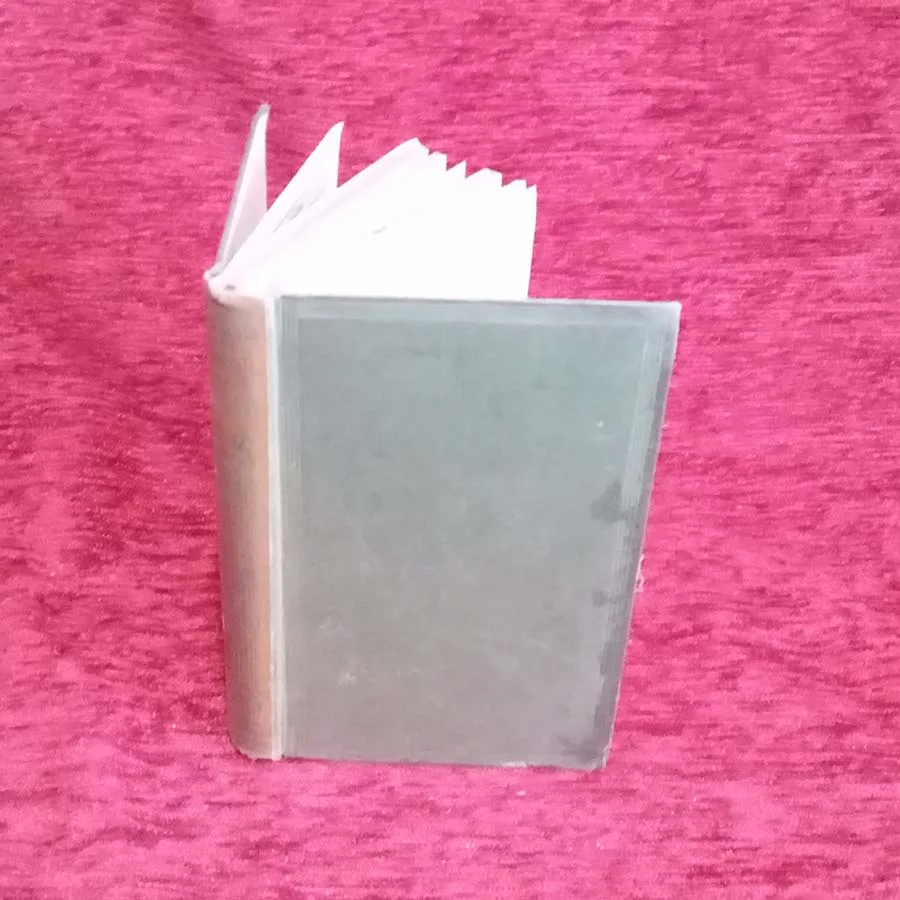
This 1921 edition has exactly the right sort of modest authority. Oxford University Press knew how to make classics look like classics without overdoing it. The volume in the image appears restrained, serviceable and properly self-possessed, which suits Virgil perfectly. A loud or flashy edition would somehow miss the point. Virgil does not need decorative panic. He needs clear print, sound binding and a reader willing to meet him halfway.
In Good condition, this copy has survived with admirable composure. It looks like the sort of book that may once have belonged to a shelf where Latin and Greek still held social rank, yet it remains entirely approachable now. There is a special pleasure in old classical editions: they often carry the air of long seriousness without becoming forbidding. One feels not merely that one is reading Virgil, but that one is joining a very long queue of readers who have done the same, with varying degrees of delight and alarm.
For the modern reader, Poems of Virgil offers several pleasures at once. It is, naturally, a foundation stone of Western literature, but it is also full of living poetic intelligence. The landscapes are vivid, the emotions exact, the sense of human effort unmistakable. One does not need to be building an empire or ploughing an Italian field to recognise Virgil’s understanding of ambition, fatigue, tenderness and fate. He remains classical in the best sense: not remote, but durable.
As a Crappy Old Books item, this is exactly the right kind of treasure: learned, elegant, compact and quietly full of world-historical weight. It will appeal to lovers of poetry, collectors of old Oxford editions, classicists, would-be classicists, and anyone who enjoys books that look small on the shelf but contain enough civilisation to occupy a lifetime.
In short, this 1921 Oxford University Press edition of Poems of Virgil is a charming and substantial little survivor: a Good copy of one of the great poetic voices of the ancient world, housed in a format both modest and dignified. A fine Crappy Old Books volume for anyone who likes their literature classical, their poetry grave and beautiful, and their shelves improved by a little Roman permanence.
Keep browsing: See more Poetry books Other books by Virgil
