


The Clans And Tartans Of Scotland
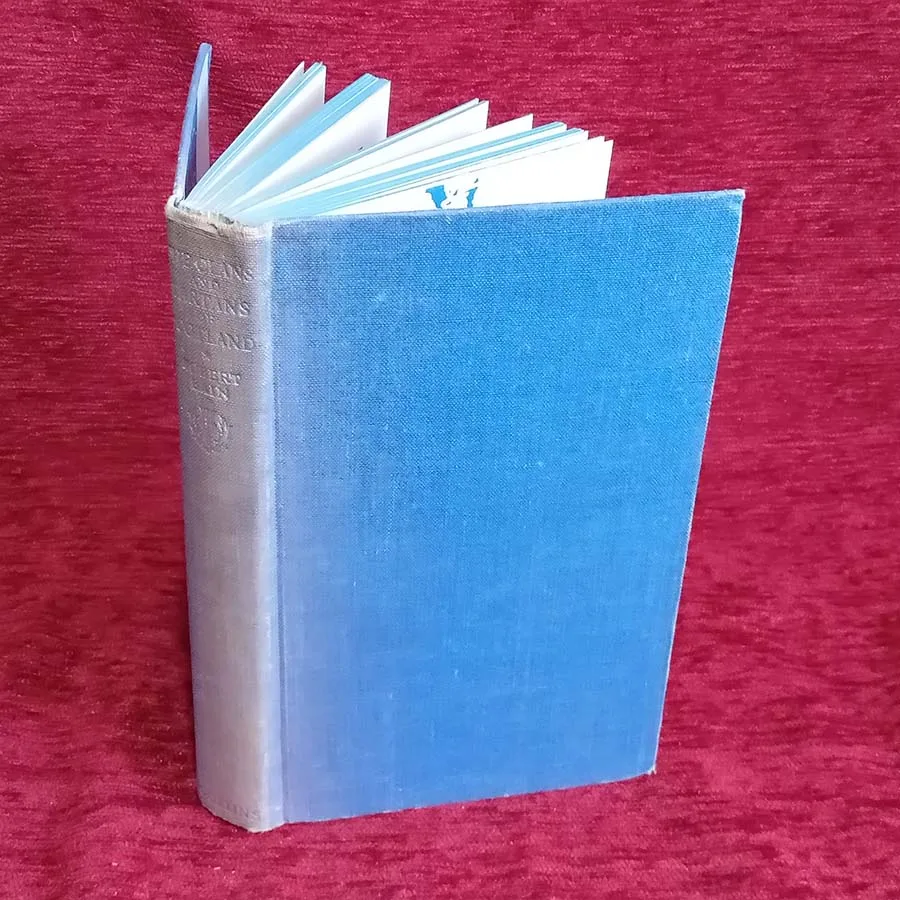
Publisher: Collins
Format: Hardback
ISBN: none
The Clans and Tartans of Scotland (1956) by Robert Bain
Collins — ISBN: none
Condition: Good
Slightly faded spine, as per image
As sold by Crappy Old Books
There are books that merely sit on a shelf, and then there are books that appear to have inherited the shelf by ancient right, possibly after a dispute settled in 1746. The Clans and Tartans of Scotland is very much of the second variety: a compact, sturdy, deeply self-possessed little volume that seems to carry with it not only names and patterns, but several centuries of argument, loyalty, reinvention, ceremony, and highly organised wool.
Compiled by Robert Bain and published by Collins in 1956, this is one of those marvellously solid mid-century reference books that understands exactly what it is there to do. It is here to tell you who belonged to whom, what they wore, what they claimed, how they were connected, and why the whole business of Scottish identity has managed to be at once historical, symbolic, romantic, and faintly competitive. It is a book about tartans, yes, but also about belonging, performance, memory, and the remarkable endurance of the idea that a family can be usefully represented by a very determined pattern.
And what a subject it is. The Scottish clan world has long occupied that irresistible borderland between history and mythology, where bloodlines, loyalties, battles, names, and landscapes all become entangled in the national imagination. Bain’s book appeals precisely because it does not treat that world as mere costume drama, even though costume drama has plainly done extremely well out of it. Instead, it gives structure and shape to a tradition that has been handed down, revived, embroidered, commercialised, sentimentalised, and yet somehow never emptied of its power. It reminds the reader that tartan is never just tartan. It is ancestry, branding, aspiration, and occasionally a family disagreement in woven form.
This 1956 edition also has that unmistakable postwar reference-book charm. It comes from a period when publishers still believed a small hardback could quietly hold an entire cultural infrastructure between its covers. There is something wonderfully assured about that. No flashy gimmicks, no inflated packaging, just a neat, serviceable volume prepared to explain Scotland properly to anyone with sufficient curiosity and a free evening. It belongs to the age of practical scholarship, where books were made to be consulted, kept, and trusted.
This particular copy is in Good condition, with a slightly faded spine, exactly the sort of mild wear that seems to suit a book of this sort rather well. A faded spine on a tartan book feels almost poetic: a gentle softening from years of standing to attention on the shelf, still dignified, still serviceable, just a little weathered by time. The image suggests a volume that has aged honestly, without fuss, and is all the more appealing for it. It looks like the sort of book one might find in a house where someone knew the difference between MacDonald and MacDonnell and was prepared to discuss it.
There is, of course, a rich irony in the whole clan-and-tartan tradition. Much of what people now take as immemorial custom was shaped, codified, revived, or glamorised comparatively recently, often with enormous enthusiasm and just enough historical ambiguity to keep things interesting. The Victorians, naturally, were delighted by all this. And yet the fact that parts of the tradition were reconstructed or stylised does not make them meaningless. Quite the opposite. Human beings are forever inventing the past in order to belong to it more convincingly. Scotland simply did it better, and with superior fabric.
For the modern reader, this book offers several pleasures at once. It is useful as a reference, attractive as an object, and endlessly enjoyable as a portal into that rich mix of genealogy, heraldry, national mythology, and textile seriousness. It will appeal to anyone with Scottish roots, anyone intrigued by clan names and tartans, or anyone who simply enjoys old books that make one feel temporarily more authoritative about history than one actually is.
As a Crappy Old Books item, it has exactly the right sort of character: modestly handsome, slightly worn, quietly knowledgeable, and full of the sort of contained cultural weight that old hardbacks do so well. It is the kind of book that improves a shelf simply by being there, suggesting that its owner may at any moment identify a surname, explain a district tartan, or become unexpectedly forceful about Highland tradition.
In short, The Clans and Tartans of Scotland is a delightful little monument to Scottish identity in all its woven, inherited, argued-over splendour. This 1956 Collins edition, in Good condition with a slightly faded spine, remains a deeply pleasing survivor: practical, evocative, and steeped in that peculiar historical magic by which family, nation, and checked cloth become inseparable.
Keep browsing: See more History books Other books by Robert Bain
