


Palaces And Churches Of The Kremlin
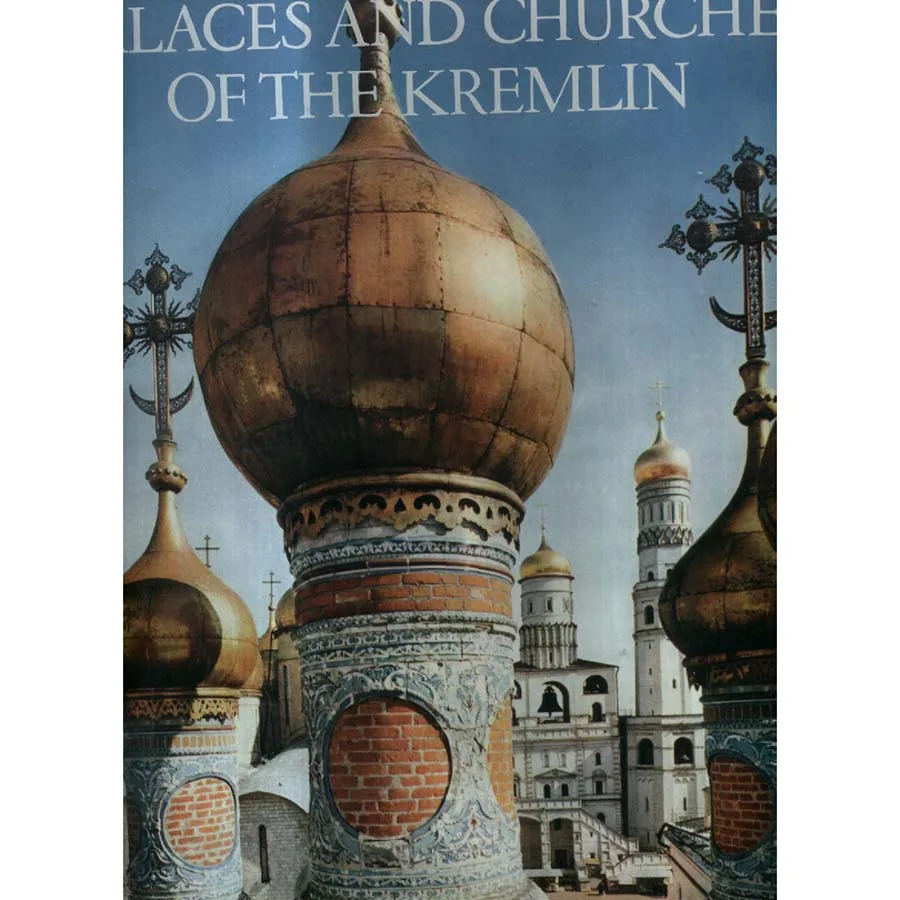
Publisher: Paul Hamlyn
Format: Hardback
ISBN: none
Some books are quiet objects. Others are cultural ambassadors, time capsules, architectural catalogues and mildly suspicious Cold War artefacts all rolled into one. Palaces and Churches of the Kremlin (1965) by N. N. Voronin is very much in the latter category. Published by Paul Hamlyn during that curious mid-1960s moment when the West was cautiously peering through the curtains at the Soviet Union, this volume invites you straight into the heart of Moscow’s most fortified, ceremonial and historically layered square mile.
The Kremlin, of course, is not merely a building. It is a medieval citadel, a political theatre, a cathedral complex, a coronation venue, a military fortress and—depending on the century—a place where emperors, revolutionaries and secretaries-general have all attempted to look inevitable. Voronin’s book focuses on the architectural side of this story, exploring the palaces and churches that have accumulated inside those famous red walls like geological layers of power. One moment you are looking at golden onion domes glinting in improbable sunlight; the next you are examining white-stone cathedrals built when England was still arguing about the Wars of the Roses.
What makes this book particularly charming is that it belongs to that golden age of serious illustrated art books, when publishers believed that the best way to understand history was to print large, lavish photographs on thick paper and trust readers to stare at them thoughtfully. Paul Hamlyn was rather good at this. The result is a handsome production—solid, dignified and faintly scholarly, the sort of book that expects to live on coffee tables, library shelves, and occasionally under the elbow of someone attempting to appear cultured.
Voronin himself was one of the Soviet Union’s leading architectural historians, and his writing carries that confident tone of someone who knows exactly which cathedral was rebuilt in which century and which prince insisted on adding another dome. Through his guidance the reader moves from the Assumption Cathedral—where tsars were crowned—to the Terem Palace and other structures that formed the ceremonial core of imperial Russia. Even if you begin the book unable to distinguish a Kremlin bell tower from a fortified wedding cake, by the end you may find yourself nodding knowingly at Byzantine influences and Muscovite styles.
There is also something wonderfully evocative about reading a book like this today. Published in 1965, it comes from a world where the Kremlin was less a tourist destination and more a symbol appearing on the evening news while commentators spoke gravely about geopolitics. Yet here it is presented simply as architecture: towers, cathedrals, palaces, domes, frescoes and centuries of craftsmanship quietly persisting regardless of who happens to occupy the offices nearby.
This particular Crappy Old Books copy arrives in fine condition, preserved with the kind of care that suggests it has spent decades living a quiet and respectable life on a shelf somewhere. It also comes in its original protective card casing, a feature that gives the whole ensemble the pleasing air of an artefact that expects to be handled with mild reverence.
In short, Palaces and Churches of the Kremlin is not merely a book about buildings. It is a tour through Russian history, imperial symbolism, and the architectural theatre of power—wrapped up in a handsome 1960s volume that still feels satisfyingly authoritative today.
A splendid addition for anyone who enjoys grand architecture, Cold War-era art books, or simply the quiet pleasure of owning a well-produced illustrated volume that has outlived several political regimes and still looks rather pleased with itself.
Keep browsing: See more History books Other books by NN Voronin
