


A Slaughtermans Tail
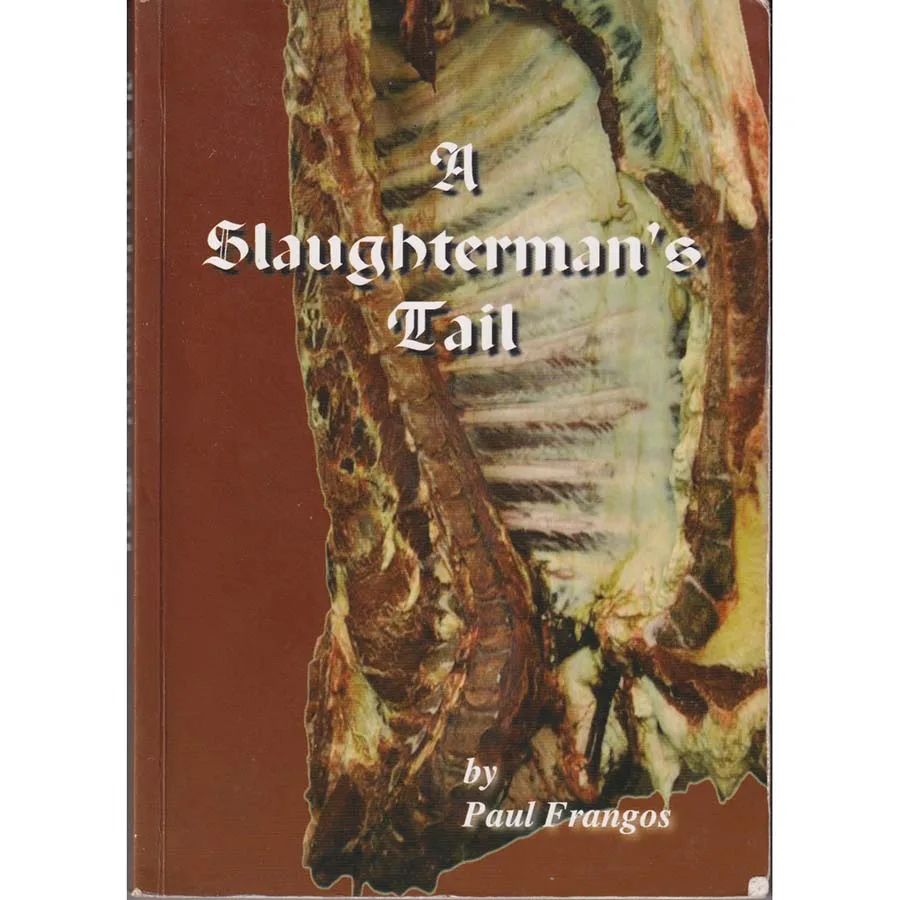
Publisher: Freedom Press
Format: Paperback
ISBN: none
There are memoirs, there are manifestos, and then there is A Slaughtermans Tail by Paul Frangos, a title that arrives already trailing a whiff of blood, argument, and the strong possibility that somebody, somewhere, is about to tell polite society to stop being so delicate.
Published in 2010 by Freedom Press, this is very much not the sort of book that sidles onto the shelf hoping to blend in between tasteful cookbooks and middlebrow novels about emotional growth in Tuscany. No, this is the kind of title that sits there with a slightly dangerous look in its eye, daring you to pick it up and find out whether the “tail” is a pun, a provocation, a typo, or all three. Crappy Old Books respects that sort of energy enormously.
And really, what a splendidly uncompromising combination of author, title and publisher. Freedom Press does not exactly suggest a cosy afternoon of approved opinions. It suggests ideas with edges. It suggests politics, principle, and the possibility that this book was not produced to reassure anyone. Add in a title like A Slaughtermans Tail and you have something that sounds less like a conventional narrative and more like a slab of lived experience hacked roughly into print and left there on purpose.
There is, of course, a wonderful irony in the title itself. Tail, not tale — unless that is exactly the joke, in which case all the better. It gives the whole thing an extra little twist of menace and absurdity, as if the book is refusing even the ordinary courtesies of spelling in favour of atmosphere. One imagines abattoirs, labour, politics, memory, hard physical realities, and the kind of truths that do not arrive wrapped in literary perfume. It sounds earthy, defiant and slightly feral, which is often a promising sign in second-hand bookselling.
Paul Frangos, meanwhile, has the sort of name that could belong either to a practical working man with stories worth hearing or to somebody fully prepared to dismantle an entire social order over tea. Possibly both. And that is part of the charm of a book like this: it does not announce itself as polished or market-tested. It feels like the real thing, whatever the real thing turns out to be — memoir, polemic, recollection, social history, or some marvellously stubborn blend of all four.
As sold by Crappy Old Books, this copy is in good condition, which means the physical survivor before you has made it from 2010 to the present without being too badly mauled by life, readers, or ideology. That matters, because books from small radical presses often have a special sort of object-quality about them. They are not just texts; they are artefacts from corners of publishing still willing to be awkward, specific, and gloriously under-upholstered. Good condition means it is ready to continue its life on a new shelf, alarming or intriguing visitors as required.
There is also something deeply refreshing about a book that sounds as though it might not care in the slightest whether it is “relatable.” Modern publishing is often full of carefully managed voices and heavily sanded edges. A Slaughtermans Tail sounds like it still has bones in it. It suggests a world of labour, flesh, class, memory, and argument, not one of tasteful consensus. Even before you know exactly what is inside, you can feel the resistance to blandness radiating from the cover.
And that is why Crappy Old Books likes this sort of item. Not because every book must be abrasive, but because every shelf needs something that looks as though it has a point of view and is perfectly prepared to make it your problem. Whether this is a memoir of working life, a social observation, an anarchic reflection, or a rough-hewn human document from somewhere outside the usual publishing lounge, it already possesses one crucial virtue: it does not sound boring.
For collectors, it is a lovely oddity: a Freedom Press title from 2010 with a memorable name and an even more memorable title. For readers, it offers the pleasure of picking up something that feels outside the mainstream and therefore potentially far more alive than the usual conveyor belt of respectable paperbacks. For shelf appeal, it is first-rate. Few books suggest “this may contain labour, blood, politics and absolutely no patience for nonsense” quite so effectively.
There is also a certain second-hand magic in books like this. They feel discovered rather than merely stocked. They look like the sort of thing one stumbles upon, picks up out of curiosity, and then cannot quite forget. That is a valuable quality. Plenty of books are competent. Far fewer have character. A Slaughtermans Tail has character before you have even opened it, which is more than many bestsellers manage after 400 pages and a publicity budget.
So here we have a good-condition 2010 Freedom Press survivor: angular, intriguing, slightly menacing, and all the better for it. It is the sort of book that promises not comfort but texture. Not polish but presence. Not necessarily answers, but certainly a voice.
A Slaughtermans Tail is exactly the kind of title Crappy Old Books loves to rescue — strange, memorable, a little unruly, and impossible to confuse with anything else. If you like offbeat publishing, radical presses, books with grit, or simply the thrill of owning something that sounds as though it may bite back, this is a very fine and faintly dangerous thing to take home.
Keep browsing: See more Biography books Other books by Paul Frangos
