


Maintaining The Breed
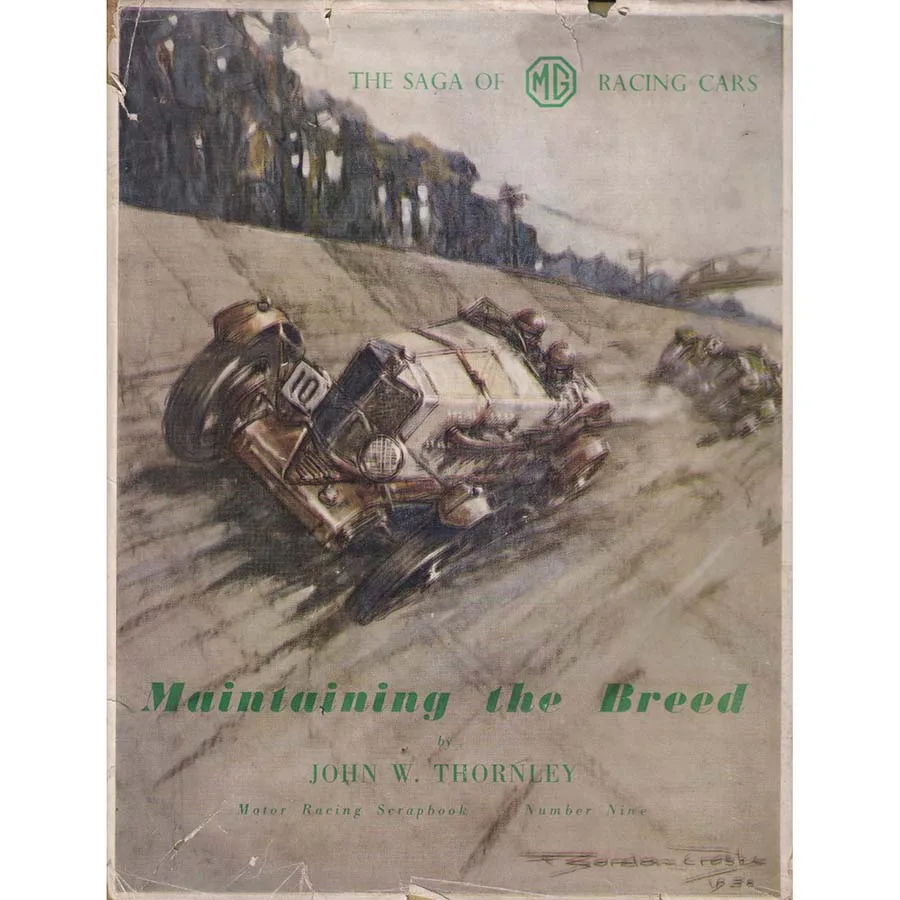
Publisher: Motor Racing Publications
Format: Hardback
ISBN: none
There are motoring books, and then there is Maintaining the Breed by John W. Thornley, a title so magnificently British it sounds less like a workshop manual and more like a private warning issued over port in a walnut-panelled room.
Published in 1950 by Motor Racing Publications, this is not merely a book about cars. It is a book about standards. About lineage. About preserving the right sort of machine in the right sort of way, preferably with oily hands, sound judgement, and a complete lack of interest in anything vulgar. The phrase Maintaining the Breed is wonderfully loaded. One can almost hear the unspoken continuation: “…and do try not to let the side down.”
John W. Thornley, of course, was no random scribbler with a passing fondness for carburettors. He was deeply associated with the world of fine motoring, and that gives the whole enterprise a rather satisfying authority. This is the sort of book that feels as though it was written by a man who believed mechanical sympathy was not just useful but moral. A man who understood that certain cars are not so much owned as stewarded, and that looking after them properly is part engineering, part devotion, and part social class in overalls.
And what a title for Crappy Old Books to get its hands on. Maintaining the Breed suggests polished bonnets, exact tyre pressures, clipped workshop wisdom, and the quiet conviction that a motor car ought to be treated with decency. It belongs to that post-war world where machinery still carried personality, and maintenance was not a matter of plugging in diagnostics but of listening, adjusting, checking, cleaning and generally behaving like a responsible adult in the presence of important metal.
As sold by Crappy Old Books, this copy is in fair condition, though the reality sounds rather better than that might imply. The book itself is in good condition, while the dust jacket has a few tears but remains about 98% intact, which is really the sort of brave performance one likes to see from a seventy-five-year-old jacket. A vintage motoring dust jacket should not look pampered. A few tears only add to the sense that the book has led a proper life: read, handled, admired, perhaps consulted beside a motor car of some distinction while someone muttered approvingly about bearings or coachwork.
And let us pause to appreciate the jacket itself, because books like this are as much about atmosphere as text. A torn-but-mostly-there dust jacket is the bibliophile’s equivalent of a well-preserved old tool roll: used, honest, and still doing the job. Ninety-eight per cent intact is splendidly specific too, suggesting not a wreck but a survivor — a little battle-worn, certainly, but with its dignity very much intact. In other words, exactly the kind of copy that gives second-hand books their charm.
There is also something gloriously old-fashioned about the whole concept. Today, a car maintenance book might be full of computer diagrams, warning lights, and apologetic notes about dealer servicing. Maintaining the Breed comes from a more confident era, when men expected to understand machines and machines, in return, rewarded attention. This is the age of tappets, tuning, proper road manners and the belief that mechanical things should be kept right because that is what decent people do.
The irony, naturally, is delicious. Modern life is full of disposable appliances, sealed units, and vehicles that seem faintly offended if you so much as lift the bonnet. Then along comes this 1950 volume, radiating calm authority from a time when maintenance was assumed, excellence was aspirational, and a motor car could still be discussed in terms faintly resembling bloodline. It is impossible not to admire such seriousness, even while smiling at it.
For collectors, it is a lovely find: post-war motoring literature, Motor Racing Publications, Thornley’s name on the cover, and that irresistible combination of practical knowledge and period charm. For classic car enthusiasts, it offers the added pleasure of belonging to the older religion of motoring — the one in which cars were temperamental, elegant, and in need of regular respectful attention. For shelf appeal, it is excellent. Few books say “I may have opinions about valve clearances” quite so persuasively.
It is also one of those books that makes you want to inhabit its world, at least briefly. A world of garages with proper benches, cars with presence, and owners who considered upkeep part of the romance rather than an inconvenience between finance payments. There is tremendous charm in that. Even the very idea of “the breed” hints at an age when the motor car was not merely transport but character made visible in steel, leather and noise.
So here we have a very nice overall copy of a 1950 motoring title with a good sound book inside and a dust jacket that has taken a few knocks but remains admirably, heroically present. It is practical, period, faintly grand, and exactly the kind of survivor Crappy Old Books likes best: a book with a bit of wear, a lot of atmosphere, and absolutely no interest in modern nonsense.
Maintaining the Breed is more than just a book about keeping cars going. It is a small hardback monument to mechanical duty, good breeding in both senses, and the vanished age when maintenance was part of honour. If you like classic motoring, vintage transport books, or simply the idea of owning something that sounds like advice for both Jaguars and minor aristocrats, this is a thoroughly appealing old thing.
Keep browsing: See more Transport books Other books by John W Thornley
