British Motor Cycles Since 1950 - Panther - Royal Enfield - Scott - Silk - Sunbeam - Sun And Tandon Roadsters Of 250cc And Ocer
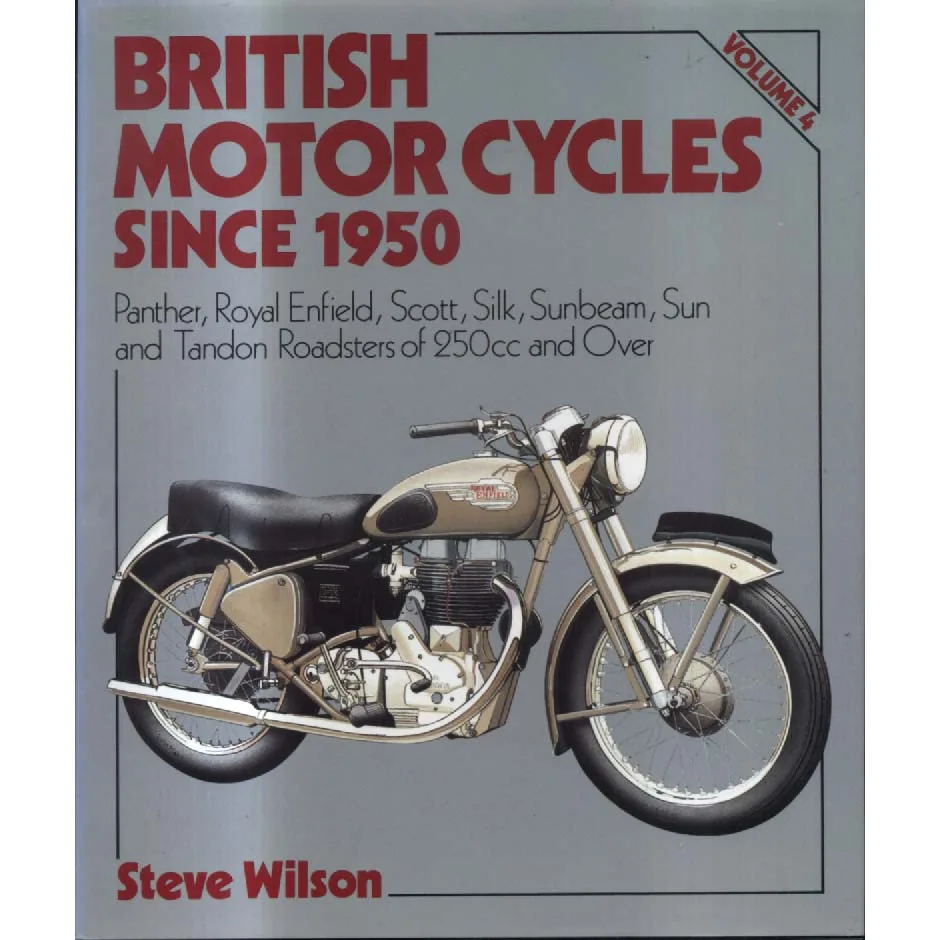
Publisher: Patrick Stephens Limited
Format: Hardback
ISBN: 9780850598308
Some books choose a subject and stick to it. This one looks at that approach, shrugs politely, and says: “No, actually, we’re going to cover Panther, Royal Enfield, Scott, Silk, Sunbeam, Sun, Tandon roadsters of 250cc, and something called Ocer as well.” Which is either a publishing decision made by an enthusiast with an enormous filing cabinet, or the kind of glorious specialist logic that makes British motorcycle history so addictive.
British Motor Cycles Since 1950 (1987) by Steve Wilson, published by Patrick Stephens Limited, is essentially a greatest-hits mixtape of marques and odd corners that deserve their own spotlight. It’s the sort of book that exists because someone, somewhere, was tired of the same handful of household names getting all the attention. Yes, we all know the big stories. But what about the fascinating side streets. The niche manufacturers. The stubborn hold-outs. The beautifully eccentric machines produced in limited numbers for people who liked their motorcycles a little different and weren’t afraid of explaining why at length.
The joy here is the range. Panther, with its distinctly British mix of simplicity and heft. Royal Enfield, with that air of tradition and the feeling that the badge alone comes with a faint whiff of parade-ground dignity. Scott, forever intriguing for its engineering character and the way it seems to belong to a slightly alternate timeline of motorcycle development. Silk, which sounds like it should be gentle and refined, but is in fact the name of a serious, enthusiast-aimed machine that appeals to people who enjoy the idea of owning something most others have never even heard of.
Then you’ve got the elegant nostalgia of Sunbeam, the plain-spoken practicality implied by Sun and Tandon, and those wonderfully specific 250cc roadsters, the sort of category that immediately suggests post-war Britain in motion: sensible capacity, purposeful design, and riders who wanted transport with a bit of style without pretending they were about to win the Isle of Man TT.
And yes, the title includes Ocer, which is either a niche manufacturer, a rare variation, or one of those tiny footnotes of motoring history that makes you feel clever just for knowing it exists. (If you like books that can send you down a rabbit hole of “hang on, what was that?” this is very much your flavour.)
Steve Wilson writes with that classic Patrick Stephens confidence: clear, enthusiast-friendly, and happily detailed. This is not a glossy lifestyle book where every sentence is “iconic” and every machine is “legendary.” This is the more satisfying thing. A proper reference-style history that assumes you’re reading because you actually care, or because you’re trying to identify a bike you once saw in a shed, or because you’ve just found yourself browsing old motorcycle adverts at midnight and need to justify it as “research.”
This copy is in Good condition, which is exactly right. These are working books. They are meant to be consulted, re-opened, and used to settle arguments. A pristine copy would feel like it had never done its duty.
If you’re collecting the series, this is the volume that makes your shelf look impressively knowledgeable. If you’re not collecting the series, this is the volume that may accidentally start you collecting the series. Either way, it’s a brilliantly specific, charmingly broad snapshot of the British motorcycle world after 1950, full of names and machines that remind you just how diverse, inventive, and occasionally bonkers the industry could be.
In short: a proper enthusiast’s compendium, for anyone who likes their motorcycling history wide-ranging, slightly obscure, and pleasantly likely to trigger further book-buying.
Keep browsing: See more Transport books Other books by Steve Wilson