


The Man Who Presumed - A Biography Of Henry M Stanley
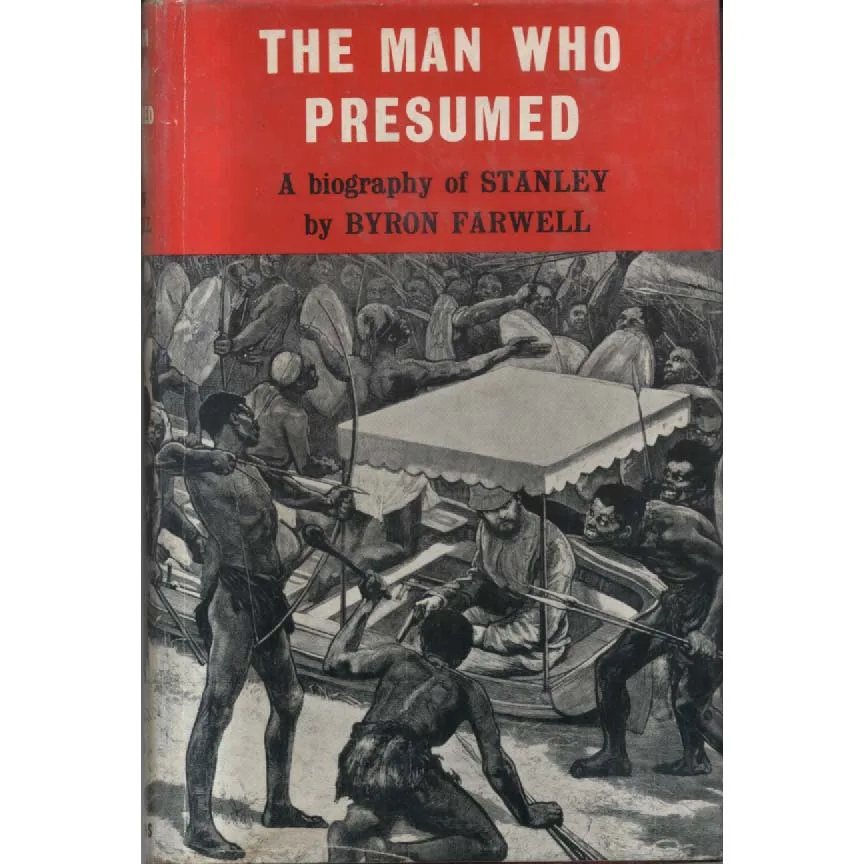
Publisher: Longmans
Format: Hardback
ISBN: none
The Man Who Presumed – A Biography of Henry M. Stanley (1958) by Byron Farwell
Longmans | ISBN: none
Condition: Good
As sold by Crappy Old Books
Some historical figures enter the record with modesty and good judgement. Henry Morton Stanley did not get that memo. He arrived with a notebook, a sense of destiny, and the kind of confidence that makes you want to check whether anyone has hidden the matches.
The Man Who Presumed is Byron Farwell’s biography of the journalist-explorer who became a byword for Victorian-era “adventure” — the man whose name is welded to the famous line “Dr Livingstone, I presume?” (a sentence so polished it sounds like it was written by a committee and then sent out into the jungle with a top hat). Farwell’s title is perfect, because Stanley’s whole life has that quality: presumption as a driving force, a personality trait, and occasionally a method.
This is a portrait of a complicated, forceful, hard-edged character: driven, ambitious, and relentlessly determined to make himself into someone important. He’s the kind of figure who fascinates because he seems built out of sheer willpower — and alarms because willpower, when paired with imperial ambition, can leave a long shadow.
You’ll get the big beats: the making of the myth, the public fame, the exploration narrative that thrilled Victorian audiences, and the machinery behind it all — money, newspapers, sponsors, prestige, and that era’s appetite for turning distant places into dramatic stories told at home. Farwell writes biography with a storyteller’s eye, giving you Stanley as both man and phenomenon: the personal drive and the public stage.
And then there’s the unavoidable context. Stanley’s story sits right in the middle of the imperial age, with all the moral weather that comes with it. This is not a cosy “plucky chap with a compass” tale. It’s tangled up with power, coercion, and the human cost of “opening up” places for European interests. A modern reader can’t help noticing how often the language of discovery is also the language of possession. Farwell’s book comes from 1958 — a time when biographies could still carry a certain stiff-upper-lip admiration for empire — which makes it doubly interesting: you’re reading both Stanley’s life and a mid-century lens on how that life was presented.
So yes, it’s adventurous in the sense that it involves hardship, distance, and high-stakes decisions. But it’s also a reminder that history’s “adventures” often had unwilling participants — and that reputation is sometimes built on suffering out of frame.
As a physical book, this copy is Good — sturdy, readable, and perfectly suited to the subject: a serious biography with a bit of age on it, carrying the faint smell of old libraries and older certainties.
Ideal for:
-
readers who like biographies of forceful, controversial characters
-
anyone interested in exploration narratives and what sits behind them
-
people who enjoy history with a side order of “how did we tell ourselves this story?”
From Crappy Old Books: because some lives aren’t inspiring exactly — they’re revealing. And Stanley’s reveals an entire era: its ambitions, its blind spots, and its talent for presuming it had the right to go wherever it pleased.
Keep browsing: See more Biography books Other books by Byron Farwell
